Scientists

Scientists

For science to make the news in a rigorous and attractive way, good sources are needed. Because access to scientific knowledge is a citizen's right.

¿Qué me ofrece?

Help science make headlines with rigour and context. We’ll ask you for feedback on current events in your field and you can participate in the briefings we’ll organise. Need to prepare for an interview? Use our resources on science communication.

Icono
Cómo trabajamos

We’re on the lookout for controversial information about science and we will contact you for your analysis in your area. Do you want to be part of our sources? Contact us. We will not pass your contact details on to anyone else. You can find out more about how we work here.   

Título qué me ofrece
What we offer you
Título cómo trabajamos
How we work

Reaction: mortality increased by 20 % in the summer months of 2022 compared to 2019 due to heat, among other causes

From May to August 2022, 157,580 deaths were recorded, 20.5% more than in the same months of 2019, before covid. This increase in mortality was mainly among people aged 75 years and older. Of the causes of death directly related to the heat, heat stroke and dehydration stood out. These are some of the provisional data published by the National Statistics Institute (INE) in relation to deaths in 2022. Covid-19 was the most frequent cause of death, with 31,559 people dying, 20% less than in 2021.

0

Reaction to the detection of the CH3+ cation in the interstellar medium with the James Webb Telescope

A research team describes in Nature the presence outside the solar system of CH3+, a cation that could react with other molecules to form complex organic molecules. Its role in interstellar organic chemistry was described decades ago, but until now it had not been observed outside the solar system. The team, which includes co-authors from the CSIC's Institute of Fundamental Physics and the National Astronomical Observatory in Madrid, based their work on observations from James Webb Telescope.

0

Reaction: more than 1.3 billion people will be living with diabetes by 2050, a figure accelerated by inequality

If effective strategies are not developed, more than 1.3 billion people will be living with diabetes by 2050, some 800 million more than today. This is according to the lead study in a set of papers published in The Lancet and The Lancet Diabetes & Endocrinology. In addition, 75% of these people will live in low- and middle-income countries, which is largely due to "structural racism and inequality", according to the editorial accompanying the studies.

0

Reactions to Japan's plan to dump treated wastewater from the Fukushima plant into the Pacific Ocean

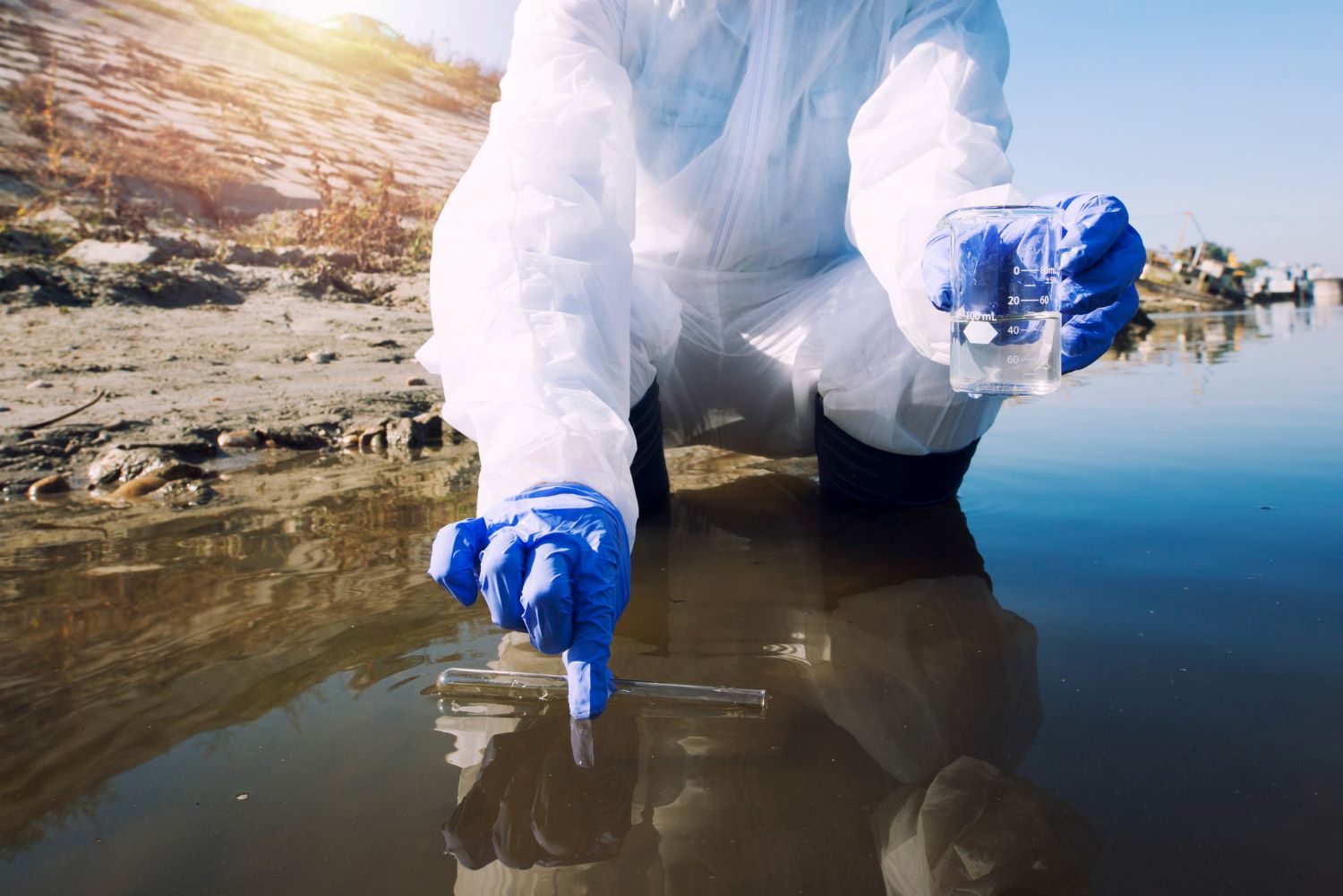
This week, Japan began testing a new facility designed to discharge treated wastewater from the Fukushima Daiichi nuclear power plant into the Pacific. The water has been used to cool the melted reactor. After filling more than 1,000 tanks, the storage should reach full capacity early next year.

0

Reactions: 30 researchers challenge study questioning the hypothesis that low serotonin levels cause depression, published last year

A commentary published last Friday in the journal Molecular Psychiatry, signed by more than 30 researchers, challenges the conclusions of the systematic review published in the same journal in July 2022, in which the authors concluded that there was no evidence that low serotonin levels cause depression. The researchers in the new paper blame the earlier study for flaws in methodology, among other weaknesses.

0

Reaction to an artificial placenta project presented in Barcelona

Results of the first phase of a project to develop an artificial placenta in an animal model, to help extremely premature babies (born at 6 months gestation or less), were presented to the press today. The project is led by BCNatal, a fetal medicine research centre in Barcelona, with funding from the "la Caixa" Foundation, which has renewed its support for the second phase of the project. 

0

Reactions to the two preprints on models of human embryos created from stem cells in the laboratory

The Guardian newspaper reported on Wednesday that Magdalena Zernicka-Goetz's team had announced the generation of synthetic human embryos from stem cells at the annual meeting of the International Society for Stem Cell Research in Boston. The author later denied on Twitter that they were synthetic human embryos and spoke only of models, warning that it was pending publication in a scientific journal. The day after the publication in The Guardian, and as reported in El País, Jacob Hanna and his team published a preprint - a publication that has not been peer-reviewed - in bioRxiv on models of human embryos generated from stem cells without genetic editing. A few hours later, Zernicka-Goetz's team posted their preprint on bioRxiv.

0

On the challenges posed by synthetic human embryos

The latest episode of competition between research groups working on the same topic, a very common situation in science, should not distract us from the actual achievement: synthetic human embryos, in the laboratory, made from stem cells, up to a post-implantation stage. Now, we must decide what status or condition we will grant to these synthetic embryos. Once again, science is leaping forward and testing the limits of the laws, posing new ethical challenges for us to solve. 

1