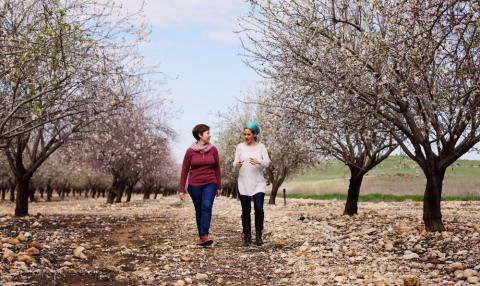
Although menopause is a part of the lives of millions of women—accounting for about one-third of their lives in total—it remains one of the least-studied stages of women’s health. With up to 72 associated symptoms, there are still many unanswered questions about many of them and the impact of treatments. We spoke with experts to find out which questions remain unanswered.
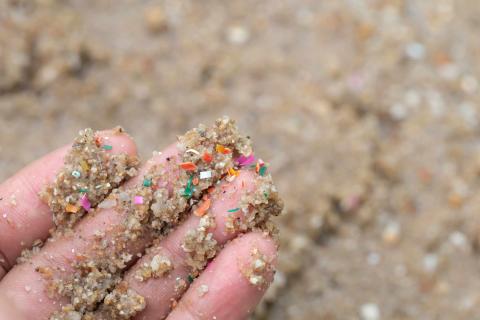
Plastics are generally considered to be chemically inert, which is why they are so frequently used for food packaging, bottling water or manufacturing toys. However, when a large piece breaks down into microplastics — less than 5 mm in size — its surface area increases dramatically in relation to its volume. As a result, the amount of material exposed to the environment is much greater. A study published in Nature concludes that this new surface area is not necessarily safe when submerged in water, but may generate high-energy reactive radicals — reactive oxygen species — which can cause harm to health and the environment.

Currently, weather forecasts become less accurate as the lead time increases, especially beyond two weeks. A study published in the journal Nature presents a machine learning method that corrects errors in existing weather models and improves forecasts for a period of two to six weeks. When applied to an artificial intelligence model from the European Center for Medium-Range Weather Forecasts (ECMWF), the method doubled its predictive capability. It also improved the prediction of extreme weather events, such as floods and cold snaps. According to the article, these advances could help improve agricultural planning, energy management, and disaster preparedness.

Since the 1970s, so-called leap seconds have been periodically added to clocks—a measure designed to keep traditional astronomical time aligned with high-precision atomic time. However, adding an extra second can disrupt global technological infrastructure, leading to website outages and network failures. In 2022, a decision was made to abandon this practice starting in 2035. This week, during the 28th General Conference on Weights and Measures—which begins today in Versailles, France—a vote will be held on a proposal by timekeeping experts to stop adding leap seconds as early as 2027.
A Google DeepMind team has developed a new artificial intelligence (AI) system based on large language models capable of autonomously tackling select mathematical problems. The tool, called AlphaProof Nexus, searches for proofs and employs verification processes to ensure the resulting solutions are logically sound. According to the study published in Science, AlphaProof Nexus has successfully solved several previously unsolved problems, including nine of the 353 Erdős problems.
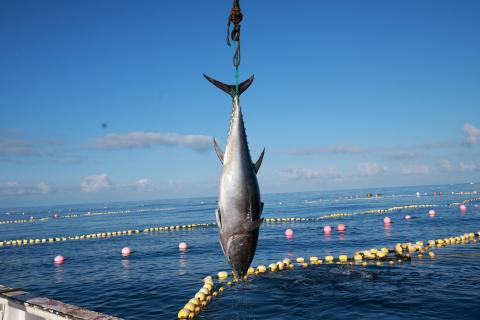
Although human-caused mercury emissions have been declining since 1990 in Europe and North America and since 2010 in East Asia, large reserves have accumulated in the soil and water. A Perspective article published in Science and written by two researchers from the Blas Cabrera Institute of Physical Chemistry at the CSIC warns that climate change—through global warming, wildfires, permafrost thaw, changes in precipitation, and altered ocean conditions—may be increasing the mobilization of accumulated mercury. According to the authors, this phenomenon may exacerbate risks to the environment and the health of humans and other organisms, primarily due to its concentration in shellfish and fish.

A study published in Scientific Reports estimates that the total area occupied by buildings within potentially flood-prone zones near the Himalayas increased by approximately 45 per cent between 2016 and 2023. In total, the study estimates that around 300,000 people could be at risk of flooding in the Nepalese, Indian and Chinese regions of the mountain range. Floods in the Himalayas are usually caused by monsoons, torrential rain or, on rare occasions, by devastating debris flows and glacial lake outbursts — such as the one that occurred last August. Climate change is expected to increase the severity of these events, whilst the narrow, steep valleys of mountainous areas can exacerbate the height of the floods and their consequences.
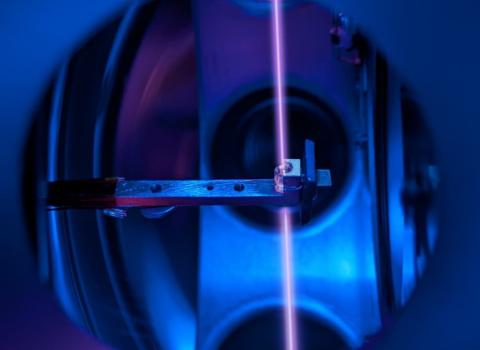
Two independent studies published simultaneously in Nature claim to have developed the first functional nuclear clocks, both based on thorium-229 isotopes. Although their current stability is lower than that of the best atomic clocks, the authors maintain that future research could increase it by around four orders of magnitude, which would facilitate research in the field of fundamental physics.
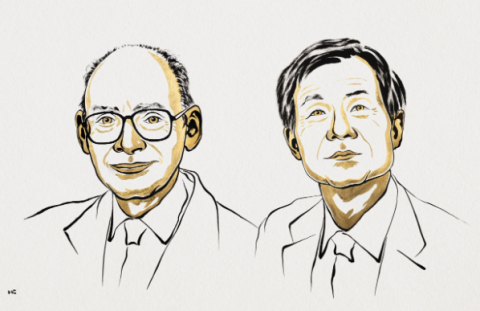
Some molecules, such as amino acids, exist in two forms that are mirror images of each other. However, living organisms contain only one of these mirror images. For a long time, the origin of this chemical asymmetry was a mystery to chemists. The Royal Swedish Academy of Sciences has awarded the Nobel Prize in Chemistry to Henri B. Kagan and Kenso Soai “for the discovery of nonlinear effects and autocatalysis in asymmetric organic synthesis,” which provided the solution to this enigma.
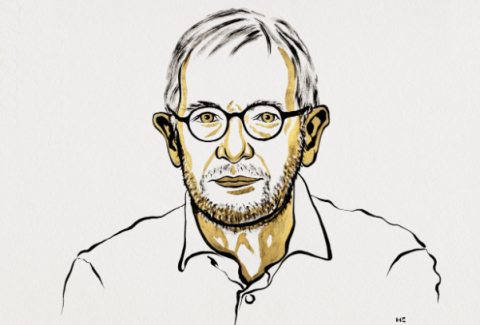
The Royal Swedish Academy of Sciences has awarded the Nobel Prize in Physics to Francis Halzen, the driving force behind the idea of using ice at the South Pole to detect particularly elusive particles known as neutrinos. According to the Academy, his “decisive contributions” have been fundamental to the development of the IceCube Neutrino Observatory: a cubic kilometer of ice equipped with light sensors that allows the scientific community to detect neutrinos originating from extremely high-energy processes in the distant universe, laying the groundwork for an entirely new field of astronomy.