
Trump's measures are directly affecting trans and non-binary people in science. This uncomfortable mirror is not unique to the United States. International studies have documented how the LGTBIQA+ community in science experiences less safe working environments, greater discrimination and more frequent abandonment of academic careers. Better science will only be possible if it protects and celebrates all the people who make it possible.

An analysis published in the medical journal The BMJ points out that lifestyle changes recommended by doctors to people with obesity, focusing on calorie restriction and increased physical activity, have little effect on long-term weight loss, fail to significantly reduce cardiovascular risks and, yet, can lead to discrimination, stigmatisation and eating disorders. The authors also point out that weight alone is an inadequate measure of a person's health, as reflected in recent clinical guidelines, and propose a ‘health for all sizes’ approach with effective, patient-centred care.

Spanish citizens trust science and researchers, and want them to be more involved in the issues that affect people's lives. Television and social media are the most commonly used channels for obtaining information on these topics. 81.4% recognise that climate change is a serious problem and, with regard to AI, although more than 80% use it, there is concern about its risks and governance. These figures come from the latest edition of the FECYT's biennial Social Perception of Science and Technology Survey (EPSCT) 2024.
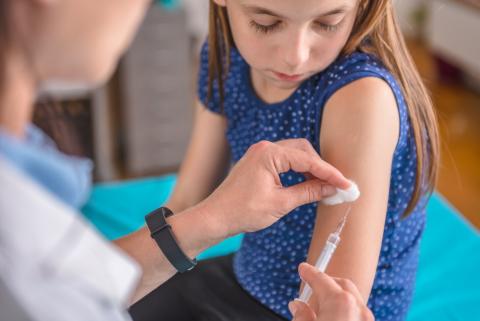
Between 1980 and 2023, childhood vaccination rates against diphtheria, tetanus, whooping cough, measles, polio and tuberculosis doubled worldwide, according to a study published in The Lancet. However, this increase slowed in many countries between 2010 and 2019; during this period, measles vaccination declined in half of all countries.
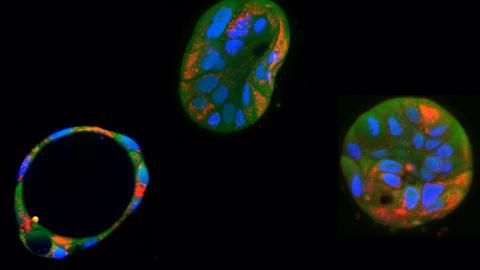
A team from the Netherlands has successfully edited pathogenic mutations in mitochondrial DNA in human cells, changes in DNA that cause disease, according to research published in PLoS Biology. The authors used a genetic tool known as a base editor. Until now, techniques derived from CRISPR have made it possible to correct mutations in nuclear DNA, and new techniques are being developed that allow mitochondrial DNA to be edited.

Coinciding with the World Conference on Tobacco Control - to be held June 23-25 in Dublin, Ireland - the World Health Organization (WHO) is releasing its report on the global tobacco epidemic, responsible for more than seven million deaths worldwide each year. The WHO warns that "action is needed to maintain and accelerate progress in tobacco control, as increasing industry interference calls into question tobacco control policies and efforts.

The U.S. Presidential Malaria Initiative is a project that has been in place since 2005 to reduce malaria cases and deaths in Africa. The Donald Trump administration has halted some of its services and questioned its continuity. Now, a team has analyzed the possible consequences in 27 of the most affected countries on the continent. According to their estimates, some 104,000 deaths and around 13.6 million cases would be avoided if full funding were maintained. The results are published in The Lancet.

Intermittent fasting has similar effects to calorie-restricted diets in terms of weight loss, concludes a meta-analysis, published in The BMJ, pooling the results of 99 previous clinical trials. Of three types of intermittent fasting (alternate-day fasting, time-restricted eating and all-day fasting), intermittent fasting has a higher impact on weight reduction compared to continuous energy restriction, the study adds.

The carbon available for emission without exceeding the 1.5°C limit set in the Paris Agreement—known as the carbon budget—could be exhausted in just over three years at the current rate of CO2 emissions. This is one of the conclusions of a new edition of Indicators of Global Climate Change, published in the journal Earth System Science Data. The study also shows that between 2019 and 2024, sea levels rose by an average of around 26 millimetres: more than double the rate of 1.8 mm per year recorded since the beginning of the 20th century.

Competition to attract audiences encourages media outlets to spread misinformation, according to a study published in Science Advances. The research applies a mathematical framework - called a zero-sum game - to analyse the dynamics between immediate media benefits and long-term damage. The model showed how an ‘arms race’ can emerge between news sources: when one player resorts to misinformation, the other has to do the same in order to compete.