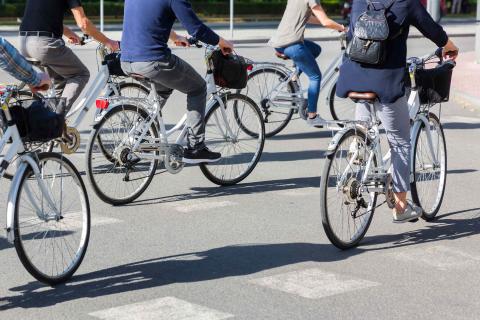
A team from the United States has analysed data on modes of transport in more than 11,500 cities in 121 countries around the world, including Spain, representing 41% of the world's population. In addition to studying the factors that most influence the proportion of journeys made on foot or by bicycle, they estimate that if each city analysed increased the extent of its cycling network to the level of Copenhagen (Denmark), private vehicle emissions would be reduced by 6% and the public health benefits would be equivalent to around £37 billion. The results are published in the journal PNAS.

An international study has warned of the potential risks of widespread use of faecal microbiota transplantation without taking into account the region of the intestine where the transferred microbes arrive. The experiment, conducted on mice and human tissue samples, showed that the microbes from the transplant—mostly anaerobic microbes from the colon—colonised the small intestine, persisted there for months and modified that new environment, causing changes in the host's metabolism. According to the authors, whose study is published in the journal Cell, this may have long-lasting and unforeseen consequences, as well as imbalances in the intestinal ecosystem of patients.
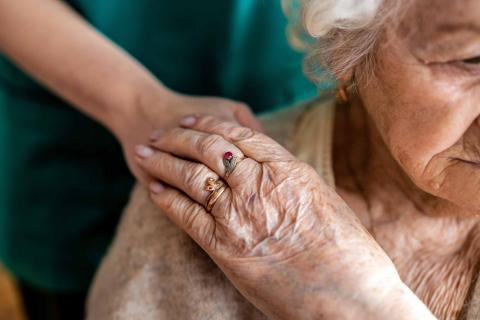
Several studies have suggested that taurine concentrations in the blood decrease with age and that supplementation with this amino acid could delay ageing. Now, a study carried out in the USA with Spanish participation, including data from humans, monkeys and mice, shows that this decline is not systematic and that it depends more on individual factors than on ageing, so taurine is not a reliable marker of ageing. The results are published in the journal Science.
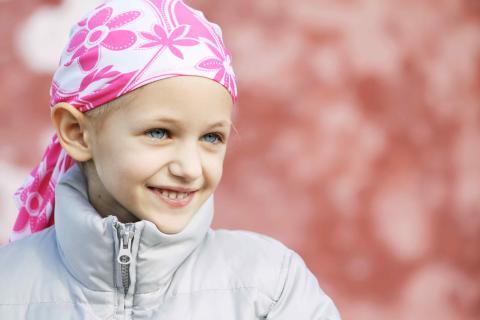
So-called precision oncology involves the use of drugs that target specific molecular alterations in the tumour. These therapies are usually tested in clinical trials in adults and most have not been approved for use in children. An opinion article calls for these trials to be extended to children as well, given the difficulty of conducting such trials in children due to the small number of cases. According to the authors, who publish the text in the journal Trends in Cancer, given that children and adolescents tend to tolerate therapy better than older adults, ‘the time has come to consider age-agnostic approvals, i.e. approvals that include children and adults of any age’.

Children will suffer more from the climate crisis than their grandparents. Fifty-two per cent of people born in 2020 will experience unprecedented heat waves throughout their lives, compared to 16 per cent of those born in 1960. This was calculated by a study published in Nature last month, assuming that temperatures rise 1.5 °C above pre-industrial levels. In this article, we analyse the profile of children who already suffer from heat in our country and explain how to adapt their environments to extreme temperatures.
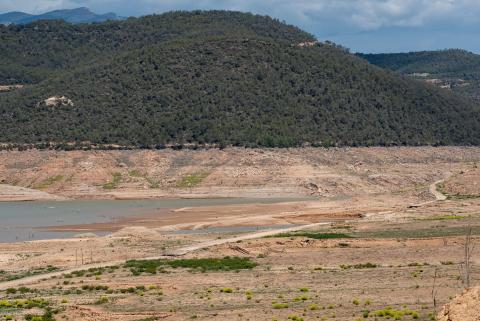
Atmospheric evaporative demand is a measure of the atmosphere's ability to extract moisture from the soil and influences the availability of water on the Earth's surface. An international team has analysed global drought data from 1901 to 2022 and found that this demand has contributed to a 40% increase in drought severity since 1981. Furthermore, this trend is accelerating and will most likely continue due to climate change, according to the authors. The results are published in the journal Nature.
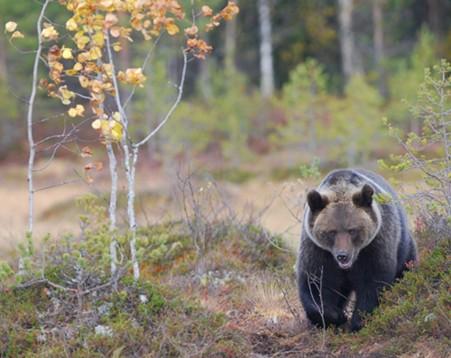
An international research project involving Spanish participation has analysed the distribution of brown bears in Europe and Turkey. To do this, the team studied more than three million locations belonging to some 3,000 bears, with data from 14 European and Turkish subpopulations in very different environments. The main conclusion is that bears occupy areas where the species that form part of their diet are distributed. The study, published in Global Change Biology, shows that the influence of climate change on these species also has an impact on the distribution of bears.
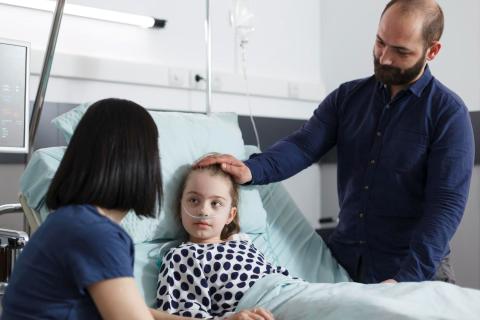
A study conducted in Australia analysed nearly 75,000 cases of paediatric patients who had been admitted to hospital or attended the emergency department. When a parent or carer expressed concern that the child was getting worse, they were more likely to end up being admitted to the ICU or requiring mechanical ventilation. According to the authors, who published their findings in The Lancet Child & Adolescent Health, this intuition "is a resource that can help doctors and may work better than some current systems based solely on vital signs".

The number of adolescents with anxiety problems seems to be increasing, especially in developed countries. An opinion article published in the journal Science proposes that maternal stress, quality of care and environmental conditions in the early years, together with current social and technological changes, may contribute to explaining this trend.
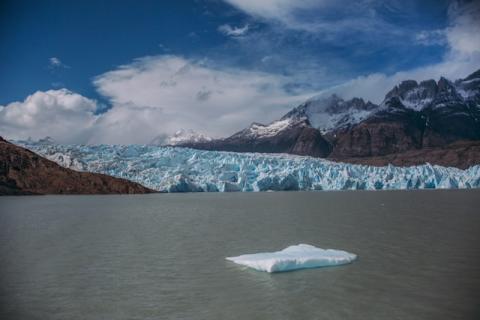
An international study, published in Science, has found that only 24% of the current glacier mass would be maintained if the world were to warm to 2.7°C, the trajectory set by current climate policies. In contrast, limiting warming to 1.5°C - the Paris Agreement target - would preserve 54% of the glacier mass.