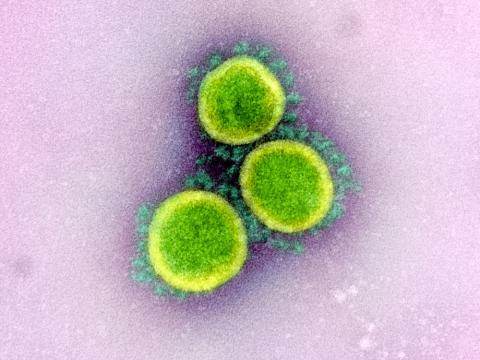
Respiratory viruses trigger metastatic breast cancer cells to proliferate in lungs in mouse models of breast cancer, a study in Nature indicates. These findings are supported by human observational data.
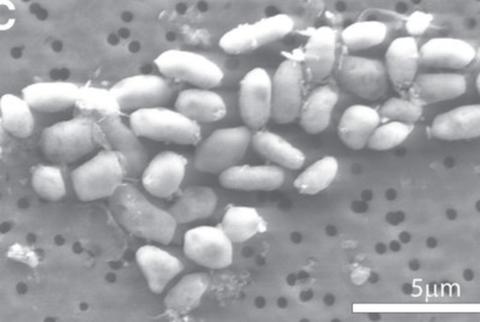
The research article A bacterium that can grow by using arsenic instead of phosphorus was one of the big science stories because it discussed the possibility of arsenic-based life. However, it has been the subject of criticism until now. After nearly 15 years of debate and failed attempts by other groups to replicate the findings, Science has now decided to retract the article, despite finding no evidence of fraud or misconduct on the part of the authors, who disagree with the decision.
Two studies published today in the journal Nature significantly expand the catalogue of known human genetic variations. The resulting data constitute what may be the most complete view of the human genome to date.
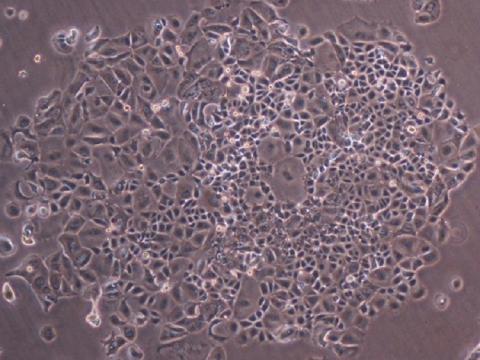
Certain immunotherapy treatments for cancer work by releasing the brakes on our defences. However, their response varies and is not uniform in all patients. A team in the United States has now published a study in Nature according to which certain autoantibodies present in patients could improve the efficacy of the therapy, which would explain some of this variability and could be used to design future complementary treatments.

Today at 3:00 PM CEST, the International Court of Justice in The Hague, the principal judicial body of the United Nations, will issue its advisory opinion on the obligations of states in relation to climate change and the legal consequences of those obligations. The case stems from a Pacific youth initiative, taken up by the small island nation of Vanuatu, which led a coalition of 132 countries to request an opinion. It is expected to determine whether large, polluting countries should be held accountable for damages caused to small island nations.

Patients who are prescribed weight loss drugs may experience a rebound effect after stopping treatment, according to a meta-analysis published in BMC Medicine. The study, which analyses data from patients who received weight loss drugs in 11 randomised clinical trials, suggests that while the amount of weight regained varies depending on the specific drug, there is a general tendency to regain weight once treatment is stopped.
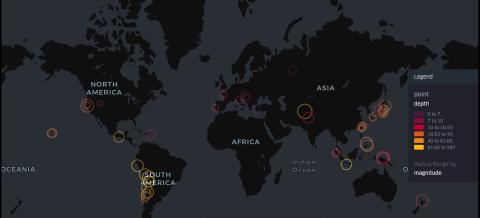
Between 2021 and 2024, the Android Earthquake Alerts system detected an average of 312 earthquakes per month and sent alerts in 98 countries associated with 60 events of magnitude greater than 4.5, according to a study published in the journal Science. The study also includes comments from users who received the alerts: 85% said they felt tremors, 36% received the alert before noticing them, 28% during the event and 23% after they occurred. In addition, 84% said they would trust the system more next time, according to the research team from Google and the universities of California - Berkeley and Harvard (USA).
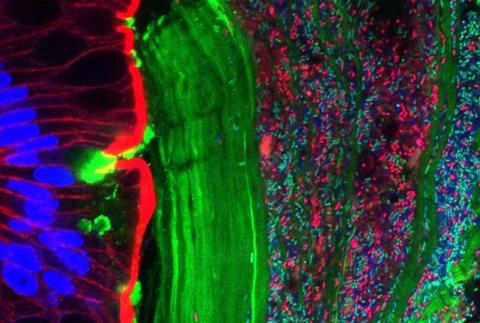
Researchers have modified a bacterium to colonise the gut microbiota and treat kidney stones. They genetically engineered Phocaeicola vulgatus to make it able to break down oxalate molecules, a cause of recurrent kidney stones, and consume a specific nutrient called porphyrin. In mice and in preclinical trials in healthy people, this reduces oxalate levels, the authors report in the journal Science.
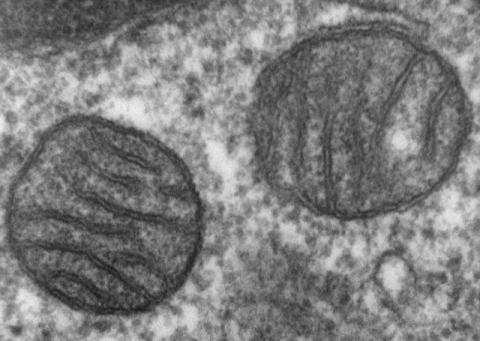
In 2015, the United Kingdom became the first country to pass legislation allowing the use of mitochondrial donation technology, pronuclear transfer. The technique is designed to limit, through in vitro fertilization, the transmission of mitochondrial DNA diseases in babies born to women who are at high risk, and for which there is no cure. Two studies published in the New England Journal of Medicine (NEJM) describe the results of the first treatments performed to date, from which eight babies have been born by mitochondrial donation, with reduced risk of disease.
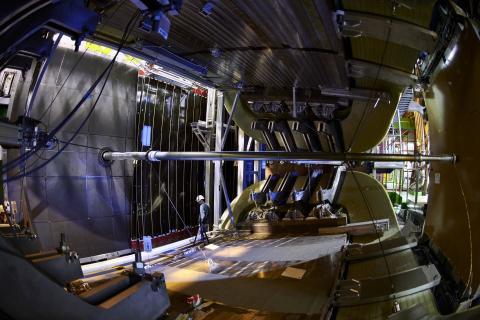
Cosmological models suggest that matter and antimatter were created in equal amounts in the Big Bang, but in the current universe matter seems to predominate over antimatter. This imbalance is believed to be due to differences in the behaviour of the two, a violation of symmetry known as CP violation. This effect was predicted by the Standard Model of Physics and observed experimentally in mesons more than 60 years ago. Now, the LHCb collaboration at CERN, which includes significant Spanish participation, has observed this phenomenon for the first time in the decay of baryons, particles that make up most of the matter in the observable universe. The study is published in Nature.