What happens in a forest ecosystem after a fire?
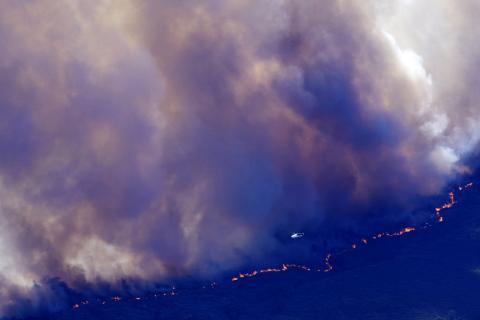
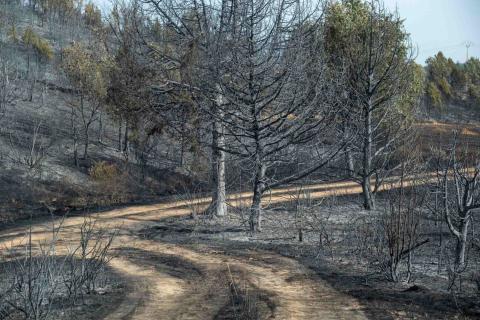
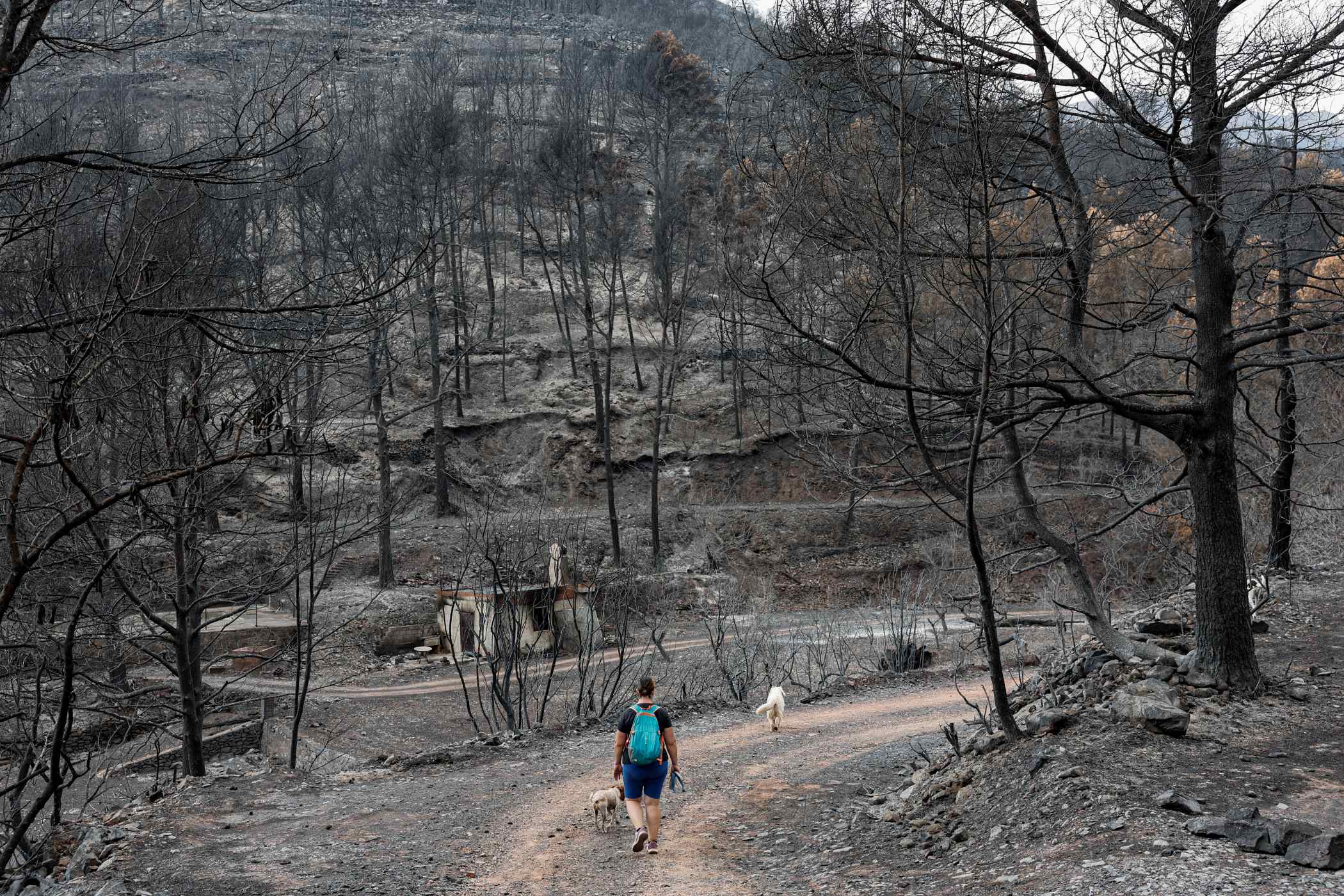
Following a medium- or high-intensity fire, the forest undergoes a major transformation. The vegetation cover disappears and the landscape is left covered in burnt wood debris. The organic matter in the topsoil is destroyed and the microorganisms living there die. As a result, some species may disappear, biodiversity may decline, and there may be a total or partial loss of forest cover.
Trees that survive the fire are often left weakened and are more vulnerable to attack by pests and diseases in the years following the fire. José V. (Pipo) Roces-Díaz, a lecturer at the University of Oviedo and a researcher at the Joint Institute for Biodiversity Research (IMIB) of the CSIC and the University of Oviedo, explains to SMC Spain that “the fire also affects the processes of the ecosystem’s functioning, as the removal of the vegetation cover affects primary production, stored carbon and the hydrological cycle — for example, the amount of water that infiltrates or runs off —.”
The soil is another of the main elements affected. When a fire occurs, the soil heats up due to the transfer of thermal energy generated by the combustion of biomass. Jesús Notario del Pino, senior lecturer in the Department of Animal Biology, Soil Science and Geology at the University of La Laguna, tells SMC Spain that “as soil is a poor conductor of heat, the effects of this heating are usually restricted to the top five centimetres, even in cases of particularly intense fires”. But these few centimetres are enough to affect soil fertility and quality, putting it at risk of erosion.
How does the intensity of the fire influence the capacity for regeneration?
Although historically fire has been a natural and common feature of the Mediterranean climate, fulfilling specific functions, exposure to large, increasingly aggressive and recurrent forest fires prevents the recovery of forests and habitats.
Susana Gómez, coordinator of the Master’s in Conservation and Management of the Natural Environment and a researcher in the Department of Biology-IVAGRO at the University of Cádiz, explains to SMC Spain that, on the Iberian Peninsula, Mediterranean scrublands and heathlands are adapted to fires that occur every 30 or 40 years and are of moderate intensity. According to the researcher, in recent decades, many of these scrublands — which naturally contain no trees — have been afforested with a high density of pine and eucalyptus trees, causing current fires to be much more severe, as the fuel load has been artificially increased, as was the case in the fires in Sierra Bermeja and Las Hurdes.
Some Mediterranean forests are not adapted to such severe fires, and there are species which, even though they have adaptations to fire, may struggle to regenerate as they have survival limits. For example, the seeds of some gorse (genus Ulex) can withstand temperatures of up to 150 degrees, whilst some rockroses (genus Cistus) can withstand up to 120 degrees. Very severe fires can exceed these temperatures at ground level, causing mineralisation of the soil and resulting in high seed mortality or the destruction of the plant’s resistance organs – the parts of the plant that survive and enable regrowth after a fire.
A study published a few days ago in Science Advances, which analyses coniferous forests in North America, concludes that extreme forest fires reduce tree cover and hinder forest recovery, potentially leading to long-term changes in vegetation. These fires are often very intense in forested landscapes, as the fire spreads rapidly through the tree canopies and leaves large burnt patches, far removed from the seed sources of the surviving trees, which complicates the regeneration of the ecosystem.
When does the natural recovery of a forest begin after a fire?
As we have seen, recovery does not depend solely on the extent of the burnt area, but also on the intensity of the fire, the degree to which the vegetation has been affected, and the species’ ability to regenerate naturally. This process begins soon, within the first few weeks or months after the fire, although it is not always visible at first.
There are two main types of plant species based on their response to fire: those that regrow from stumps and those that do not (i.e. those that rely on seed germination). As Fernando Ojeda, professor in the Department of Biology (Botany Section) at the University of Cádiz, explains to SMC Spain, “most woody species in our flora – trees or shrubs – survive the fire, as they are stump-regenerating”. They regenerate by sprouting from living tissues protected underground or beneath thick bark, such as dormant buds, rhizomes or shallow roots. The most striking example is the cork oak.
“In the case of seed-germinating species, adult plants cannot withstand fire and die, but before the fire they have left seed banks on the ground,” adds the expert. These species persist because the heat of the fire stimulates their germination — a process known as pyrogenic germination. Among shrub species, the most paradigmatic examples of seed-germinating species are rockroses and pines.
Looking beyond specific species to ecosystems as a whole, adaptations to fire are found mainly in sclerophyllous scrublands and Mediterranean heathlands, as well as in some pine and oak forests, as these can completely regenerate their vegetation cover within a few years. On the subject of resilient species, Helena Ballart, head of the Resilient Societies and Landscapes Department at the Pau Costa Foundation, tells SMC Spain that fire can act as a sort of ‘vaccine’, since “a forest that came into being a hundred years ago developed under climatic conditions different from those of today; whereas the vegetation regenerating now does so under the current climate, and may therefore be better adapted to this new context”.
A forest that came into being a hundred years ago developed under climatic conditions that differed from those of today; by contrast, the vegetation that is now regenerating following a fire is doing so under the current climate
Helena Ballart
However, ecosystems that are not adapted to fire often take decades to restructure, particularly in terms of biodiversity. As Roces explains, “it will not only be necessary to restore the same species composition and abundance, but also the previous levels of biomass and a comparable spatial structure, something that may take several decades”. A study on burnt areas in the Rocky Mountains (United States) stated that the recovery of forest cover was estimated at 40 years, although there were areas where the expected recovery time was over 200 years.
Does fire have any benefits for the land?
The effects of a fire on the soil depend, to a large extent, on its intensity. Low-intensity fires are not always harmful and, in some cases, can benefit the ecosystem by promoting herbaceous vegetation, reducing the accumulation of plant fuel, increasing the availability of nutrients and thinning out forests. Furthermore, the ash produced during combustion adds mineral nutrients to the soil, such as phosphorus, potassium, calcium and magnesium, temporarily increasing its fertility.
Prescribed or controlled burning is a very useful forest management tool, as it helps to reduce the risk of high-intensity fires, maintain certain fire-adapted ecosystems and promote the regeneration of some plant species. These strategies aim to replicate the positive natural processes of fire under controlled conditions, modulating its intensity and behaviour to achieve specific benefits, such as reducing accumulated fuel.
What factors influence soil recovery? Is it reversible?
Soil recovery following a fire depends on the extent of the damage sustained. As Notario del Pino explains, in the most severe cases, full recovery may not occur. Furthermore, the problem is exacerbated by the fact that the intervals between fires are becoming increasingly shorter. This means that, although the effects of each individual fire may be relatively moderate, they accumulate over time and prevent ecosystems from having the time needed to recover fully.
As for the soil’s chemical properties, the time required for the pH to return to its initial levels varies. In a report on forest fires in Spain, the authors point out that this process can be faster or slower depending on how long the ash remains on the ground. The nutrients provided by the ash can increase fertility, but this positive effect does not always offset the damage caused by the fire. Ballart explains that “if the fire is very severe on the ground, occurs too frequently or is followed by erosion and drought, recovery may be compromised”.
What criteria should be followed to restore a forest after a fire?
As set out in the INFOCA plan of the Regional Government of Andalusia, the process of restoring vegetation cover should be undertaken once it is clear how vegetation regeneration is progressing after the fire and after the burnt trees – a source of pests and diseases for the rest of the vegetation – have been removed. It is therefore necessary to wait a reasonable period of time. Once this period has elapsed, the plan highlights the following guidelines:
- The techniques used must respect the natural vegetation that has survived the fire and that which has regenerated afterwards, whilst minimising the impact on the soil, wildlife and the landscape.
- Wherever possible, native species that closely resemble the optimal vegetation should be used.
- Both silvicultural treatments and reforestation shall be carried out in such a way as to promote a mix of main species, avoiding large monospecific stands and encouraging multi-layered vegetation.
- Reforestation must be planned to achieve the greatest possible resilience and self-defence of the woodland by creating defence and support lines for combating forest fires, and by establishing mosaics of vegetation where non-reforested areas are supported by defence lines such as boundaries, paths or firebreaks that are easy to maintain.
“Generally speaking, we can say that it will always be better to allow natural regeneration to take its course,” explains Víctor Resco de Dios, professor of Forestry Engineering and Global Change at the University of Lleida and a researcher at Agrotecnia, to SMC Spain. However, there are cases that do require intervention, such as when erosion processes or landslides may occur.
“Restoration efforts should take into account that we are at the beginning of a major climate change that will affect many of our species and increase both hydrological and fire-related risks,” states the researcher. Therefore, they must seek to anticipate these conditions and mitigate them as far as possible. “In light of this new reality, we must move away from concepts that were useful in the past but are becoming increasingly less so, such as that of ‘native species’.” Rather than prioritising these species, we should opt for those best suited to a particular area, as native species are adapted to past conditions but will not necessarily remain so in the future, according to the researcher. The fact that a species is indigenous to a region should be a factor to consider, but not a requirement. “The requirement will be to use species that are capable of withstanding the environmental conditions we expect by the end of the century,” he emphasises.
We are at the beginning of a period of major climate change and, rather than prioritising native species, should opt for those best suited to a particular area, as native species are adapted to past conditions
Víctor Resco de Dios
Which trees have been used to reforest Spain?
Human reforestation efforts have profoundly transformed the Spanish landscape. A study on reforestation in Spain found that between 1877 and 2006, more than six million hectares were reforested, equivalent to 11 per cent of the country’s total land area. However, forest management must be analysed over the long term, as trees and forests take a long time to grow, meaning that the effects of reforestation and forest management policies are only evident 100 years later.
Most large-scale afforestation projects were launched in the post-war period, in the 1940s, by the State Forestry Authority. These were commercial plantations. “In theory, they were afforesting wasteland and protecting catchment areas, but this led to the destruction of certain ecosystems in the name of reforestation, particularly heathlands in the west of the Iberian Peninsula,” explains Ojeda.
According to the expert, reforestation carried out using dense, monospecific stands of pine or eucalyptus has increased the accumulation of plant fuel, fuelling high-intensity forest fires. “They burn more fiercely, the fires are more severe and the ground is completely scorched due to the extremely high temperatures,” he states. However, the problem lies not so much in the species used, but in how these forest stands are managed and in the effects of climate change.
“We need to move away a little from this forest-centred mindset and restore the natural mosaic that has been disrupted, in which different types of vegetation coexist according to the characteristics of the terrain and the ecosystem,” he emphasises. We must also seek to control the density of trees per hectare.
Gómez points out that, at present, “one post-fire restoration measure in some areas should be to remove pine trees after a fire and allow the scrubland to recover”. However, the pine’s highly invasive nature makes this a complex task, as it tends to regrow and can even spread over significant geographical distances. Furthermore, it involves high costs.
How is wildlife affected?
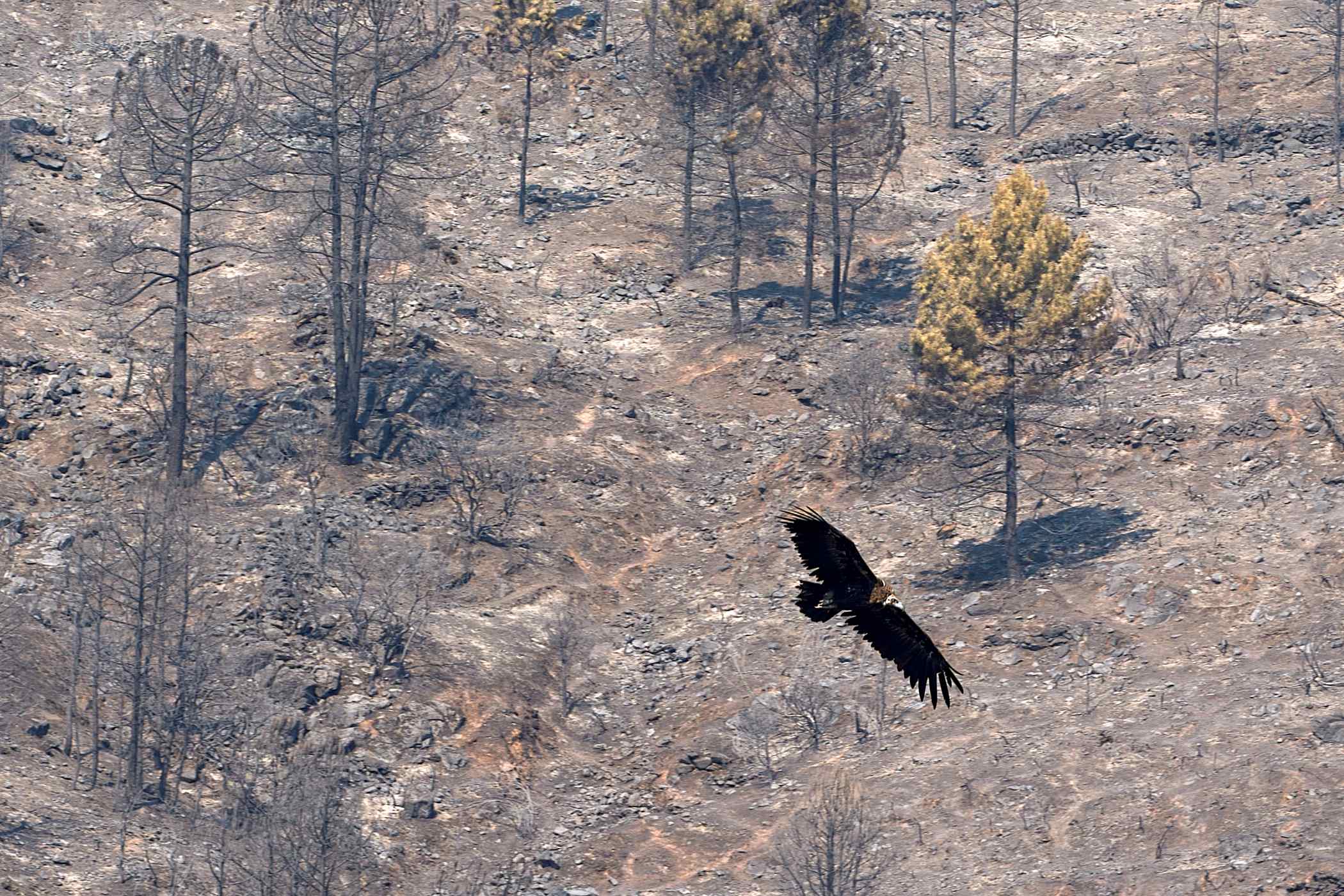
Fires also have an impact on animal communities. Although one might think that burnt areas are completely devoid of vertebrates, various studies show that many species remain or return shortly after the fire. According to a report by the Doñana Biological Station, the impact varies depending on each group of animals. In the case of birds, some display philopatric behaviour and remain in the territory where they were born, making use of burnt trees and other shelters to feed and breed. Other birds, found in shrubby areas, disappear until the vegetation recovers.
A statement from SEO/Birdlife reports that the Vall d’Uixó fire last July affected around 12 per cent of the total area of the protected areas in the Sierra de Espadán and its natural park, which include two sites protected under the Natura 2000 network. This habitat is home to significant populations of birds of prey. According to the organisation, the fire may have affected birds such as the eagle owl, the European grass snake and the peregrine falcon.
The ground is also an important habitat, as it is home to the burrows of small mammals, as well as the nests of insects and arthropods. As explained by the CREAF, these animals can survive by taking refuge in these underground nests. However, their survival depends on the depth of the nest and the intensity of the fire, as a very severe fire can overheat the ground, endangering these animals. Species that have no strategy for surviving fire die and disappear from the affected area. This is usually the case for reptiles and amphibians. For example, mortality rates of between 30 per cent and 85 per cent have been recorded in populations of the Mediterranean tortoise following major fires.
And how does it affect nearby rural areas?
Following major forest fires, rural communities suffer a severe impact. Residents are forced to evacuate their homes, leaving behind their belongings and property, which may have been reached by the fire. Furthermore, many people living in these areas keep farm animals that may be harmed. There is also a risk of direct losses to crops that have been burnt or damaged by the heat. Notario del Pino explains that “they may be affected by charcoal and soot residues, whether carried by the wind or washed down by runoff, which sometimes contain substances that are potentially harmful to terrestrial ecosystems, such as hydrocarbons or dioxins”. For the families affected, this damage often results in significant financial losses.
Crops may be affected by coal residues and soot, whether carried by the air or carried by runoff, which sometimes contain substances that are potentially harmful to terrestrial ecosystems
Jesús Notario del Pino
Tourism is also affected, particularly nature-based tourism. A study published in 2024 showed that the regions of the European Union with the highest fire risk were also those most dependent on tourism, notably the Mediterranean region and, within the Iberian Peninsula, Andalusia. Furthermore, according to the Spanish Confederation of Travel Agencies, major fires lead to changes in travel itineraries and uncertainty amongst visitors, affecting the perception of Spain as a tourist destination.
Smoke from forest fires also poses a serious health risk. According to a study published by The Lancet Planetary Health in 2025, the number of deaths associated with PM2·5 particles from fire smoke is underestimated by 93 per cent. These plumes affect areas located even hundreds of kilometres away. At a briefing organised by SMC Spain, a study was presented showing that, between 2013 and 2018, on days when fires were recorded, there was an increase in A&E admissions for respiratory problems in nine Spanish provinces.