Bananas from the area around the eruption on La Palma are safe and nutritious
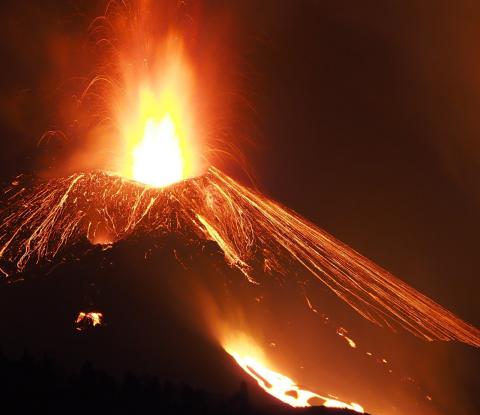
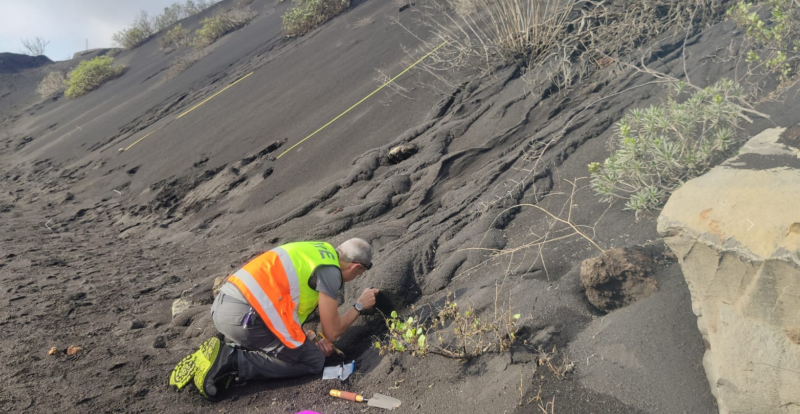
In 2021, the eruption of the Tajogaite volcano on the Canary Island of La Palma caused the loss of 53,000 tonnes of bananas, equivalent to 50% of its production, which is essential to the local economy. Given the potential risk of contamination from ash and magma, a team of researchers from Spanish centres analysed the composition of bananas in the area of the eruption. The study, conducted using mass spectrometry and published in PLOS One, confirms that they are safe and healthy to eat. For most potentially toxic elements, the estimated maximum intake remained below 1% of the tolerable daily intake (TDI) and in no case exceeded 3% of the TDI.
Pablo Gago - plátanos La Palma EN
Pablo Gago
Senior Scientist at the Institute of Environmental Diagnosis and Water Studies at CSIC (IDAEA-CSIC) and visiting professor at SLU Swedish University of Agricultural Science (Sweden)
This study is well-founded and uses a robust technique such as mass spectrometry (ICP-MS) to quantify both essential and potentially toxic elements in bananas following the volcanic eruption on La Palma. It is particularly interesting that it includes elements that have been little studied in volcanic contexts, such as rare earth elements, and that it compares both before and after the eruption, as well as different geographical areas.
This approach allows the results to be put into context. Although increases in some elements are detected in bananas from the affected area, the concentrations are well below levels that could pose a risk to human health. For consumers, the message is clear: bananas remain safe and nutritious.
The study also highlights the importance of regular monitoring of crops in volcanic regions, especially in the face of extreme events that can alter the chemical composition of the soil and air.
Miguel Motas - plátanos La Palma EN
Miguel Motas
Full professor of Toxicology in the Department of Social and Health Sciences at the University of Murcia
Is the study based on solid data and methods?
‘The study is based on data obtained using a robust, reliable, consolidated and highly sensitive technique for analysing inorganic elements, namely ICP-MS. Although the methods have their limitations due to the difficulty of sampling, they are rigorous enough to guarantee the validity of the results obtained.’
What new information does it provide?
‘This is quite a novel study, as there is little literature on the presence of many of the elements studied in bananas. It also clarifies the influence of volcanic activity on the release of pollutants into the environment and, therefore, the possible contamination of the food chain and the risk to the population.’
Are there any important limitations to bear in mind?
‘The number of samples due to the difficulty of collection in areas exposed to the volcano and, as it is opportunistic sampling due to the volcanic eruption, there are factors that have not been taken into account that may influence the absorption and transport of elements such as soil type, topography and moisture content.’
What do these results mean in practice for consumers?
‘Although levels of elements increase after the eruption, the toxic risk from these elements after the eruption is minimal (estimated intake less than 1% of the tolerable daily intake) and does not pose any problem for the population, making bananas not only a safe but also a healthy option.’
What practical recommendations could we make based on this work?
‘It is very beneficial to eat bananas, especially for people with molybdenum and cobalt deficiencies, as bananas provide 37% and 21% of the recommended daily intake of these important elements, respectively.’
Conflict of interest: ‘I know the authors as colleagues in the field of toxicology, although I have not published anything with them.’
Ángel Rodríguez-Hernández et al.
- Research article
- Peer reviewed