
University of Barcelona
If you are the contact person for this centre and you wish to make any changes, please contact us.
Doctor in Biology and research professor in the Department of Evolutionary Biology, Ecology, and Environmental Sciences at the University of Barcelona.
Ramón y Cajal researcher at the Institute of Neurosciences at the University of Barcelona
PhD candidate in the Department of Social Psychology and Quantitative Psychology at the Faculty of Psychology, University of Barcelona
ICREA Research Professor and Coordinator of the Regenerative Medicine Programme at the Bellvitge Biomedical Research Institute (IDIBELL), member of CIBER-BBN, Director of the Clinical Translation Programme in Regenerative Medicine in Catalonia, and Professor of Physiology at the University of Barcelona.
Professor of Preventive Medicine and Public Health at the University of Barcelona and member of the Spanish Society of Epidemiology
Associate professor at the University of Barcelona, ICREA Academia fellow, and member of the Scientists’ Coalition for an Effective Plastics Treaty.
Senior Consultant at the Department of Preventive Medicine and Epidemiology at Hospital Clínic in Barcelona, Professor of Public Health and Dean of the Faculty of Medicine and Health Sciences at the University of Barcelona
Professor of Microbiology, University of Barcelona
Professor of Cognitive Neuroscience
Brainlab, Department of Clinical Psychology and Psychobiology, University of Barcelona (UB).
UB Institute of Neuroscience
Sant Joan de Déu Research Institute
Lecturer of the Department of Social Psychology and Quantitative Psychology at the University of Barcelona, researcher at the Bellvitge Biomedical Research Institute (IDIBELL) and CIBERSAM
ICREA research professor and leader of the QSBio research group at the University of Barcelona
Head of Microbiology at Hospital Clínic in Barcelona, associate professor at the University of Barcelona, and researcher at ISGlobal Barcelona
Deputy Head of the Tobacco Control Unit at the Catalan Institute of Oncology and lecturer in the Department of Nursing, Public Health, Mental Health and Maternal and Child Health at the University of Barcelona
Lecturer at the University of Barcelona (UB) and head of the Laboratory of Neural Stem Cells and Brain Damage at the Institute of Neurosciences of the UB
Director of the BCNatal maternal-fetal medicine center (Hospital Clínic-Sant Joan de Déu) and professor at the University of Barcelona.
Head of the Arrhythmias and Physical Activity research group at IDIBAPS, cardiac electrophysiologist at Hospital Clínic Barcelona, associate professor of Medicine at the University of Barcelona and researcher at CIBERCV.
Professor of Psychiatry at the University of Barcelona, Head of the Psychiatry and Psychology Department at Hospital Clínic in Barcelona, and researcher at the Biomedical Research Centre in Mental Health (CIBERSAM)
Professor of Pedagogy at the University of Barcelona
Lecturer in the Department of Fundamental and Clinical Nursing at the University of Barcelona and member of the research group ‘Bioethics, Law and Society: Interdisciplinary analysis of ethical, legal and social issues of biomedicine, biotechnology and emerging technologies’
Professor at the department of Biochemistry and Molecular Biomedicine of the University of Barcelona. Principal Investigator IBUB and CIBEROBN.
Geologist and professor at the Faculty of Earth Sciences, University of Barcelona
Gemma Marfany, Professor of Genetics at the University of Barcelona (UB) and a member of CIBERER, IBUB-IRSJD
Serra Húnter Associate Professor at the Faculty of Information and Audiovisual Media of the University of Barcelona
Neuropathologist and Professor Emeritus at the University of Barcelona
Professor of Physical Geography at the University of Barcelona, Director of the Fabra Observatory RACAB
Professor Emeritus of Ecology at the University of Barcelona
Professor of Medicine at the University of Barcelona and coordinator of the Central Sensitisation Unit at the Hospital Clínic de Barcelona.
Associate Professor, Brainlab, Department of Clinical Psychology and Psychobiology, University of Barcelona (UB)
UB Institute of Neurosciences
Sant Joan de Déu Research Institute
Clinical psychologist in the Department of Child and Adolescent Psychiatry and Psychology at Clínic Hospitaland researcher at IDIBAPS, University of Barcelona
Researcher in the Department of Developmental and Educational Psychology
Scientific coordinator of the National Health System Cancer Strategy, director of the Catalan Oncology Plan and Professor of Preventive Medicine and Public Health at the University of Barcelona
Professor of financial economics and accounting at the University of Barcelona
Researcher in the Human Anatomy and Embryology Unit of the Faculty of Medicine and Health Sciences at the University of Barcelona
Ramón y Cajal Research Professor, Department of Pathology and Experimental Therapeutics, Faculty of Medicine and Health Sciences
Physician at the Gynecological Oncology Unit at the Hospital Clínic of Barcelona, scientific coordinator at the Clinical Institute of Gynecology, Obstetrics and Neonatology (ICGON) and associate professor at the University of Barcelona
Professor of Biochemistry and Molecular Biomedicine of the University of Barcelona. Principal Investigator IBUB and CIBEROBN.
Professor of Ecology at the University of Barcelona
Serra Húnter Lecturer in the Department of Social Psychology and Quantitative Psychology at the University of Barcelona and co-director of Research at the Jane Goodall Institute Spain and Senegal
Head of Medical Oncology at the Catalan Institute of Oncology (ICO), head of the Colorectal Cancer Research Group, Oncobell programme (IDIBELL) and associate professor of Medicine at the University of Barcelona
ICREA research professor of Cosmology and Theoretical Physics at the Institute of Cosmos Sciences at the University of Barcelona, visiting professor in the Astrophysics group at Imperial College London (United Kingdom), and researcher at the Imperial Centre for Inference and Cosmology (ICIC)
Professor of Applied Economics at the University of Barcelona
Theoretical physicist and ICREA professor at the Institute of Cosmos Sciences of the University of Barcelona
Lecturer Serra Húnter, Department of Biochemistry and Molecular Biomedicine, Faculty of Biology, University of Barcelona
Professor in the Department of Electronics and Biomedical Engineering at the University of Barcelona and group leader at the Institute for Bioengineering of Catalonia

A study published in The BMJ suggests that the incidence of autism spectrum disorder (ASD) is comparable between boys and girls. The study included a sample of more than 2.7 million people born in Sweden between 1985 and 2020 who were followed from birth to a maximum age of 37. More than 78,000 were diagnosed with ASD. It was observed that boys are usually diagnosed between the ages of 10 and 14, five years earlier than girls. By the age of 20, the proportion of diagnoses is almost equal between the sexes. Before the age of 10, the ratio is 3:1 in favour of boys.

A team in China has studied the ability of a test to detect the human papillomavirus (HPV)—responsible for the vast majority of cervical cancers—in menstrual blood from more than 3,000 women. The results indicate that the test is comparable to current screening performed in medical offices. According to the researchers, “Using menstrual blood for HPV testing is practical and non-invasive, allowing women to collect samples at home and thus potentially offering a practical way to expand access to screening.” The study is published in The BMJ.
[Nature Medicine has retracted this article on 24 June 2026]
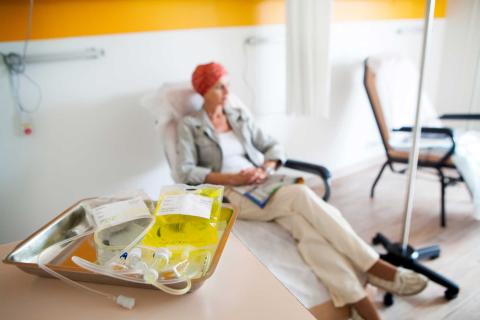
A phase 3 clinical trial conducted in China tested 210 patients with advanced non-small cell lung cancer—the most common type—to see whether the time of day when immunotherapy and chemotherapy were administered influenced their effectiveness. The data indicate that, on average, those who received therapy after 3 p.m. did not see their cancer worsen for 5.4 months. In contrast, those who received it before that time did not see their cancer worsen for an average of 11.7 months, almost twice as long. Overall, response rates were 56.2% and 69.5%, respectively. The results, published in Nature Medicine, suggest that scheduling therapy early in the day may offer a simple and cost-free way to improve treatment efficacy.

The American Psychiatric Association has unveiled the new features of the forthcoming Diagnostic and Statistical Manual of Mental Disorders (DSM) in five articles published in The American Journal of Psychiatry. Among the highlights are the proposed change of name — it will become the Diagnostic and Scientific Manual — and the intention for it to be more dynamic, incorporating biomarkers for diagnosis and integrating the socioeconomic, cultural and environmental determinants of health. According to the authors, the aim is to enable a more personalised and inclusive clinical practice, aligned with scientific rigour. The most recent update was published in 2022 with the DSM-5-TR, and specialists are currently unaware of the date of the next edition, as they reported during a briefing with journalists.
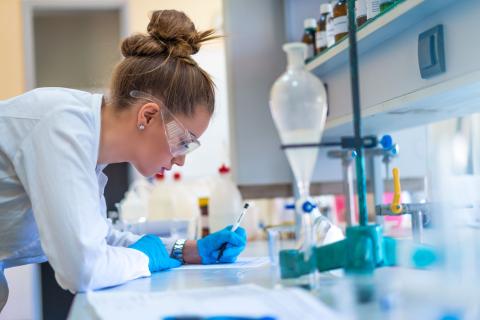
Before being published, studies written by female researchers are spend a longer time in peer review than articles by male authors, according to an analysis of more than 36 million publications in biomedical and life science journals. The median peer review time is between 7.4% and 14.6% longer for female authors than for male authors in most disciplines, says the analysis published in PLoS Biology.

An international team has used a type of artificial intelligence (AI) to identify the most important factors influencing cancer survival in almost every country in the world. The study provides information on policy improvements or changes that could be implemented in each nation to have the greatest impact. In general, access to radiotherapy, universal health coverage, and economic strength emerged as common and important factors. Furthermore, information for each country, including Spain, can be accessed through an online tool. The results are published in Annals of Oncology.
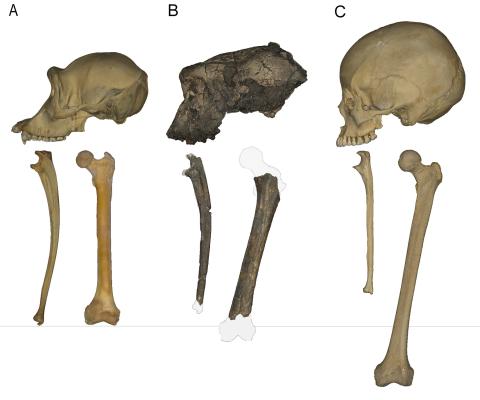
A US research team presents new evidence in Science Advances that Sahelanthropus tchadensis was a biped that evolved from an ape ancestor. Based on the study of two partial ulnas and a femur, they conclude that S. tchadensis—the oldest known hominid, which lived around 7 million years ago—had bones similar in size and shape to those of chimpanzees, but with a relative proportion more similar to that of hominids.

A longitudinal study published in the journal International Gambling Studies states that boys and girls who play videogames with gambling-like elements, such as tool boxes, are more likely to gamble with real money in the future. The lead researcher warns that, to protect minors, regulation should go ‘beyond loot boxes, including a variety of gambling-like elements, such as social casino games, prize wheels, and gambling videos.’
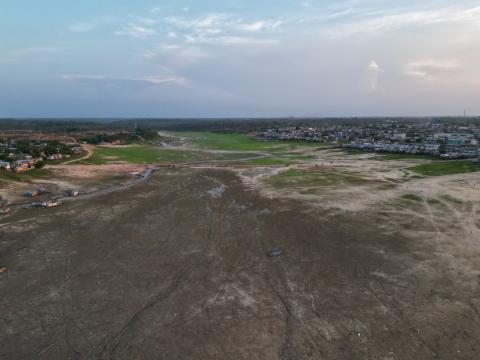
Lakes are considered sentinels of climate change, although most research has focused on temperate regions. An international team analysed 10 tropical lakes in the central Amazon during the 2023 drought, which caused high mortality among fish and river dolphins. Using satellite data and hydrodynamic models, the authors show how intense drought and a heatwave combined to raise water temperatures: five of the 10 lakes experienced very high daytime temperatures, exceeding 37°C. Specifically, temperatures in the shallow waters of Lake Tefé soared to 41°C—hotter than a thermal bath. The study is published in Science.

The use of hormonal contraceptives is associated with a small increase in the risk of breast cancer—one additional case of cancer for every 7,752 women who use these drugs—according to a Swedish study. The risk varies depending on the type of hormones administered, and is slightly higher with the use of contraceptives containing desogestrel. The study, published in JAMA Oncology, analyses data from a national registry between 2006 and 2019, with more than two million women aged between 13 and 49.