The heat at the World Cup in North America will exceed safe playing conditions for several matches
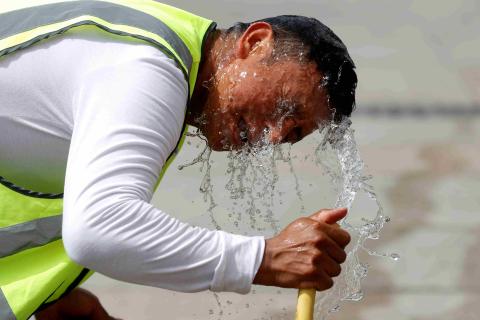
An analysis by World Weather Attribution shows that players and fans face a much higher risk of extreme heat and humidity at the 2026 FIFA World Cup—to be held from June 11 to July 19 in North America—compared to the 1994 tournament held on the same continent. The report analyzes the likelihood that each of the 104 matches to be played in Canada, the United States, and Mexico will meet the safety guidelines set by the FIFPRO players’ union. Nearly a quarter of the matches will be played when conditions exceed a wet-bulb temperature of 26°C—an index that measures the body’s ability to cool itself—which requires cooling breaks. In addition, five matches will exceed the 28°C threshold for this indicator—equivalent to 38°C in dry heat—a limit set by FIFPRO for postponing matches.
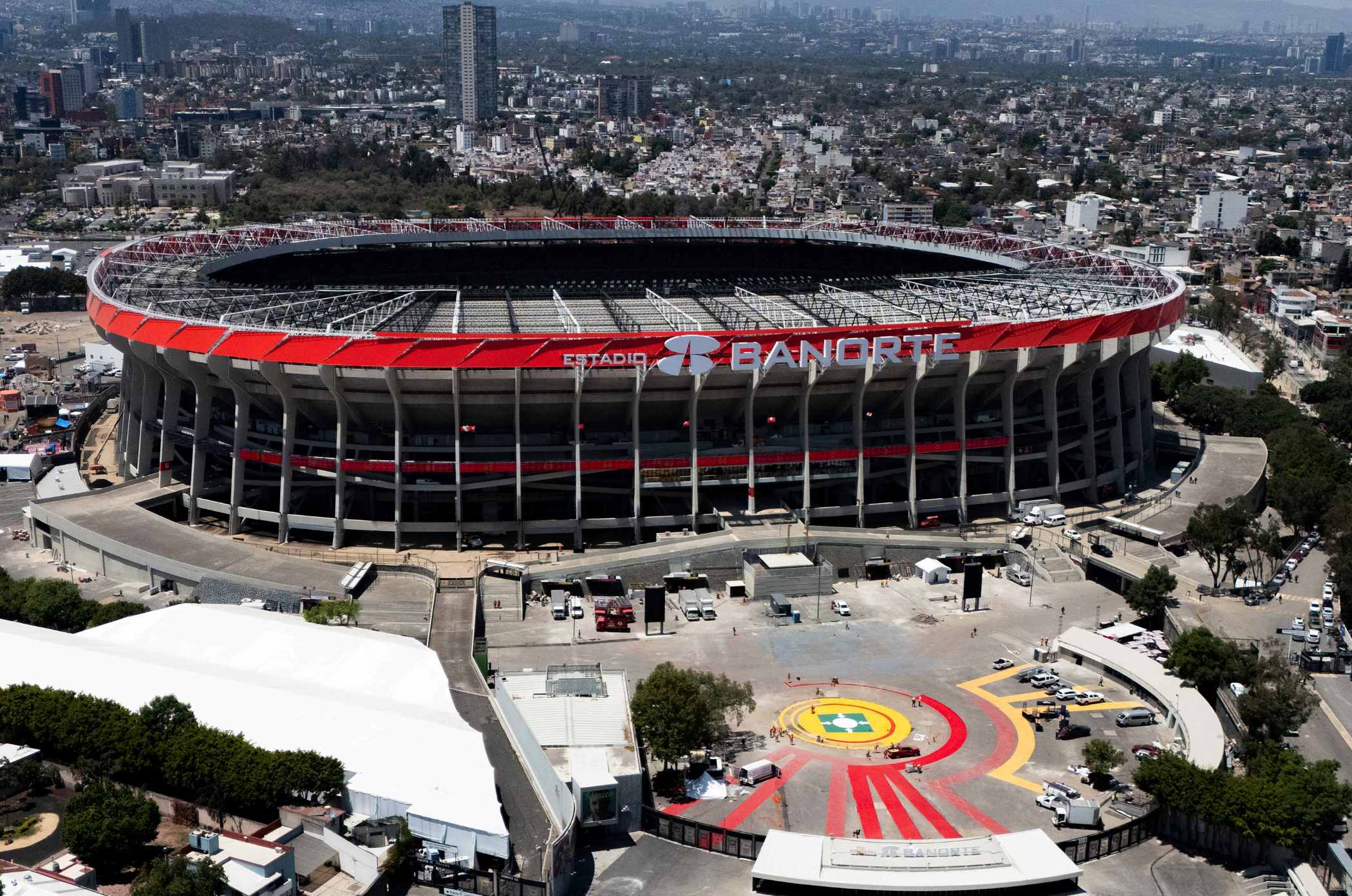
Aerial photograph showing the Azteca “Banorte” Stadium on 27 March 2026, in Mexico City (Mexico). EFE/Tomas Pérez.
Víctor Resco_calor mundial FIFA
Víctor Resco de Dios
Lecturer of Forestry Engineering and Global Change, University of Lleida and researcher at Agrotecnio
When we wrap an old-fashioned mercury thermometer in a damp cloth, we measure what is known as the ‘wet-bulb temperature’, which tells us how much the temperature drops due to humidity. In other words, it indicates the body’s ability to regulate its temperature through sweating. There comes a point, when the wet-bulb temperature exceeds 26–28 °C, at which we have difficulty regulating our temperature through sweating, which can trigger a breakdown in our body.
The last time the World Cup was held in the United States was in 1994. During that World Cup, the wet-bulb temperature exceeded 26 °C and 28 °C for 21 and three days, respectively. These figures are expected to rise to 26 and five days for wet-bulb temperatures above 26 and 28 °C. This represents a significant increase in risk for players and also for spectators.
We have already seen several players collapse due to high temperatures at sporting events. If we continue to fail to mitigate climate change, we should at least start adapting to it. As far as sporting competitions are concerned, this means changing the dates of these tournaments, as happened in Qatar four years ago. We should also rethink the venues and play more matches in New York and fewer in Dallas, for example.
In 2022, Kylian Mbappé and the then PSG manager, Christophe Galtier, laughed off the proposal to travel by train to Nantes (400 km from Paris) to play a match, thereby emitting fewer emissions than travelling by plane. I hope you enjoy the matches, and hopefully the World Cup will help to ensure that measures are taken to curb the growing threat posed by climate change.
Julien Périard . calor mundial FIFA EN
Julien Périard
Professor and Director of the Institute for Sport and Exercise Research at the University of Canberra (Australia)
The research examines the issue of heat stress at the 2026 World Cup in North America to determine the potential for environmental conditions to influence player health and performance, as well as the heat stress risk to fans. It also compares historical data from the previous World Cup hosted in the USA in 1994 to identify if climate change has exacerbated heat stress risk over that time.
The statistical approaches used are contemporary. One caveat in the modelling of wet-bulb globe temperature (WBGT) is the omission of black globe temperature, or radiant heat when exposed to direct sunlight. Radiant heat is a key component of WBGT, particularly during afternoon games when solar load is at its highest and humidity typically at its lowest. Notwithstanding, the article highlights the increased risk of environmental heat stress during the 2026 World Cup at different levels of WBGT based on FIFPRO recommendations (26ºC WBGT for cooling and hydration breaks; 28ºC WBGT for match postponement) and the current FIFA guidelines (32ºC WBGT for cooling and hydration breaks). These observations are aligned with other recent reports of greater exposure to more sever conditions than previously. This body of work highlights the need for forward planning of large events like the World Cup, as well as proactive implementation of heat policies. Given that WBGT accounts for environmental conditions only and does not incorporate sport-specific metabolic heat production or the insulating effects of clothing, which can limit heat loss, more advanced models and predictive tools are required to ensure athlete safety. Beyond the health and safety of athletes is that of the fans, which may be required to sit in direct sunlight under hot conditions for protracted amounts of time.
Rubén del Campo - calor mundial FIFA
Rubén del Campo
Spokesperson of the State Meteorological Agency (AEMET)
The World Weather Attribution study focuses on analyzing trends in heat and humidity. This is important because the human body does not respond to high temperatures in the same way under low-humidity conditions as it does under high-humidity conditions. In the latter cases (intense heat and high humidity), the physiological response to combat heat (sweat evaporation) is less effective, and prolonged exposure to these conditions can pose a health risk.
The previous World Cup in North America was held in 1994, and since then, the global average temperature has risen by between 0.5 and 0.7 °C. This figure may not seem very high, but it accounts for about half of the warming observed over the past century and a half. Furthermore, since the mid-1990s, when the previous World Cup was held in the U.S., the effects of climate change have intensified across the globe, particularly heat waves.
What this study highlights is that both athletes and spectators at major events are now subjected to more extreme environmental conditions related to heat and humidity than they were three decades ago; therefore, adaptive strategies (cooling, match schedules, etc.) must take this new reality into account.
Ernesto Rodríguez - mundial FIFA EN
Ernesto Rodríguez Camino
Senior State Meteorologist and president of Spanish Meteorological Association
The international initiative World Weather Attribution (WWA) has so far worked on quantifying the impact of climate change on extreme weather events and their consequences (primarily relating to extreme rainfall and temperatures, and wildfires) in real time. This study is novel because:
- It looks ahead to a future event, namely the 2026 FIFA World Cup.
- It explores an indicator that combines temperature and humidity, both of which affect the human body’s ability to regulate its internal temperature through perspiration and heat exchange.
- It estimates how extreme heat stress conditions have changed due to anthropogenic climate change.
Approximately 25% of all matches are likely to be played when conditions exceed a threshold of the indicator studied here, at which the global players’ union (FIFPRO) recommends that matches should include breaks to allow players to cool down. In as many as 5% of matches, a threshold will be exceeded at which conditions are considered unsafe for play and postponement is recommended. Of course, all this refers to open-air stadiums and not to enclosed stadiums with air conditioning, although in the latter cases, related activities outdoors and during transport may also adversely affect spectators.
This study highlights and helps to communicate the importance of anthropogenic climate change in increasing the intensity and frequency of heat-related extremes, and the need to adopt adaptation measures in order to maintain certain activities.
Joyce Kimutai et al.
- Report
- Peer reviewed
- Modelling