Scientists

Scientists

For science to make the news in a rigorous and attractive way, good sources are needed. Because access to scientific knowledge is a citizen's right.

¿Qué me ofrece?

Help science make headlines with rigour and context. We’ll ask you for feedback on current events in your field and you can participate in the briefings we’ll organise. Need to prepare for an interview? Use our resources on science communication.

Icono
Cómo trabajamos

We’re on the lookout for controversial information about science and we will contact you for your analysis in your area. Do you want to be part of our sources? Contact us. We will not pass your contact details on to anyone else. You can find out more about how we work here.   

Título qué me ofrece
What we offer you
Título cómo trabajamos
How we work

Reactions to study linking rare genetic variants with left-handedness

10 % of people are left-handed, which occurs when the right cerebral hemisphere is more dominant for the control of that hand - whereas it is the left hemisphere in the case of right-handed people. To investigate the genetic basis of this laterality, scientists in the Netherlands have analysed genome data from 350,000 people in the UK biobank for rare genetic variants associated with this phenomenon. The heritability of left-handedness due to rare coding variants was low, at less than 1%. The research, published in Nature Communications, suggests that one gene - TUBB4B - is 2.7 times more likely to contain rare coding variants in left-handed people. 

0

Reactions: Analysis of 2013 data estimates that most CAP funds go to emissions-intensive animal production

Eighty-two percent of EU farm subsidies articulated through the Common Agricultural Policy (CAP) financed high-emission livestock production in 2013, according to a study published in Nature Food. The analysis, which is based on data from 1986 to 2013 - the latest year for which records are available - highlights that 82% went to animal products in the following proportions: 38% directly and 44% for feed production. The authors note that food of animal origin is associated with 84 % of the greenhouse gases emitted by EU food production. 

0

Reaction: heat waves move more slowly, which exacerbates their effects

A study has analysed data on heat waves from 1979 to 2020 and concludes that their propagation speed has decreased over the last 40 years due to anthropogenic causes. In addition, their frequency, intensity and travel distance have increased. According to the authors, "longer-lasting and slower-moving heat waves will cause more devastating effects on natural and social systems in the future if [greenhouse gases] continue to increase and effective mitigation measures are not taken". The findings are published in the journal Science Advances.  

0

Reaction: Experts call in 'Science' for mandatory standards to ensure ventilation in public buildings

The journal Science publishes an article in which international experts demand mandatory standards to monitor three parameters within public buildings: carbon dioxide (CO2), carbon monoxide (CO), and PM2.5 (fine particles that can enter the lungs and bloodstream), as well as to ensure proper ventilation.


0

Reactions: some progesterone analogues increase risk of developing a type of brain tumour, study finds

A French study involving more than 100,000 women has found a link between long-term use of some progesterone hormone analogues - used for contraception or hormone replacement therapy - and an increased risk of developing meningioma, a generally benign type of brain tumour. The results are published in The BMJ. 

0

Reactions: Review details impacts of climate change on global wine production

Some 90 % of coastal and lowland wine-growing regions in Spain, Italy, Greece and southern California are at risk from extreme events, such as excessive droughts and heat waves, according to a review published in Nature Reviews Earth & Environment. The article summarises the expected changes and the adaptations that wine producers will need to make.   

0

Reaction to study suggesting that accumulation of 'junk proteins' could be a possible cause of ALS

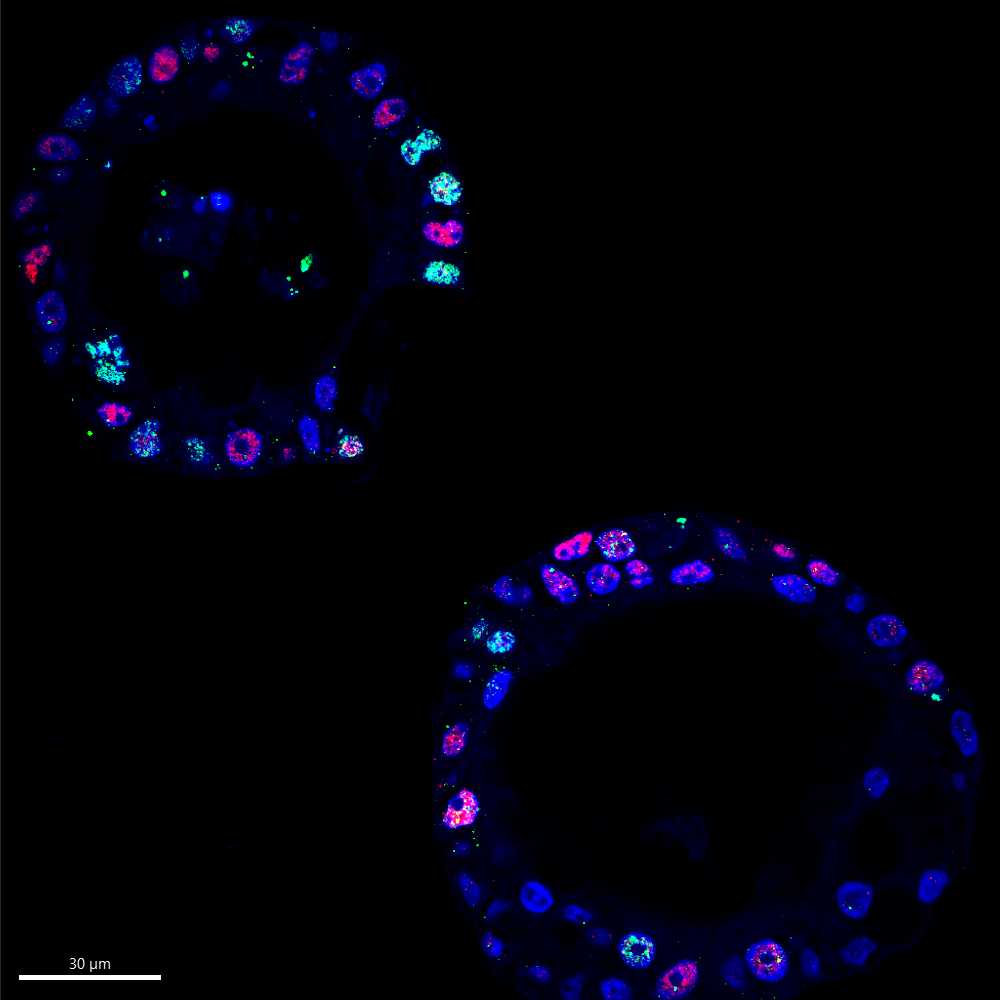
In a paper published in Molecular Cell, a team of researchers led by the Spanish National Cancer Research Centre (CNIO) provides the first evidence that a possible cause of the hereditary type of ALS - familial ALS - is the accumulation in motor neurons of 'junk proteins', proteins with no function that accumulate unduly and prevent the cell from functioning properly. In addition, the research describes a new causal factor in the ageing process: nucleolar stress, which encompasses alterations in organelles called nucleoli. 

0

Reactions to study predicting large drop in global fertility rate

Work by the Institute for Health Metrics and Evaluation (IHME) estimates that by 2050, more than three quarters (155 out of 204) of countries will not have fertility rates high enough to maintain their population size. The percentage will rise to 97% by the year 2100. The authors warn that national governments must plan for the threats these changes will pose to the economy, food security, health, the environment and geopolitical security. The findings are published in the journal The Lancet. 

0