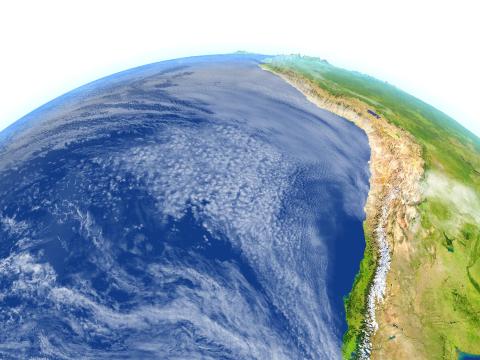
After three years in which the planet's climate has experienced a phenomenon known as La Niña, in 2023 it gives way to its opposite, El Niño. This has led the World Meteorological Organization to warn that this event, added to climate change, could cause the 1.5 °C limit to be exceeded in the next five years. But what are these "children", how do they affect Spain, how long will they last?

Heat waves and other events accentuated by climate change affect health, especially for the most socially vulnerable people. To counteract these effects, mitigation and adaptation plans for cities are designed based on scientific evidence, the implementation of which belongs to the local political sphere. Two experts in urban health and climate governance analysed these problems and their possible solutions in a briefing organised by SMC Spain.
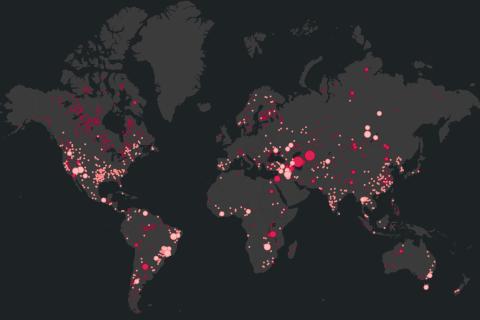
Fifty-three per cent of the world's largest lakes and reservoirs have lost water between 1992 and 2020, according to a study combining satellite observations, climate data and hydrological models. These results suggest a global trend towards more extensive desiccation than previously thought, in both arid and humid areas, the research team says in the journal Science. The authors also share an online map that includes trends for large freshwater reservoirs in Spain, such as the Iznájar (Córdoba), Mequinenza (Zaragoza) and Valdecañas (Cáceres) reservoirs.
Most high-income countries do not have prostate cancer screening programmes for their entire population; prostate-specific antigen (PSA) tests can be done on an individual basis. In an opinion piece published in The BMJ, a group of urologists and epidemiologists specialised in prostate cancer screening argue for restricting the use of PSA tests to avoid over-detection and over-treatment.

On 5 April, the UK National IHR Focal Point informed WHO of an increase in severe myocarditis in neonates associated with enterovirus infection in Wales (UK). Between June 2022 and April 2023, ten hospitalised neonates with a positive PCR for enterovirus were found to have myocarditis. Seven of the ten cases were confirmed to have coxsackievirus B3 or coxsackievirus B4. As of 5 May 2023, one patient remained hospitalised and one patient had died. According to the WHO statement, although enterovirus infections are common in neonates and infants, the reported increase in myocarditis - inflammation of heart muscle tissue - with severe outcome associated with enterovirus infection is unusual.

The WHO has issued a new guideline advising against the use of non-sweetened sweeteners for weight control or to reduce the risk of noncommunicable diseases. The recommendation is based on the findings of a systematic review published in 2022.

A study led by the University of Montpellier (France) and with the participation of CREAF has analysed the causes of the decline in bird populations in Europe. To do so, they have compiled data on 170 bird species in 28 countries, including Spain, over 37 years. The overall decline is 25 %, and the decline in populations in agricultural areas is around 60 %. The main cause in both cases, according to the research, is intensive agriculture, although climate change is also an important factor. The results are published in the journal PNAS.
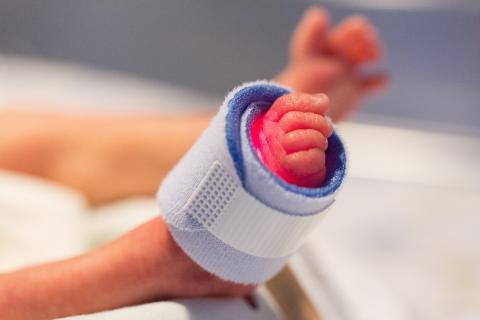
A journal article published in the BMJ discusses the potential adverse effects associated with GSK and Pfizer's RSV vaccines in the face of a possible increase in preterm births and argues for further study of the risks and benefits of the drug.
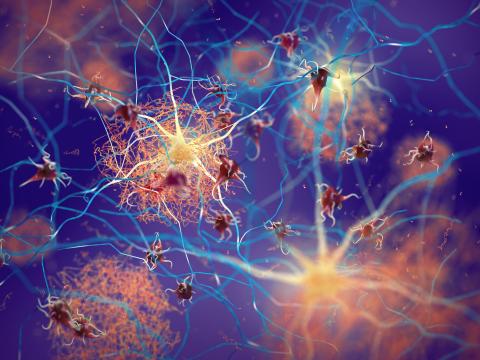
Research led by scientists at Harvard Medical School (USA) has isolated small aggregates of amyloid from the brains of post-mortem Alzheimer's patients. The achievement has made it possible to study the structure of these "clumps", which exist outside plaques and are considered highly toxic, and to test their effect on synapses. In addition, the authors have shown that the drug lecanemab, recently approved by the FDA, is able to bind to them and help neutralise their action. The results are published in the journal Neuron.

In a series of three articles and a companion article - collected in Nature Biotechonology - Nature publishes the first draft of the human pangenome reference, which contains highly detailed data from 47 genetically diverse individuals. The first human genome was published more than two decades ago but, being from a single person, it does not represent human diversity, whereas the pangenome refers to the gene pool of our entire species. The ultimate goal of the Human Pangenome Reference Consortium project is to include genetic material from 350 people by 2024. It is hoped that this data will allow more clinically relevant genetic variants to be identified.