
A Japanese research team has announced in Nature Communications that it found uracil, a component necessary to form RNA, in a small sample collected from the asteroid Ryugu. According to the authors, these results indicate that these molecules of prebiotic interest were commonly formed on asteroids like Ryugu, and reached the early Earth with the impact of these bodies. The sample was collected by the Japan Aerospace Exploration Agency's Hayabusa2 robotic spacecraft, which returned to Earth in December 2020.
In 2018, a regulation was introduced in Scotland that establishes a minimum sale price for alcoholic beverages, proportional to the amount of alcohol they contain. A study has analysed the health impact of this measure. According to the authors, alcohol-related mortality has decreased by 13% since then, especially among the most disadvantaged socio-economic classes. The results are published in the journal The Lancet.

Space debris and satellites orbiting close to Earth have proliferated in recent years. Two articles in Nature Astronomy warn of their impact on light pollution. In the first, a team calculates the increase in the brightness of the night sky and warns of the effect on ecosystems and astronomical observations from Earth. In the second, which is a commentary, the authors call for limiting the production of artificial light and the number of satellites in orbit, calling on the scientific community to take on the big space and big light companies. Both articles are co-signed by Salvador Bará, from the Agrupación Astronómica Coruñesa, and the second by Fabio Falchi, from the University of Santiago de Compostela.

Almost a decade after the previous edition, the Intergovernmental Panel on Climate Change (IPCC) has presented the synthesis report of its sixth assessment cycle (AR6) on Monday in Switzerland. "This synthesis report underlines the urgency of taking more ambitious action and demonstrates that, if we act now, we can still secure a sustainable and liveable future for all," said IPCC chair Hoesung Lee.
The document includes the main findings of the three Working Group reports of 2021 and 2022 (Physical basis, Impacts, adaptation and vulnerability and Mitigation of climate change) and the three special reports of 2018 and 2019 (Global warming of 1.5°C, Climate change and land, Ocean and cryosphere in a changing climate). With this document, which is primarily addressed to policy makers, the IPCC closes its sixth assessment cycle.
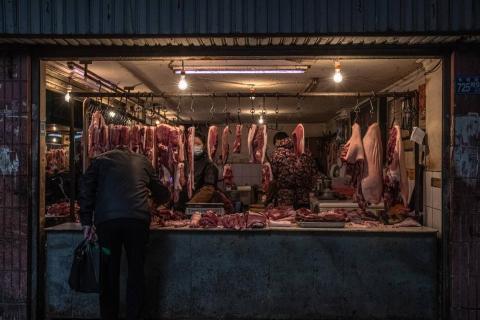
A French researcher has found genetic data showing that raccoon dogs, civets and other mammals susceptible to the infection with SARS-CoV-2 in the early 2020s in the Wuhan market in China. The findings have been presented to the Scientific Advisory Group on the Origin of Emerging Pathogens (SAGO), an expert group convened last year by the World Health Organisation. The data, collected by a team of Chinese scientists, were held in a database called GISAID, but had not been publicly reported and have been withdrawn. SAGO explained the origin of this data and the history of this research in a statement on 18 March.
Swedish research involving more than 6,000 male footballers in the country's top division (between 1924 and 2019) indicates that they were 1.5 times more likely to develop a neurodegenerative disease compared to the population analysed who were not involved in professional football. Unlike outfield players, goalkeepers did not have this increased risk, which, according to the authors, supports the hypothesis that impacts to the head when striking the ball could explain the increased risk. The study is published in The Lancet Public Health.
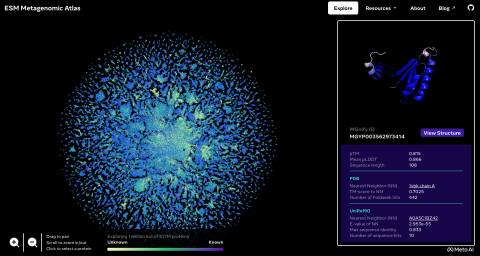
Meta has applied language modelling to predict the structure of a large collection of proteins. The model, called ESMFold, is being presented this week in the journal Science after being published on the bioRxiv preprint article server in December 2022. EMSFold is faster than similar models such as AlphaFold, developed by Google's DeepMind and EMBL's European Bioinformatics Institute. The sequences of more than 617 million proteins - of which more than a third are predicted with a high degree of confidence - are published in open access in the ESM Metagenomic Atlas.
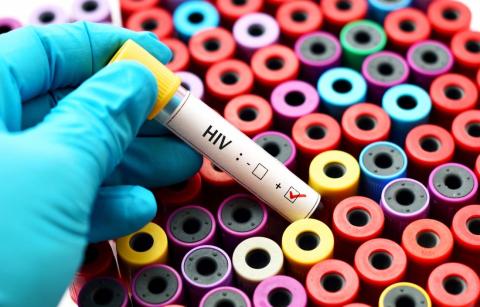
A study published in the journal Cell shares the case of the "New York patient", a woman with leukaemia and HIV who identifies as "mixed race" and has been free of the virus since 2017. She would be the first woman to be cured of the virus after a bone marrow transplant and there are now four such cases, along with patients in Düsseldorf, Berlin and London. The method involves transplanting HIV-resistant stem cells, this time from umbilical cord blood.

A study in mice has found that high doses of the sweetener sucralose can reduce the immune response and, under certain laboratory conditions, alter its action against infections or tumours. The results are published in the journal Nature.
A review of studies of more than 700,000 women has estimated that those who follow a Mediterranean diet faithfully have about a 25% lower risk of cardiovascular disease and death. This effect is greater than had been found in other studies, many of which included a majority of men and did not differentiate results by sex. According to the authors, the study underscores the need for this type of targeted analysis. The results are published in the journal Heart.