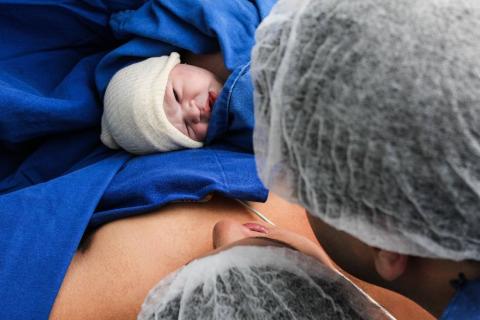
A study carried out by researchers at the University of Amsterdam Medical Centres on more than 220,000 children examines the academic performance at age 12 of children born by induced labour. According to the authors, a reduction in scores was observed in infants born after induced labour between 37 and 41 weeks. The research is published in Acta Obstetricia et Gynecologica Scandinavica.

On Tuesday, Russian President Vladimir Putin announced that he is suspending Russia's participation in the New START treaty, a bilateral agreement signed with the United States that has been in force since 2011 and that limits and controls the nuclear armament of both powers.

22% of children worldwide have signs of disordered eating behaviours, a figure that rises to 30% for girls alone, according to an analysis published in JAMA Pediatrics led by researchers from the University of Castilla-La Mancha. The research brings together 32 previous studies that used the same diagnostic tool (the SCOFF questionnaire). It includes in total more than 60,000 children aged 6 to 18 in 16 countries. The article also states that the risk of disordered eating behaviour increases with age and Body Mass Index (BMI). Disordered eating behaviours include behaviours such as ‘weight loss dieting, binge eating, self-induced vomiting, excessive exercise, and the use of laxatives or diuretics (although not to the level to warrant a clinical diagnosis of an eating disorder)’.
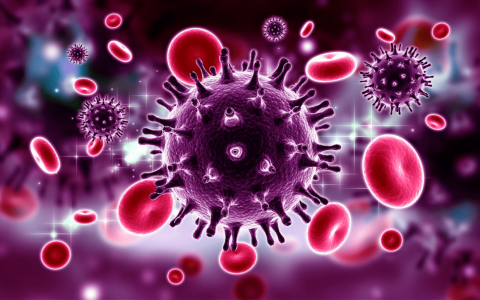
A virological and immunological follow-up confirms that a third patient has been cured of HIV nine years after receiving a bone marrow transplant for myeloid leukaemia, and four years after stopping his antiretroviral treatment. This case of the Düsseldorf patient, similar to two previously documented in Berlin and London, is detailed in a Nature Medicine publication by an international consortium coordinated by the IrsiCaixa AIDS Research Institute and the University Medical Center in Utrecht, the Netherlands. The patient was diagnosed with HIV in 2008 and in 2011 with leukaemia, for which he received the transplant in 2013.

A study estimates that household energy expenditure has increased by 62.6 to 112.9 % in 2022, following the Russia-Ukraine conflict. This represents an increase of 2.7 to 4.8 % of overall household expenditure. The analysis, published in Nature Energy, warns that this increase could push between 78 and 141 million people worldwide into extreme poverty.
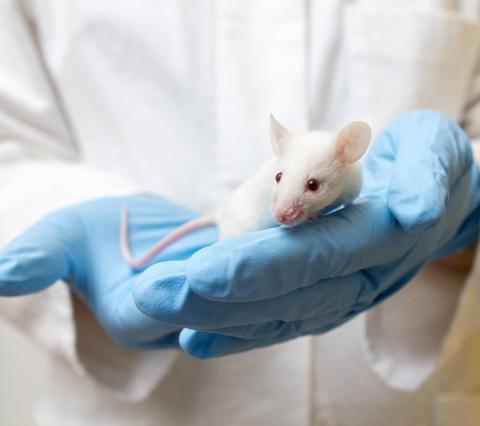
A study in mice found that a molecule called TDI-11861 works as an oral male contraceptive, temporarily blocking sperm function. The paper, published in Nature Communications, presents the research as a step towards an on-demand male contraceptive drug: the user could take a birth control pill before sex and become fertile again the next day. Four co-authors of the study have founded a company in the US to develop such products.

Outbreaks of highly pathogenic H5N1 avian influenza have been increasing since 2021, but in recent months have evolved into what is known as a 'global panzootic' affecting all types of wild birds and new continents, but also mammals such as mink and sea lions. At a briefing organised by SMC Germany, in collaboration with SMC UK and SMC Spain, three experts discussed the situation, the level of risk and possible next steps.

Research analysing data from more than 100,000 people in the UK followed for nearly a decade concludes that a higher intake of free sugars - added sugars or those naturally present in honey and fruit juice - is associated with an increased risk of cardiovascular disease. The study is published in BMC Medicine.

A study published in the journal PLOS Digital Health has analysed ChatGPT's performance on the US Medical Licensing Exams (USMLE). The results indicate that it could pass or come close to passing the exam.

A study in California has found that 41% of deaths in the first year of life are due to genetic diseases. This percentage is higher than previously thought. According to the authors, strategies to improve neonatal genetic diagnosis may reduce infant mortality, as this diagnosis is sometimes missed or arrives late. The research is published in JAMA Network Open.