
An international team of researchers has conducted a meta-analysis of 137 clinical trials involving nearly 90,000 people to assess the migraine efficacy of 17 available drugs. Their conclusions are that four drugs in the triptan group are more effective and cheaper than newer drugs such as gepants or lasmiditan, and that the efficacy of the latter is comparable to that of paracetamol and most anti-inflammatory drugs. The results are published in The BMJ.

An international team of researchers has analyzed various data sources and scientific literature and identified 3,601 chemical substances in human samples such as blood, urine or breast milk that are known to be in contact with food, for example, because they are used in packaging. According to the authors of the study, “this work shows that food contact materials are not completely safe, even if they comply with regulations, because they transfer known substances to food". The research is published in the Journal of Exposure Science and Environmental Epidemiology.

A new web-based tool analyzes major cities like Tokyo, Paris, Atlanta or Barcelona to see how close they are to the 15-minute city concept, where residents take less than those minutes to access essential services by foot, bike, or public transport. According to the study, published in Nature Cities, few cities fit this concept. The tool, which is freely accessible and uses data from 10,000 cities sourced from the open-source packages GeoPandas and OpenStreetMap, could be useful for developing action plans and estimating how viable it is to transform certain cities to follow this model.
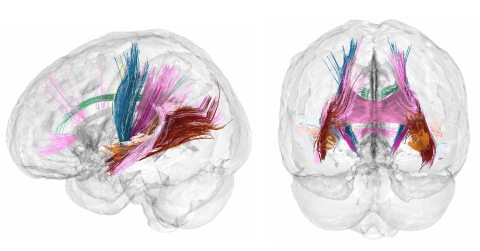
A study describes changes in a woman's brain during and after pregnancy, including a ‘pronounced’ decrease in grey matter volume and cortical thickness, and an increase in ventricular volume and cerebrospinal fluid. Some of the changes are maintained in the postpartum period; others reverse within months. The team performed 26 MRI scans and blood tests on one mother, from pre-conception until two years postpartum, and publish the results in Nature Neurology.

A study published today in Science Advances suggests that there may be a correlation between having a high body mass index (BMI) in childhood and developing schizophrenia later in life. However, the study also indicates that having a higher BMI in adulthood may be correlated with a lower risk of schizophrenia and obsessive-compulsive disorder.

People who believe in conspiracy theories can revise their opinions after conversing with a chatbot that presents them with "sufficiently compelling evidence", according to a study of 2,190 people published in Science. Other hypotheses propose that believing in conspiracies satisfies important psychological needs and that offering information is not enough to change these beliefs.

A study published today in Nature Genetics examines AstraZeneca's new tool, MILTON, which uses artificial intelligence to detect biomarkers and predict diseases before they are diagnosed. According to this analysis, the tool could potentially predict over a thousand diseases and may even be more effective than the currently available polygenic risk scores.

A new study presented at the annual meeting of the European Association for the Study of Diabetes (EASD), being held in Madrid from September 9-13, and published simultaneously in the New England Journal of Medicine (NEJM), has revealed that liraglutide, an anti-obesity drug, is safe and effective in children aged 6-12 years.

Ahead of World Suicide Prevention Day on September 10, a new series of six articles published in The Lancet Public Health calls for a shift in the narrative. Experts advocate for moving beyond framing suicide solely as a mental health issue, emphasizing the need to recognize the impact of social factors such as poverty, debt, addiction, homelessness, abuse, discrimination, and social isolation.

Brain maturation is measured by the thickness of the cortex. It is known that stress accelerates cortical thinning, which is associated with a higher risk of developing neuropsychiatric disorders. A study published in PNAS analyzes MRI data collected from 160 adolescents before COVID-19 and from 130 of them after the measures implemented during the pandemic. The comparison of brain structure before and after reveals accelerated cortical thinning which, measured in terms of equivalent years of brain development, was 4.2 years in girls and 1.4 years in boys.brain maturity