
The risk of an adverse reaction to a vaccine and the risk of not evacuating a flood-prone area have something in common: both are risks, though very different ones. While one refers to a numerical probability, the other refers to a potential consequence. Here, we explore six different meanings of the word “risk” in headlines. These examples will help you explain risks more clearly, or demand that clarity from others.

A report by the Lancet Commission on Self-Harm highlights that at least 14 million episodes of self-harm occur each year - particularly among young people and in low- and middle-income countries. The paper argues that their impact has been neglected by governments globally and sets out a series of recommendations to reduce their incidence.

US researchers have published a model showing that ice in the mid-latitudes of Mars could allow photosynthetic life to develop. Its thickness and composition would attenuate harmful ultraviolet radiation, but allow sufficient visible light to pass through. The work is published in the journal Communications Earth & Environment.

An international report by the Global Commission on the Economics of Water says the water crisis puts more than half of the world's food production at risk by 2050. It also claims that it threatens an average loss of 8% of GDP in countries around the world by 2050, with losses of up to 15% in the lowest income countries.
A review published in the journal Science Advances examines how the expansion of marine aquaculture - the farming of aquatic organisms in the ocean - can lead to risks, such as degradation of the marine environment. The study is part of a special issue of the journal dedicated to this growing industry.
Chronic pain is a public health problem that affects almost one in six people in Spain, with very different origins and characteristics. Specialists in psychology and pain explain what it is, how it is treated, what consequences it has for those who suffer from it and how to learn to live with it.
A study conducted in several Spanish provinces has analysed the relationship between breast cancer and obesity in more than 2,000 postmenopausal women. Its findings are that around 40% of estrogen receptor positive (ER+) cases - the most common type - can be attributed to excess body fat (above 40%). This is much higher than the 10% considered attributable when only a high body mass index is taken into account. The results are published in the Journal of Epidemiology and Community Health.

The Twinning project is a UK-based initiative that organises soccer-based programmes, with the collaboration of professional clubs such as some Premier League clubs, to improve the mental and physical health of prisoners. Research has studied the behaviour of more than 670 of these participants and a group that did not participate, as well as collecting data related to the possible reintegration of those who were in this programme. According to the authors, who publish their research in the journal Nature Human Behaviour, ‘the results indicate that social bonding is associated with better behaviour in prison and a greater willingness of host communities to support reintegration efforts’.

Two of the Nobel Prize winners in Chemistry 2024 are employees of Google DeepMind, who caused significant unrest among their colleagues in May. Hassabis and Jumper announced in *Nature* the results of their AlphaFold 3 model, with applications in drug design; however, they published it in a closed manner, with reviewers not even having access to the system, which contradicts the basic principles of scientific publication. We risk having the transformative potential of AI controlled by big tech companies.
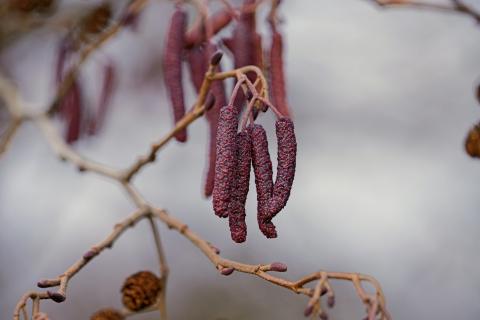
An international team of researchers has reconstructed the first European seed dispersal network based on a literature review. The data indicate that extinction threats and demographic changes in the animals that disperse them have resulted in 30% of plant species having their dispersers listed as 'high concern.' The lack of seed dispersal could hinder the recovery of declining plant populations. The authors publish their results in the journal Science.