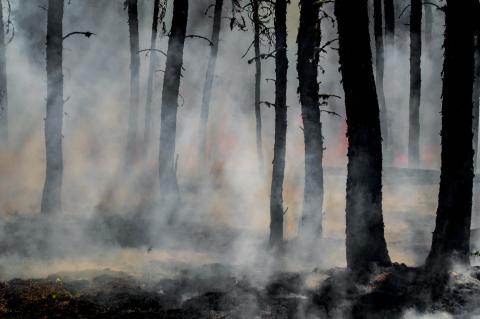
More frequent and severe wildfires increase the temperature of the exposed land surface one year after the fire, according to an analysis of forest satellite data collected from 2003 to 2016. In recent decades, large wildfires have doubled or tripled their average size in eastern Spain, Canada, and western United States, as noted in the research published in Nature. The authors call for consideration of these effects on surface temperature when managing forests.

Newborns with Down syndrome, as they grow, face a higher risk of developing leukemia compared to those without the syndrome. An international team has sequenced the genes of more than 1.1 million cells from fetuses with and without Down syndrome, and it has discovered that the extra chromosome 21 they have alters the way DNA is packaged inside cells. According to the authors, whose research is published in Nature, this difference affects the regulation of certain genes and may contribute to the development of leukemia.

Canadian research analysing more than 863,000 births over almost a decade, including 806 surrogacy deliveries, concluded that the risk of severe maternal morbidity was 7.8% in gestational carriers, more than three times the risk of conception without assisted reproductive techniques and almost twice the risk in IVF pregnancies. The three most frequent complications were severe postpartum haemorrhage, severe pre-eclampsia and puerperal sepsis. The study is published in the Annals of Internal Medicine.

The Anthropocene began around 1952, according to a study based on geological records from 137 sites around the world, published in PNAS. The term ‘Anthropocene’ describes the period in Earth's history when human activities have drastically altered the planet; in March, an international scientific body dismissed it as an official geological epoch.

An international team of researchers has conducted a study in which they conclude that increased activity of the brain amygdala detected by magnetic resonance imaging is associated with an increased risk of developing symptoms of depression in pregnant women. According to the authors, the finding could be used to identify those who are more likely to suffer from postpartum depression. The results of the study, still in prepublication form and not yet peer-reviewed, will be presented at the ECNP (European College of Neuropsychopharmacology) conference.

The regulatory agencies for medicines in the United States and Europe have issued statements informing about a possible risk of developing certain types of tumors following CAR-T cell immunotherapy treatment. What do we know so far? What is the real risk? Does the benefit-risk balance still hold? Has anything changed after these alerts? We answer these questions with expert opinions and the data currently available.

A study has analyzed changes in the Earth's average global surface temperature over the past 485 million years and has discovered oscillations ranging from 11°C to 36°C, representing a variation of up to 25°C. The research concludes that temperatures during the Phanerozoic underwent more fluctuations than previously thought and shows a correlation between CO2 and changes in Earth's temperature. The article, published in the journal Science, combines thousands of data points with a modeling method used for weather forecasting.

A review published in Science estimates that 2 % of rodent species are hyper-reservoirs, hosting and transmitting more than three pathogens to humans, including Lyme disease, Lassa fever and plague. In addition, the authors estimate that 10 % of rodents are reservoirs for one to three pathogens. These are especially so-called synanthropic species - animals that live close to humans and are able to adapt to these environments - such as black rats, Norway rats and house mice.

Men and women could develop Alzheimer’s disease through different mechanisms. Understanding these differences is essential to design specific interventions and to treat the disease effectively. In an article published in Alzheimer’s and Dementia: The Journal of the Alzheimer’s Association, a group of researchers, including myself, have highlighted the urgency of adding a sex and gender approach to the studies on this pathology.

The number of people who suffer a stroke, die from it or live with a subsequent disability has risen sharply worldwide between 1990 and 2021, according to a study published in The Lancet Neurology. The contribution of high temperatures to ill health and premature death from stroke has increased by 72% since 1990. For the first time, the study reveals the high contribution (on par with smoking) of particulate air pollution to subarachnoid haemorrhage (fatal brain haemorrhage).