Antimicrobial resistance caused around 5 million deaths worldwide in 2019. The use of vaccines has the potential to reduce these deaths - 515,000 fewer deaths per year - according to a report published by the WHO. The work focused on 24 pathogens and 44 vaccines, licensed by regulatory agencies, in clinical development or in development. By counting existing vaccines alone, antibiotic use could be reduced by 142 million daily doses per year.
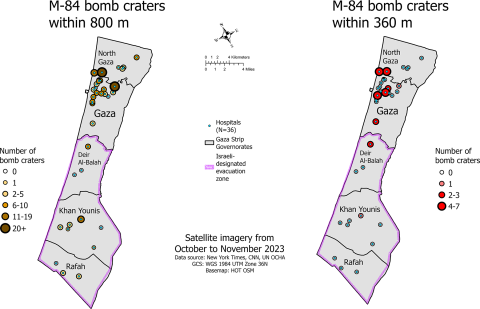
A study has used geospatial data and satellite imagery to analyze the number of MK 84 bombs dropped by the Israeli army in the Gaza Strip between October 7 and November 17, 2023 that detonated near hospital infrastructure. Of the 36 existing hospitals, 30 of them had suffered at least one explosion within 800 meters. According to the authors of the paper, which is published in PLOS Global Public Health, the research “reveals concerns about indiscriminate shelling near hospital infrastructure, which enjoys special protection under international humanitarian law.”

Research published in Nature analyses future scenarios in which the 1.5°C temperature limit set in the Paris Agreement would be temporarily exceeded, assuming that temperatures could be lowered in the long term by reducing carbon dioxide emissions using different techniques. The authors stress that exceeding this threshold would have irreversible consequences for the Earth system in key areas such as biodiversity, sea level and carbon stocks. ‘Only rapid, short-term emission reductions are effective in reducing climate risks,’ they stress in the paper.

The Royal Swedish Academy of Sciences has awarded the Nobel Prize in Chemistry 2024 on the one hand to David Baker for computational protein design, which makes it possible to construct proteins with functions not present in nature. On the other hand, jointly to Demis Hassabis and John M. Jumper of Google DeepMind, for the development of AlphaFold2, which allows the structure of the 200 million known proteins to be predicted at high speed.

Despite considerable advances in the discovery and development of new cancer drugs, there are significant disparities in both the availability and timeliness of these medicines around the world, with the poorest countries being left out, according to an analysis published in the journal BMJ Global Health. According to the study, few new cancer drugs were launched in low- and lower-middle-income countries, and the gap between rich and poor countries widened over the three decades between 1990 and 2022.

The Royal Swedish Academy of Sciences has awarded the Nobel Prize in Physics 2024 to researchers John J. Hopfield and Geoffrey E. Hinton for discovering the foundations that enable machine learning with artificial neural networks. Hinton for discovering the foundational basis that enables machine learning with artificial neural networks. This technology, inspired by the structure of the brain, is behind what we now call ‘artificial intelligence’.

The risk of HIV transmission through breastfeeding is very low, but it is not non-existent in women living with HIV who have undetectable levels in their blood. Now, for the first time, a study published in the Annals of Internal Medicine has been able to test for HIV in the milk of two such women: one elite controller (who maintains low viral loads without antiretrovirals) and another who had been on treatment for years. Although small amounts of viral DNA were found, the virus was not infectious. The results show that such testing is possible and help confirm the very low risk of transmission.

The increase in human life expectancy may be slowing down, according to an analysis of data from nine regions around the world, including Spain, over the past three decades published today in Nature Aging. The accelerated rates of increase in life expectancy observed in the 20th century have slowed, especially after 2010: children born in recent years have a relatively low probability of reaching 100 years of age. The authors suggest that there is no evidence that a radical extension of life expectancy has occurred or will occur in the 21st century.
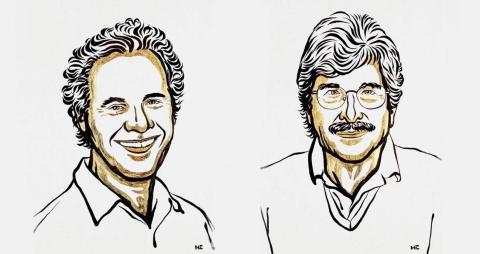
The Karolinska Institute has awarded the Nobel Prize in Medicine or Physiology to Victor Ambros and Gary Ruvkun for the discovery of microRNAs, small RNA fragments that do not contain instructions for making proteins but instead participate in the regulation of gene expression. Their role is fundamental in processes such as cell differentiation, and their alteration can influence diseases like cancer.

International research in which CREAF is participating estimates that more than 1,300 bird species will disappear over the next two centuries, which is more than double the number of extinctions recorded to date - 610 species have disappeared in the last 130,000 years. The study, published in the journal Science, shows that, for island endemics, the proportional losses have been and will be even greater. The authors warn that when a species becomes extinct, its role in the ecosystem may disappear with it.