climate change

climate change

climate change

Failure of the Oceans Treaty?

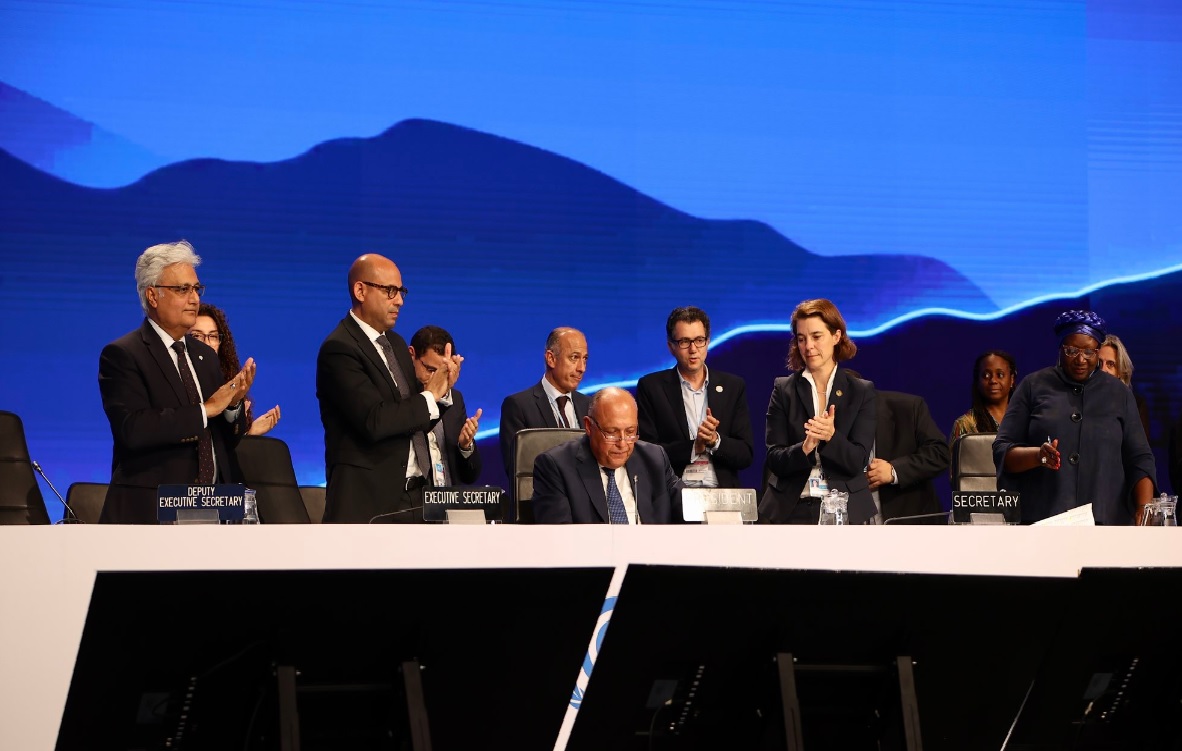
The so-called Oceans Treaty, promoted by the UN, has had to be stopped, not concluded, due to the impossibility of reaching an agreement. After a process of more than 16 years, only half a session separates us from the word failure. Let us hope that the resumption of the last session, possibly in the spring of 2023, will offer us the agreement we all wish for.

1

Reaction to study claiming that the frequency of heatwaves will increase this century

Research estimates that the rise in global average temperatures could approach 2 ˚C by 2050. The study, published in Communications Earth and Environment, estimates that by 2100 many people living in tropical regions will be exposed to dangerously high levels of heat on most days of the year. In addition, deadly heatwaves, which are currently rare in mid-latitudes, could occur every year in these areas.

Reaction to the study that calculates how much emissions would be reduced if people cycled like in the Netherlands

A study published in the journal Communications Earth & Environment (from Nature Research) estimates that a reduction of 686 million tonnes of carbon emissions could be achieved each year if the world followed a cycling pattern similar to that of the Netherlands (2.6 kilometres per day). This is about 20 % of the carbon emissions produced by the global passenger car fleet in 2015.

0

Europe in drought: a perfect storm

The lack of rainfall and the decrease in available water resources have caused 47% of European territory to be on drought pre-alert and 17% to be on alert. The lesser experience of northern countries in managing this phenomenon and the high vulnerability of southern regions mean that this drought is having a major impact on various economic sectors, in addition to supply cuts.

1

Reaction: unprecedented floods and droughts make risk management more difficult

A study published in Nature shows that, in the face of climate events such as extreme droughts and floods, which are likely to increase as a result of climate change, risk management strategies may not be sufficient. The study analyses 45 pairs of data on such events with an average of 16 years between them, including the Barcelona floods of 1995 and 2018.

0

The territorial model and forest fires: a change in vision is needed

We are finding fires that exceed the maximum extinguishing capacity of the resources that are being asked to control them by 4 or 5 times, which is nonsense, as well as recklessness. We should ask ourselves about our territorial, social and economic model for dealing with this situation so that we do not leave the fire-fighting services with this intractable and unsolvable problem.

1

One more chapter in the never-ending story of wildfires

Our landscapes urgently need proactive, adaptive, integrative management to enable rural development that is compatible in the medium and long term with biodiversity and ecosystem services. It is clear that unilateral and reactive management in the face of the challenges of global change is neither effective nor intelligent. And inaction is also a decision.

1