meteorology

meteorology

meteorology

Weather conditions conducive to wildfires have worsened significantly in Spain and France
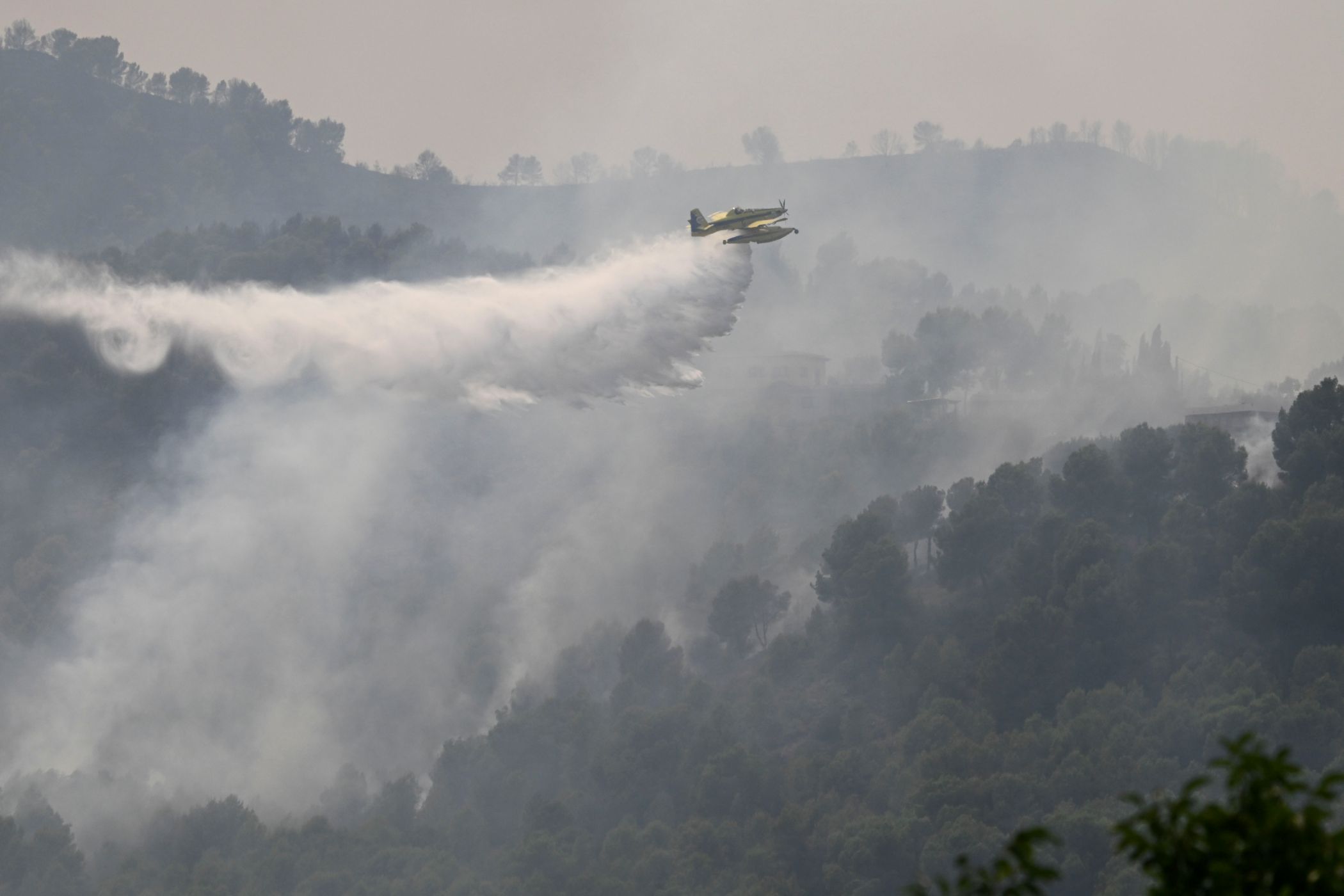
In some areas of Spain and France, the intensity of weather conditions that favour wildfires — heat, drought and wind — increased by up to 50 per cent between 2016 and 2025, compared with the period between 1981 and 2010. This is one of the conclusions of a study carried out by a team including Spanish researchers, which analysed national records of forest fires in southern Europe – Spain, Portugal, France, Italy and Greece – alongside meteorological and climatic data from 1981 to 2025. The data, published in Scientific Reports, show that the number of days with conditions conducive to fires also increased in some areas of these countries. However, the annual number of fires over the last decade was 40 per cent lower than in the 1981–2010 period in all countries – a decline which, according to the authors, is consistent with a reduction in fires caused by humans, driven by stricter regulations.

0

Researchers are exploring the possibility of whitewashing marine clouds to alter climate events such as El Niño

Targeted marine cloud bleaching is a proposed geoengineering method to increase the amount of light reflected by clouds and reduce the heat reaching Earth. A US team has taken advantage of a natural experiment that generated this effect—through aerosols produced by the massive Australian bushfires of 2019 and 2020—to study the possibilities and risks of using it to modify an extreme weather event like El Niño. According to the models used in the study, its early application could weaken El Niño, but it could also have unintended consequences, such as altering the timing and increasing the magnitude of the subsequent La Niña event. The work is published in Science Advances.

0

Weather forecasts warn that El Niño could return this year with greater intensity

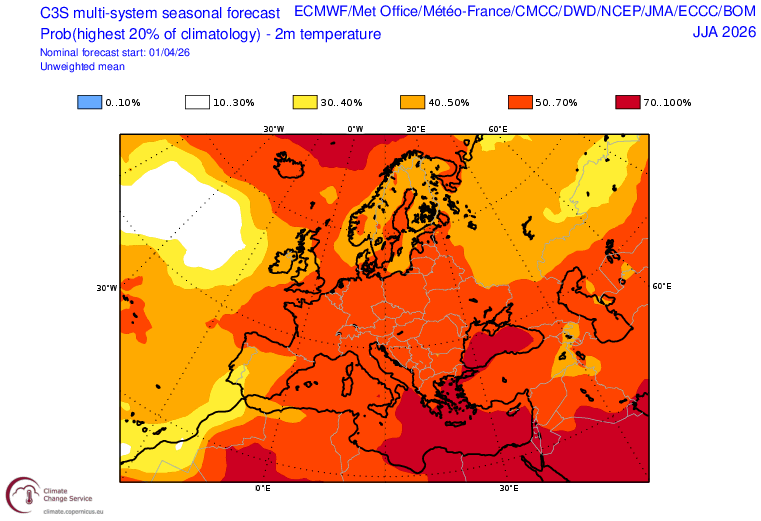
The latest forecasts from the European Centre for Medium-Range Weather Forecasts (ECMWF) suggest that there is a likelihood that the phenomenon known as El Niño will return this year and that it will do so with greater intensity. In Europe, for June through August, the forecast indicates a slight tendency toward below-average precipitation in the northeast of the continent. As for the Iberian Peninsula, temperatures are expected to exceed the top quintile of the seasonal average. Although it is not yet certain that this will occur, forecasts for the coming months will either confirm or rule it out.

0

The frequency of planetary wave resonances has tripled in the last 70 years, according to a study

Over the last seven decades, the frequency of planetary wave resonance phenomena has tripled, according to a study published in PNAS. The authors argue that the risk of extreme weather events related to this phenomenon during the northern hemisphere summer could be higher than current model estimates.

0

Are extreme weather events the only threat from climate change?

Despite the overwhelming evidence, climate change denialist messages have found a loudspeaker in certain social networks. Of importance in this disinformation strategy is the attempt to discredit the scientific community in general, and climate researchers and weather forecasters in particular. However, the study of climate and the prediction and monitoring of adverse weather phenomena is in the interest of society as a whole.

1

A global report documents the spiral of meteorological and climatic impacts that occurred in 2024

Clear evidence of human-induced climate change reached new heights in 2024 and some of the consequences will be irreversible for hundreds or thousands of years, according to the World Meteorological Organisation's State of the Global Climate 2024 report. It also highlights the enormous economic and social impacts of extreme weather conditions.

0

New machine learning model outperforms current weather forecasts

A paper published in Nature presents a machine learning model capable of producing reliable probabilistic weather forecasts. The model, called GenCast, outperforms the most efficient traditional medium-range weather forecasting and is also able to better predict extreme weather, tropical cyclone tracks and wind energy production. 

0

A study reveals temperature fluctuations of up to 25ºC over the past 485 million years

A study has analyzed changes in the Earth's average global surface temperature over the past 485 million years and has discovered oscillations ranging from 11°C to 36°C, representing a variation of up to 25°C. The research concludes that temperatures during the Phanerozoic underwent more fluctuations than previously thought and shows a correlation between CO2 and changes in Earth's temperature. The article, published in the journal Science, combines thousands of data points with a modeling method used for weather forecasting.

0