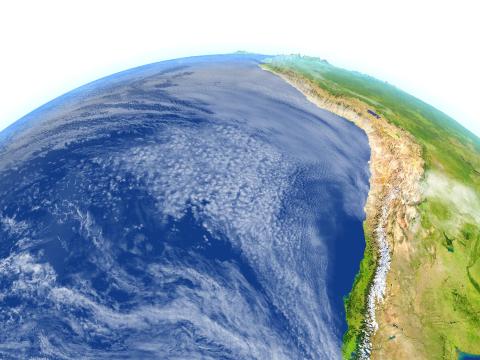
The wildfires that ravaged Australia in the austral summer of 2019-2020 and the large amount of biomass aerosols released into the atmosphere as a result allowed John Fasullo's team at the US National Center for Atmospheric Research (NCAR) to link these exceptional emissions to ocean cooling caused by the increased reflection of solar radiation by clouds resulting from this exceptional release of biomass aerosols. The team also discovered that this cooling intensified the La Niña phenomenon that formed in 2020.
While geoengineering had previously been proposed as a solution—not without side effects and uncertainties, and shrouded in ongoing controversy—to curb global warming for decades, the authors of this study propose using these same techniques on a shorter timescale, such as that associated with phenomena like El Niño, for use over a limited period and as a tool to help mitigate the impacts of these specific events, which would almost certainly cause significant damage. The authors point out that economic analyses associated with large-scale El Niño events have cost society trillions of dollars in damages, and any attempt to reduce their magnitude, for example, by reducing the brightness of the marine stratocumulus layer by increasing the concentration of certain aerosols, could be explored as a way to mitigate the personal and material losses associated with these extraordinary events.
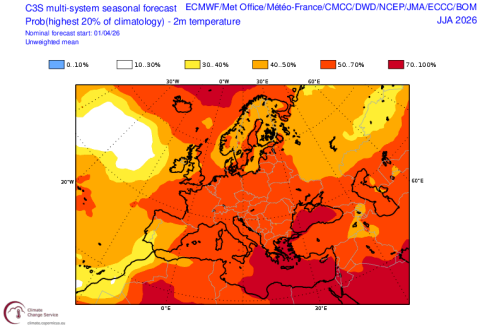
This work constitutes a theoretical exploration, based on numerical experiments, of the feasibility of using geoengineering techniques to control extraordinary events linked to natural variability, and not to the current anthropogenic climate change, as is the case with exceptional El Niño events. Currently, as we are immersed in an El Niño event that seasonal predictions estimate could be of exceptional intensity, this work, which has simulated past extraordinary El Niño events and how they would have evolved if an increase in the brightness of marine stratocumulus clouds had been forced using aerosols, is very timely. This study concludes that the impacts of El Niño would have been mitigated, with this mitigation being more effective the earlier the aerosol release occurred after the event began.
This is a novel proposal for the use of artificial cloud modification techniques, which have been used for many years, with highly variable success rates, to suppress hail, increase precipitation, etc., on much smaller scales than those proposed here. In this case, the aim is to intervene to change the radiative balance over a much larger area, thousands of kilometers across, and on timescales of months or seasons. It is expected that this work will lead to many other studies exploring ways to mitigate extreme weather and climate events, the source of so much human and material loss.