1. The blackout that left us in the dark
Hard to forget. On Monday, April 28, millions of people on the Iberian Peninsula were left without electricity, a situation that lasted for several hours in many provinces and forced us to search for flashlights, batteries, and transistor radios. When the power came back on, at SMC we asked experts for their reactions to help us understand what had happened. Their assessments reached half the world.

2. Melatonin for sleep is not harmless
Although it was published in November, it is already the second most read content: taking melatonin supplements to treat insomnia for more than a year is associated with an increased risk of heart failure for five years after use. “This challenges the perception of melatonin as a benign chronic therapy and highlights the need for a prospective controlled trial to clarify its safety profile,” said Carlos Egea, president of the Spanish Federation of Sleep Medicine Societies, in the reactions we gathered.
3. A new class of antibiotics: lariocidin
In March, the journal Nature published a study in which an international team announced that it had found a candidate for a new class of antibiotics, lariocidin. This could be effective against multidrug-resistant bacteria, one of the great challenges facing biomedicine today. “Finding a compound with antimicrobial activity and a truly novel mechanism of action is a milestone in the fight against resistant bacteria,” said Rafael Cantón, head of the Microbiology Service at Ramón y Cajal University Hospital.
4. The risks of drugs used to treat obesity
Last year, the most-read content was about Wegovy, a drug for treating obesity, starting to be sold in Spanish pharmacies. So it comes as no surprise that this top ten also includes an article about these drugs. Research warned that the use of GLP-1 analogues is associated with benefits, but also health risks, such as an increased risk of gastrointestinal conditions or hypertension. The findings were based on the analysis of data from 2.4 million people.
5. Back to the Earth's core
Whether it's because it's so inaccessible or because of Jules Verne's novels, it's clear that you love the Earth's core. A 2024 study described how the core had slowed down its rotation speed in recent decades. In February of this year, the same team added in Nature Geoscience that it has also undergone changes in shape over the past two decades. Until now, it was thought that both processes could not occur at the same time.
6. Trump links paracetamol and autism without any evidence
At the end of September, the Washington Post reported that Trump and his team were going to advise pregnant women against taking paracetamol due to a hypothetical link with autism. Following the press conference in which this was announced, the WHO and the EMA emphasized that this information was contrary to scientific evidence. In addition, the Trump administration also proposed leucovorin as a treatment for autism, something that is highly debated by the scientific community. [Due to another controversial decision, Trump will reappear a little later in this list.]
7. AI that translates like an interpreter?
Alongside drugs to treat obesity, artificial intelligence (AI) and its many applications have dominated hundreds (if not thousands) of scientific studies this year. Among them, Meta's design of an AI model capable of instant voice-to-voice translation caught our attention. The sources consulted agreed that it could not replace flesh-and-blood interpreters: “Real-time interaction, the expressiveness of the translated voice, and the mitigation of gender bias and toxicity remain open challenges,” emphasized Maite Martín, professor of Computer Science at the University of Jaén.
8. Measles cases on the rise in Spain
In addition to reactions, we are pleased that this list includes the briefing we organized in February due to the increase in measles cases in our country. Noemí López Perea (CNE-ISCIII), Fernando Moraga-Llop (AEV), and María del Mar Tomás (SEIMC) explained to the journalists in attendance the causes of the spike, the seriousness of the situation, and what measures to take. In the rest of the world, cases are also increasing and are now higher than those recorded before the pandemic.
9. Trump orders his country to leave the WHO
Donald Trump is once again among the most read news stories due to another controversial decision he signed immediately after being sworn into office: the withdrawal of the United States from the World Health Organization. “This decision puts the health and lives of many people at risk, especially children, and particularly in vulnerable areas where the WHO's role is critical,” emphasized África González, professor of immunology at the University of Vigo.
10. Baby KJ, star of the year
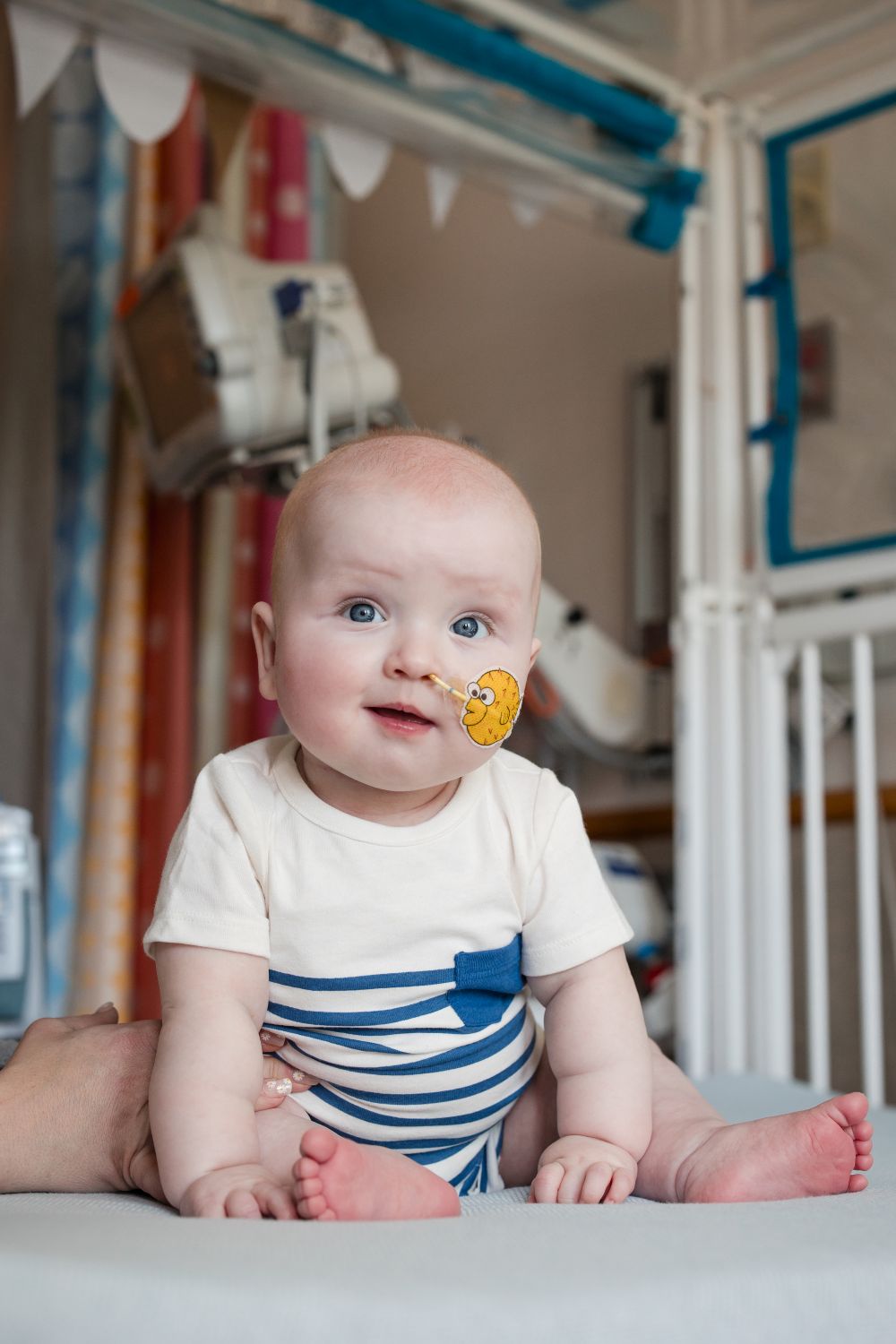
Nature magazine has included this baby in its ranking of people who have made their mark on science in 2025. KJ Muldoon, born in Philadelphia (USA), made headlines after receiving an innovative gene-editing therapy to treat his ultra-rare disorder: his body had difficulty processing proteins. ‘The important issue that the article does not address is the accessibility and affordability of these treatments for children with these diseases,’ reflected Lluís Montoliu, a researcher at the National Centre for Biotechnology.
And we close the list with our sights set on 2026, which will be the Year of Women Farmers. We hope that next year will be full of good journalism and scientific evidence. Happy New Year!