Nobel Prize in Chemistry Awarded to Kagan and Soai for Solving a Mystery of Asymmetry in the Chemistry of Life
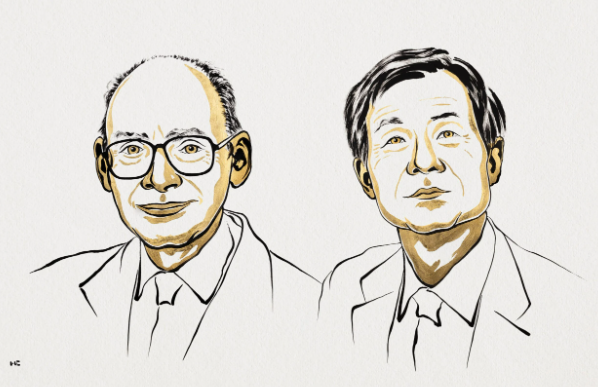
Some molecules, such as amino acids, exist in two forms that are mirror images of each other. However, living organisms contain only one of these mirror images. For a long time, the origin of this chemical asymmetry was a mystery to chemists. The Royal Swedish Academy of Sciences has awarded the Nobel Prize in Chemistry to Henri B. Kagan and Kenso Soai “for the discovery of nonlinear effects and autocatalysis in asymmetric organic synthesis,” which provided the solution to this enigma.
Raquel Pérez Herrera - Nobel Química 2026
Raquel Pérez Herrera
I have been greatly pleased to learn of the recent awarding of the Nobel Prize in Chemistry to Henri Kagan and Kenso Soai for their contributions to the discovery of nonlinear effects and autocatalytic phenomena in asymmetric organic synthesis. This recognition highlights the enormous importance of a field of research to which I have dedicated the last 23 years of my life: asymmetric catalysis. The prize reinforces the need and relevance of deepening our understanding of the mechanisms governing molecular chirality, an area with direct implications for the development of new compounds, materials, and pharmaceutical applications. Furthermore, it demonstrates how fundamental research in chemistry can help explain such fascinating and intriguing questions as the origin of homochirality in nature. Those of us who work in this field feel this recognition is very close to our hearts.
Javier Adrio - Nobel Química 2026
Javier Adrio
Chiral molecules can exist in two forms that are mirror images of each other. The fact that living organisms use almost exclusively one of these two forms (a phenomenon known as homochirality) is one of the great mysteries of chemistry and has captured the attention of the scientific community for decades.
The 2026 Nobel Prize in Chemistry, awarded to Professors Henri B. Kagan and Kenso Soai, recognizes their fundamental contributions to understanding how homochirality can arise and propagate. The discovery of nonlinear effects and autocatalytic processes in the context of asymmetric catalysis has made it possible to develop reactions capable of directly generating and amplifying a specific chiral form over its mirror image.
This well-deserved award highlights the extraordinary importance of asymmetric catalysis, not only as an essential tool for the synthesis of pharmaceuticals and other molecules of interest, but also as a means of addressing some of the most profound questions in chemistry.
Saúl Alberca Manzano - Nobel Química 2026
Saúl Alberca Manzano
I value this award because it recognizes research with a long history in organic chemistry, and it has been given to two people who have figured out why nature is homochiral—why it can choose between two paths in terms of chirality but chooses only one. Until then, no one had been able to solve this mystery. It was a mystery.
Our DNA and our proteins are chiral in nature; there are two possibilities—they are molecules that rotate light in only one direction or the other—and it was a mystery why some do so and others do not. These two individuals have figured out why nature is homochiral.
Nazario - Nobel
Nazario Martín
This is a magnificent Nobel Prize that stands out due to the brilliance of the laureates. It truly answers one of the great questions in science: why is nature chiral? The answer was there, and only they saw it. The reaction itself can generate homochirality through non-linear and autocatalytic effects—contributions made by Kagan and Soai, respectively.
Andrés - Nobel Q
José María Andrés García
Non-linear effects, discovered and rationalized by Henri Kagan, have represented a fundamental advance in the understanding of asymmetric catalysis. These phenomena demonstrate that the relationship between the enantiomeric purity of the catalyst and that of the product is not always proportional. In some cases, catalysts of moderate enantiomeric purity can yield products with much higher enantiomeric excesses, whereas in others, the opposite occurs. Beyond their practical significance, non-linear effects serve as a valuable tool for investigating reaction mechanisms and the nature of catalytically active species.
Meanwhile, the asymmetric autocatalysis developed by Kenso Soai stands as one of the most remarkable discoveries in modern chemistry. In this process, the reaction product participates in the formation of new molecules of itself, acting as a catalyst and causing its concentration to rise as the reaction proceeds. Most extraordinary is the fact that an initially minute enantiomeric difference can be amplified to yield a product of exceptionally high enantiomeric purity. This phenomenon offers a unique experimental model for studying the origins of homochirality—that is, the predominance of one of the two enantiomeric forms in the biomolecules of living organisms (such as amino acids and carbohydrates)—arising from virtually negligible chiral fluctuations.
261007_Uxue_Nobel quimica 2026
Uxue Uria Pujana
A well-deserved award. Life is chiral and, in the case of many essential molecules, such as amino acids or sugars, nature has predominantly favoured one of the two possible enantiomers. How did this come about? That remains one of the great questions concerning the origin of life. And this is where the work of Kagan and Soai is so fascinating: Kagan showed that the relationship between the enantiomeric purity of a catalyst and that of the product need not be linear, and that small differences in chirality can be amplified in surprising ways. Soai took this amplification to an extraordinary level through asymmetric autocatalysis, in which the product itself catalyses its own formation, making it possible for an initially almost negligible difference between two enantiomers to ultimately result in practically just one. A spectacular example of how something very small can end up making a huge difference.