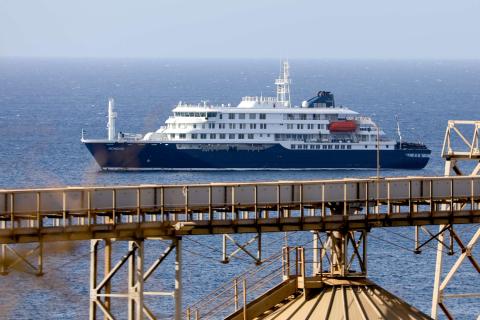
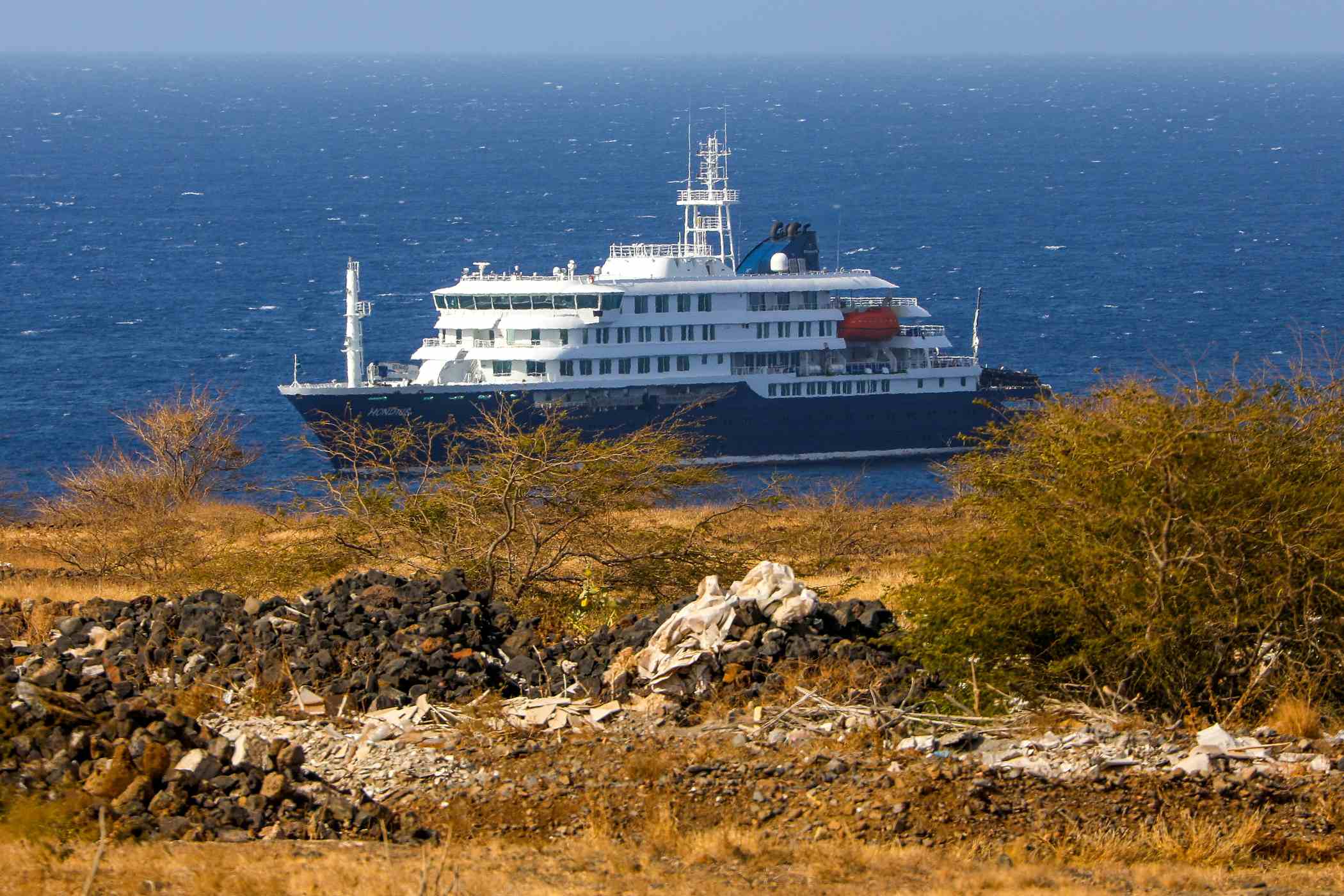
Spain will receive the cruise ship with an outbreak of hantavirus to the Canary Islands, following a request from the WHO and the EU
The Ministry of Health has announced that Spain will receive the MV Hondius in the Canary Islands “in accordance with international law and the spirit of humanitarianism”. The government is thus responding to a request from the World Health Organisation (WHO) and the European Union for the cruise ship, which is travelling from Argentina and has an outbreak of hantavirus on board, to dock in the Canary Islands, in the port of Granadilla, Tenerife. The European Centre for Disease Prevention and Control has assessed which passengers should be evacuated from the ship to Cape Verde, where it is currently located, and which will continue on to the Canary Islands. Once there, they will be examined and transferred to their home countries in accordance with safety protocols. The cruise ship is expected to arrive in the archipelago in three or four days.
José Miguel Cisneros - hantavirus Canarias EN
José Miguel Cisneros Herreros
Head of the Clinical Unit for Infectious Diseases, Microbiology and Parasitology at the Virgen del Rocío University Hospital and a researcher with the CIBERINFEC Bacterial Resistance and Antimicrobials Group and the Seville Institute of Biomedicine (IBiS)
It is right for the Spanish government to allow the ship to dock in our country, because the passengers and crew need to disembark and be assessed, and we are the nearest country with a healthcare system capable of doing so.
Salvador Peiró - hantavirus Canarias
Salvador Peiró
Epidemiologist, researcher in the Health Services and Pharmacoepidemiology Research Area of the Foundation for the Promotion of Health and Biomedical Research of the Valencian Community (FISABIO) and Director of Gaceta Sanitaria, the scientific journal of the Spanish Society of Public Health and Health Administration (SESPAS)
The decision to take the vessel on board is entirely reasonable from the point of view of public health, healthcare and international cooperation. We are not dealing with a pathogen capable of spreading within the community, and Spain’s health and public health services are well equipped to manage this situation.
Proper management is based on the treatment (in isolation) of cases, the monitoring of close contacts and the epidemiological assessment of the outbreak’s progression, without the need for general measures at the population level. Transferring the vessel to a healthcare setting with epidemiological and care capabilities improves outbreak control and the management of potential cases, reduces uncertainty and allows for the implementation of measures proportionate to the risk.
Antoni Trilla_crucero va a Canarias
Antoni Trilla
Senior Consultant at the Department of Preventive Medicine and Epidemiology at Hospital Clínic in Barcelona, Professor of Public Health and Dean of the Faculty of Medicine and Health Sciences at the University of Barcelona
There is no risk to the general public. If the ship docks in the Canary Islands, health authorities and public health services can conduct a new assessment of the health status of all passengers and crew and determine who should receive medical care and/or be medically evacuated to their countries of origin, and who can remain on the ship and continue the scheduled voyage, while being properly informed of the precautions they must follow and the possible warning signs that would indicate the need to consult medical services.
If hantavirus pulmonary syndrome is suspected, patients should be transferred to an emergency department or an intensive care unit for evaluation, monitoring, and supportive treatment.
In the context of the current outbreak, passengers on board and the crew should practice frequent hand hygiene, remain alert for symptoms of hantavirus, and actively monitor for symptoms for approximately 45 days.
The crew must ensure proper cleaning and adequate ventilation on the ship.
National and international coordination is of the utmost importance to adequately monitor the progression of this outbreak.
Adrian Hugo Aginagalde_crucero va a Canarias
Adrian Hugo Aginagalde
Spokesperson of the Spanish Society of Preventive Medicine, Public Health and Health Management (SEMPSPGS) and Associate Professor of Public Health at the University of Deusto
No country that receives a request for assistance may refuse it, except due to a lack of resources. Spain has a Network of High-Level Isolation Units (UATAN) and a Public Health Surveillance Network for monitoring potential contacts.
Hantaviruses are transmitted through environmental exposure from rodents and, in rare cases, following very close contact with an infected person (secondary transmission). The case fatality rate in Argentina in 2025 was 25%, and there have been few outbreaks where tertiary transmission has been sustained—that is, where one case has infected another person, who then infects yet another.
Pending the results of the investigation, based on the onset of symptoms and the incubation period, the leading hypothesis is that exposure prior to boarding was the source of the infection, though exposure during the voyage—whether on shore excursions to the islands or in the cabin of an infected passenger—cannot be ruled out.
Now that the sick individuals have been evacuated, it is time to assess, monitor, transfer, and maintain the quarantine of those who were in very close contact with these sick individuals.
It is possible that the epidemiological information may change in the coming hours, but based on what is known, experience with previous situations, and drills conducted, this scenario would still represent a very low level of risk (the lowest of the four levels) for the Spanish population. That said, within the cruise ship, it cannot be ruled out that some contacts may develop symptoms in the coming days and require evacuation.
Mar Faraco - hantavirus Canarias EN
Mar Faraco
Former president and current secretary of the Association of Foreign Medical Doctors (AMSE) and head of the Servicio de Sanidad Exterior in Huelva
In my view, this is the right decision. Spain is arguably the nearest country capable of managing this situation. It is reasonable (and fair) for it to take control of the outbreak and assist the affected vessel and those on board, ensuring the protection of public health through a course of action which, although complex, is both possible and necessary.
Marcos López Hoyos - hantavirus Canarias EN
Marcos López Hoyos
Scientific Director of the Valdecilla Health Research Institute (IDIVAL), Head of the Immunology Department, and Professor of Immunology at the University of Cantabria-Marqués de Valdecilla University Hospital
It is the right and logical decision. The transmission of the hantavirus—from rodents and through close contact and respiratory transmission between humans—can be effectively controlled whilst everyone is confined to the ship and given our country’s technical capabilities, unlike in Cape Verde. The ship’s passengers and crew have every right to be treated and monitored appropriately. There is no specific treatment or vaccine for this virus; instead, epidemiological control measures must be applied to passengers, for which we are fully prepared.
Pedro Arcos - hantavirus Canarias EN
Pedro Ignacio Arcos González
Epidemiologist and Director of the Emergency and Disaster Research Unit at the University of Oviedo
The Ministry’s decision is consistent with the low level of risk posed by the threat of the ship carrying the hantavirus and is in line with the provisions of the WHO’s International Health Regulations and the duty of international cooperation in the field of public health.
Maria João Forjaz - hantavirus Canarias EN
Maria João Forjaz
President of the Spanish Society of Epidemiology
The decision by the Ministry of Health to take in the vessel where cases of hantavirus were reported was taken by the national authorities with the support of international agencies, including the WHO and the ECDC, and with the involvement of epidemiology experts.
This is a known virus, transmitted from a species of wild mouse to humans through direct contact with faeces, urine or saliva, or indirectly via contaminated surfaces and food/water. Although the mortality rate is high (35–50%), in severe cases early medical support in an ICU is essential and can save lives.
Spain has the resources and coordination necessary to deal with this situation. Regular health emergency drills are carried out at designated ports; the most recent one took place a few weeks ago in the port of Palma. We also have a network of hospitals with High-Level Isolation and Treatment Units should it be necessary to treat cases.
According to the ECDC, the risk of infection to the general public is very low, as person-to-person transmission is very rare and requires close, direct contact. On the ship, individuals exhibiting symptoms have been isolated. Given the low risk to the general public, the priority is to protect the health of potential contacts. To this end, it is necessary to carry out individualised follow-up of all those who have been on the ship, monitor crew members and passengers for possible symptoms, provide early medical care should symptoms appear, and act by prioritising the safe monitoring and control of cases.
The Spanish Society of Epidemiology considers the Ministry of Health’s decision to be appropriate, given that it was taken in coordination with international bodies and in accordance with the International Health Regulations.
Once again, this highlights the importance of having these mechanisms in place and of strengthening global health security governance.
Conflicts of interest: she is a researcher at the Carlos III Health Institute; she has no other conflicts of interest.