AI-designed proteins could expand the CRISPR genome-editing toolkit beyond those produced by evolution
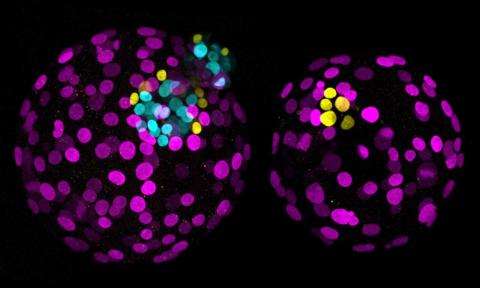
The range of CRISPR tools for genome editing can extend beyond nature-inspired designs thanks to proteins designed using artificial intelligence. A new study by Nobel laureate Jennifer Doudna’s team, published in Science, describes the design of synthetic RNA-guided nucleases, with sequences substantially different from those found in nature, which match or exceed the activity of their natural counterparts whilst offering novel properties.
260716_Montoliu_CRISPR IA
Lluís Montoliu
Research professor at the National Biotechnology Centre (CNB-CSIC) and at the CIBERER-ISCIII
When Jennifer Doudna and Emmanuelle Charpentier first met at a scientific conference in San Juan, Puerto Rico, in March 2011, they did not have the same level of experience in the field of CRISPR. Charpentier was a newcomer, with a paper in the pipeline that would be published in *Nature* and would describe one of the main components of CRISPR systems: tracrRNA. Doudna, however, had already been working for years and publishing excellent papers on RNA projects and CRISPR systems, primarily analysing the structures of various Cas proteins. Once again, serendipity had meant that a colleague at her institution, the University of California, Berkeley, Jill Banfield, had alerted her to Francis Mojica’s 2005 paper, in which he described CRISPR systems for the first time as a new immune defence system used by bacteria to defend themselves against viruses. Charpentier was introducing herself to the world with her first CRISPR paper, but Doudna had already published numerous articles on the subject. They agreed in Puerto Rico to collaborate and, a year and several months later, in June 2012, they jointly published an article in Science in which they proposed transforming Mojica’s CRISPR systems into new tools for gene editing. In October 2020, they both deservedly received the Nobel Prize in Chemistry for that proposal, and the rest is scientific history.
Charpentier has undoubtedly been the more successful of the two in her entrepreneurial venture, having founded the company CRISPR Therapeutics which, together with Vertex Therapeutics, has developed the first CRISPR therapy approved by the EMA and the FDA, Casgevy, to treat two serious blood disorders: sickle cell anaemia and beta-thalassaemia. Doudna has also founded several companies, and one of them, Intellia, is likely to be the one to secure approval for the second CRISPR therapy, this time to treat a rare disease: transthyretin-associated congenital amyloidosis. But if there is one area in which Doudna has stood out from her colleague Charpentier, it is in her scientific excellence, having regularly published remarkable advances not only on the basic mechanisms of how CRISPR-Cas systems work, but also on the identification and characterisation of new CRISPR-Cas systems, and on the origin and evolution of these marvellous tools that have transformed the lives of researchers in biology, biomedicine and biotechnology.
This is the case with the latest paper from Doudna’s laboratory, published in Science, yet another example of her scientific excellence. In this new study, Doudna has set out to explore the design of new Cas proteins with unique properties—not derived from nature, but developed in the laboratory—based on a minimal version of Cas proteins known as TnpB.
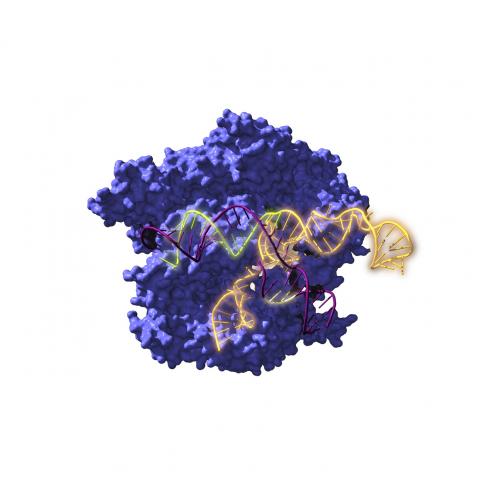
By harnessing the benefits of artificial intelligence, they have succeeded in developing new Cas proteins with characteristics that surpass those of known Cas proteins, for use in gene-editing applications in bacteria, plants and animals alike. Drawing on their extensive knowledge of protein structure, they have analysed (with the aid of cryo-electron microscopy) how the various domains of these new Cas proteins arrange themselves, whilst maintaining their RNA-guided nuclease activity.
This new strategy, which combines the identification of structural domains with the characterisation of essential amino acids in these proteins, offers an unexpected source for generating new Cas proteins—distinct from those found in nature but retaining their Cas activity—for use in various applications where CRISPR-Cas systems still require optimisation in terms of both efficacy and safety.
This publication is sure to generate a great deal of discussion and will provide the scientific community with countless new Cas proteins to experiment with in our laboratories. Many thanks, Jennifer Doudna.
260716_José Luis Villanueva_CRISPR IA
José Luis Villanueva-Cañas
Bioinformatics Specialist at Hospital Clínic de Barcelona
I find this to be a highly disruptive article with a very solid methodology, both computationally and in its subsequent experimental evaluation and validation in genome-editing models, in both human cells and plants.
Traditionally, protein design relies on variations of proteins that have been observed in nature in other organisms. On the one hand, this means that the changes introduced are backed by millions of years of evolution (they work!), but on the other hand, it somewhat limits the design to small variations of what already exists—the famous “evolutionary space” they mention. The methodology they use expands this concept and enables a major leap forward, creating the ability to design proteins that differ significantly from what is observed in nature—and a significant proportion of them actually function.
The authors note that the strategy they developed is a promising tool for exploring proteins not produced by evolution. However, the evolutionary space we can observe is reconstructed from living organisms today. Therefore, it is only a fraction of what has appeared in nature at some point, since we cannot observe everything that has existed but has become extinct without leaving a trace; nor everything that evolution has discarded for some reason, whether direct or indirect. A protein’s structure depends on multiple factors, not just its primary activity—which is what is measured here (the article focuses on measuring editing activity). Some factors could include the protein’s stability, the cost of producing it, its interactions with other proteins, and chance… so we must be cautious when holistically evaluating the proteins generated using this methodology.
In fact, some of the generated nucleases with the highest activity (v5 or v7) are also those with the most off-target editing sites (off-targets, which is a negative factor, as it reduces specificity), reflecting the importance of balancing or incorporating these other factors into the design or evaluation process.
Furthermore, this strategy may not be effective for less conserved proteins—that is, those restricted to certain organisms or branches of the tree of life—because there is not as much information available about their structure or function, as the authors already point out.
The most significant aspect of the study is that it establishes a design strategy or platform that serves as a template for creating other complex proteins that evolution has not produced. This study opens new doors both for genome editing—by providing a more refined tool for generating new proteins with the help of AI—and for the creation of new synthetic nucleases, which are genome-editing tools in their own right. It is a clear example of the effective use of AI tools in science.
Marc Güell - CRISPR IA
Marc Güell
Coordinator of the Translational Synthetic Biology research group and ICREA research professor at Pompeu Fabra University (UPF)
The research appears to be very sound. The results are clear and come from a laboratory with an excellent reputation. The data is presented as it is, without any exaggeration.
The study marks another step forward in the growing convergence between AI and synthetic biology. There are several examples of generative AI being used to create editing tools. The company Profluent presented a Cas9 nuclease created using generative AI last year, and we presented transposons created using generative AI last year as well. This is yet another example; the authors have created a very small editor from the TnpB family.
We are increasingly able to design biology on a computer. However, this design is inspired by nature and still relies on experimentation. We cannot yet design complex proteins entirely in silico.
Sergi Rodà - CRISPR IA
Sergi Rodà
The Skopintsev et al. manuscript shows the potential of generative AI tools to design new-to-nature RNA-guided nucleases using TnpB scaffold (a minimal CRISPR-Cas12-like nuclease) as the proof-of-concept. The authors present a new evolution and co-evolution guided inverse folding protein design strategy, allowing to increase the divergence from the WT sequence compared to previous studies.
The study is accompanied by an extensive validation of the generated variants with gene editing assays on bacterial, plant, and human cells. Moreover, the structure of one of the most active and distinct variants was obtained using cryo-EM, revealing a novel TAM-bound conformation that was not previously described thanks to the introduced AI-designed contacts.
The main practical conclusion from the study is that it democratizes the protocol to design your own new-to-nature RNA-guided nucleases, and it shows the experimental roadmap to find the most promising ones. However, the main limitation of the design protocol is that it currently does not allow to tailor towards other specific DNA/RNA sequence motifs.
Francisco Martínez-Abarca - CRISPR IA
Francisco Martínez-Abarca
Researcher in the Department of Soil and Plant Microbiology, Zaidín Experimental Station-CSIC
This work by J.A. Doudna and colleagues is a further example of how generative AI is changing the way laboratories operate. Specifically, in the de novo design of proteins. In this case, the authors have succeeded in improving CRISPR scissors for genetic modification, making them increasingly efficient and safe. This study represents a significant acceleration in the development of new enzymes, such as the Cas12 nuclease, for genome editing. It is also a good example of how AI can reduce to a matter of months what used to take many years of experimental work. The AI determines which variants should be tested based on changes in structure and function in predictive models; the authors incorporate evolutionary data into these models that highlight the divergence of the variants programmed by the AI. The end result is an improvement in various properties of the nuclease (binding to DNA and RNA, and cleavage). This work is further evidence of how non-natural evolution can compete very seriously with undirected natural evolution. AI is accelerating the development of new products of biotechnological value; as in this example, new nucleases designed almost entirely artificially.
P. Skopintsev et al.
- Peer reviewed
- Research article