Scientists

Scientists

For science to make the news in a rigorous and attractive way, good sources are needed. Because access to scientific knowledge is a citizen's right.

¿Qué me ofrece?

Help science make headlines with rigour and context. We’ll ask you for feedback on current events in your field and you can participate in the briefings we’ll organise. Need to prepare for an interview? Use our resources on science communication.

Icono
Cómo trabajamos

We’re on the lookout for controversial information about science and we will contact you for your analysis in your area. Do you want to be part of our sources? Contact us. We will not pass your contact details on to anyone else. You can find out more about how we work here.   

Título qué me ofrece
What we offer you
Título cómo trabajamos
How we work

Reactions: Cell therapy 'teaches' immune system to tolerate liver transplants, phase 1 trial shows

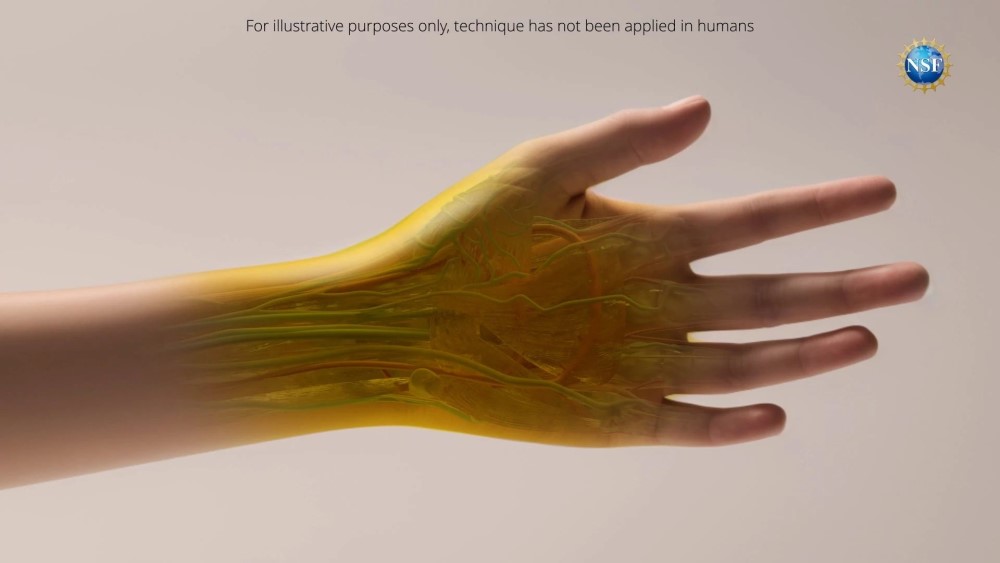
Currently, when an organ transplant is performed, the patient has to take immunosuppressive drugs to prevent his or her system from rejecting the new organ. These drugs must be taken for life and have numerous side effects. In a phase 1 clinical trial, researchers gave patients receiving a liver transplant regulatory dendritic cells derived from the original donor, with the hypothesis that these cells could 'teach' the recipient's immune system to tolerate the new organ. The research, published in Science Translational Medicine, suggests that this treatment could reduce or even eliminate the need for long-term use of immunosuppressants.

0

Reactions: study links living as a renter to faster biological ageing

Living as a private renter is associated with faster biological ageing than owning a home, according to a study using a UK database with data available on 1,420 people. The team, whose research is published in the Journal of Epidemiology and Community Health, used DNA methylation data - chemical modifications - to measure people's biological age, and says this correlation is stronger than the association between biological ageing and unemployment, or having been a smoker. Apart from blood samples from the database, the research also used historical data from a national survey.

0

Reaction: climate change could worsen the quality of hops used in European beers

Research has compiled data on brewing hop yields and alpha content - which gives beer its bitter aroma and affects quality - between 1971 and 2018 in hop-growing areas of Germany, the Czech Republic and Slovenia. The results, published in the journal Nature Communications, show that, compared to 1994, hop production has decreased by 0.2 tonnes per hectare per year and alpha bitterness content has fallen by 0.6%. Combining the data with climate models, the authors estimate that by 2050 hop yields and alpha content will fall by 4 - 18% and 20 - 31% respectively. According to the models, the cause will be higher temperatures and more frequent and severe droughts due to climate change.

0

"Online bullying is a public health problem that needs a social and governmental response"

On the occasion of World Mental Health Day on 10 October, the Science Media Centre Spain organised an information session on the mental health of young people and the threat posed by deepfakes and cyberbullying. At the meeting, experts Esther Calvete and Irene de la Vega explained their risks and possible repercussions, their characteristics and some tools to reduce their frequency and impact.

0

Reaction: Stroke could cause almost 10 million deaths a year by 2050, commission estimates

The Neurology Commission of the New World Stroke Organization and The Lancet has estimated that stroke deaths will increase from 6.6 million in 2020 to 9.7 million in 2050, with a widening gap between low- and middle-income and high-income countries. The economic analysis indicates that the treatment, rehabilitation and indirect costs of stroke would double from $891 billion in 2020 to as much as $2.3 trillion in 2050.

0

Reactions: study says persistent colds may follow acute respiratory infections

Some people may experience long-term symptoms - or 'lingering colds' - after suffering acute respiratory infections that tested negative for covid-19, research concludes. The study, published in the journal EClinicalMedicine, highlights the most common symptoms of these conditions, such as cough, stomach pain and diarrhoea more than four weeks after the initial infection.

0

Reactions: study identifies genes that may be associated with vegetarianism

A US research team has identified several genes that may be associated with a strict vegetarian diet. Some of these genes have "important roles in lipid metabolism and brain function", according to the paper, which suggests that these differences could explain the ability to subsist on a vegetarian diet in those who carry these genes. The study, published in the journal PLoS ONE, used data from the UK Biobank to compare a group of more than 5,000 vegetarians with a group of more than 320,000 non-vegetarians.

0

Reactions: traumatic experiences can be passed on to offspring and reversed with drug in mice

Early-life adversity, such as separation from the mother, can alter the neurological functioning of mice, causing some to experience panic and anxiety later in life. A study shows that these changes can be passed on for at least two generations and that inhalation of a drug, the diuretic amiloride, can reverse them. According to the authors, this treatment could be used in the future to alleviate panic disorders and related conditions in humans. The results are published in the journal Science Advances.

0

Reaction: Human settlements in flood-prone areas are increasing

A study published in Nature has analyzed the presence of human settlements in flood-prone areas and their evolution worldwide since 1985. Until 2015, there was an increase of up to 122% in these settlements in flood-prone areas. According to their data, in many regions, the growth in the most hazardous areas is far outpacing development in non-exposed areas, especially in East Asia.

0

Reactions: Nobel Prize in Chemistry to Bawendi, Brus and Ekimov for discovering quantum dots

The Royal Swedish Academy of Sciences has awarded the Nobel Prize in Chemistry 2023 to Moungi G. Bawendi, Louis E. Brus, and Alexei I. Ekimov "for the discovery and synthesis of quantum dots." Quantum dots are tiny nanoparticles that diffuse their light from televisions and LED lights, and can also guide surgeons when removing tumor tissue, among many other applications.

0