Scientists

Scientists

For science to make the news in a rigorous and attractive way, good sources are needed. Because access to scientific knowledge is a citizen's right.

¿Qué me ofrece?

Help science make headlines with rigour and context. We’ll ask you for feedback on current events in your field and you can participate in the briefings we’ll organise. Need to prepare for an interview? Use our resources on science communication.

Icono
Cómo trabajamos

We’re on the lookout for controversial information about science and we will contact you for your analysis in your area. Do you want to be part of our sources? Contact us. We will not pass your contact details on to anyone else. You can find out more about how we work here.   

Título qué me ofrece
What we offer you
Título cómo trabajamos
How we work

Reactions: Nobel Prize in Physics to Agostini, Krausz and L'Huillier for developing light pulses to study the motion of electrons in matter

The Royal Swedish Academy of Sciences has awarded the 2023 Nobel Prize in Physics to Pierre Agostini, Ferenc Krausz and Anne L'Huillier for developing "experimental methods generating attosecond light pulses". These advances made it possible to observe the motion of particles in atoms on the shortest time scale captured by humans. An attosecond is a unit of time equivalent to one trillionth of a second, roughly the time it takes light to travel the diameter of an atom.

0

Reactions: Nobel Prize in Physiology awarded to Karikó and Weissman for their discoveries that led to the development of effective mRNA vaccines against covid-19

The Karolinska Institute has awarded the Nobel Prize in Medicine or Physiology to Katalin Karikó and Drew Weissman for their groundbreaking discoveries, which have radically changed our understanding of how mRNA interacts with our immune system, and made it possible to develop vaccines at unprecedented speed during the covid-19 pandemic.

0

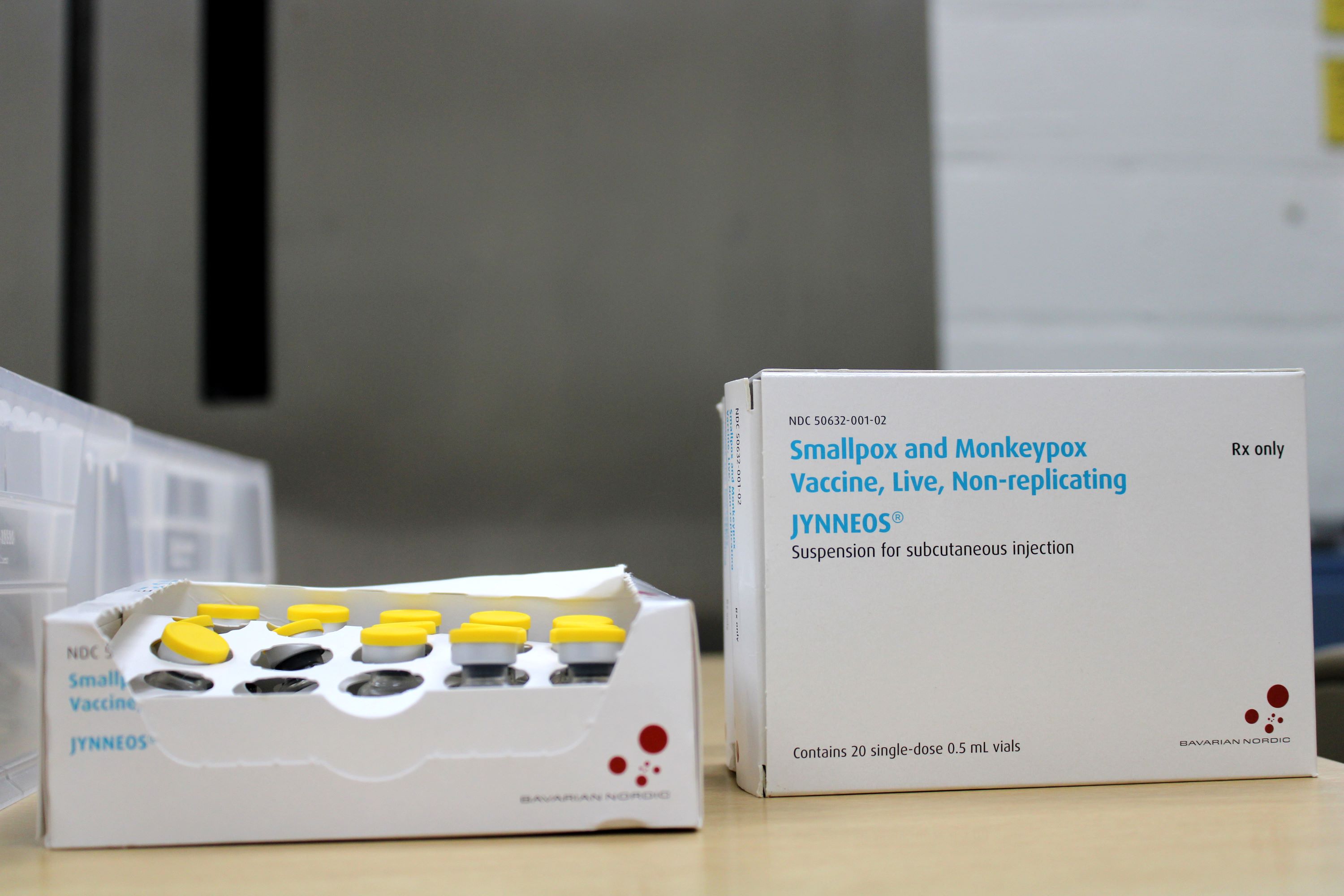
Reaction: flu vaccination may cause more adverse reactions in women than in men

A meta-analysis analyzing the results of 18 clinical trials concludes that influenza vaccination may produce more adverse reactions in women than in men. According to the authors, whose research is published in the Journal of Epidemiology & Community Health, "the data suggest that most reactions are mild, self-limited, and rarely serious." "Transparent communication about the increased risk for women could help maintain long-term confidence in health authorities and vaccines," they add.

0

Reaction: mice still show allergies when exposed to various microbes, which challenges the hygiene hypothesis

A new study in mice, published in Science Immunology, challenges the so-called 'hygiene hypothesis', the idea that a contributing factor to allergies is that there is an under-stimulated immune system that has not seen enough exposure to germs from current hygienic conditions. In the research, laboratory mice still developed allergies when exposed to various microbes.

0

Spain and extreme weather events: the Health and Climate Change Observatory needs to be set up as a matter of urgency

On the eve of an episode of unusually high temperatures for this time of year, it is time to take stock of the summer we have experienced, characterised by a succession of extreme weather phenomena in the form of heat waves, drought and torrential rains. The seriousness and complexity of these problems and their repercussions in many areas, especially on health, make it urgent to set up the Health and Climate Change Observatory approved last July, with a stable and independent structure.

1

Reactions: exposure to pollution may increase stroke risk also in the short term

Chronic exposure to various air pollutants has been linked to an increased risk of stroke, but the short-term effects have been less well studied. A review of 110 papers and more than 18 million stroke cases shows that recent exposure - in the five days prior to stroke - also increases the likelihood of stroke. The results are published in the journal Neurology.

0

Victims of artificial intelligence

There are no criminal offences to punish synthetic pornography, plus we lack sufficient means to carry out forensic examinations of victims' and perpetrators' phones and staff to process these cases quickly. The law could limit these AI tools to professional and virtuous environments, only by known developers, and for products whose purposes don't violate public order or privacy, and aren't criminal; such measures would be more than enough.

1