
Research with Spanish participation concludes that, in European countries, tropospheric ozone pollution from beyond national borders was associated with 88% of ozone-attributable deaths, and only 12% were due to domestic sources. The authors, whose research is published in Nature Medicine, used epidemiological and air quality modelling to quantify the burden of mortality in Europe associated with ozone pollution from various geographical sources. This included more than six million deaths in 813 regions in 35 European countries - including Spain - in the 2015-2017 warm seasons.

A journalistic investigation by The Investigative Desk (Netherlands) and The BMJ (UK) concludes that tobacco industry-funded studies continue to appear in the most cited medical journals. The team of journalists found hundreds of links in the PubMed database between the medical and pharmaceutical subsidiaries of the big tobacco companies - Philip Morris International, Altria, British American Tobacco, Imperial Brands and Japan Tobacco International - and published medical research. In addition, the research revealed that of 40 journals - the 10 most cited in general medicine and another 30 in areas affected by smoking - only eight had policies prohibiting studies funded in whole or in part by the tobacco industry.

The classical view describes most cancers as the result of mutations that happen by chance and accumulate over a lifetime. Now, a study claims to break that paradigm. A team of researchers from Stanford University (USA) has described that the genetics we inherit influences the surveillance that our defences do of these mutations, conditioning the type of tumour that can develop and its prognosis. The results, which for the moment refer to breast cancer, are published in the journal Science.
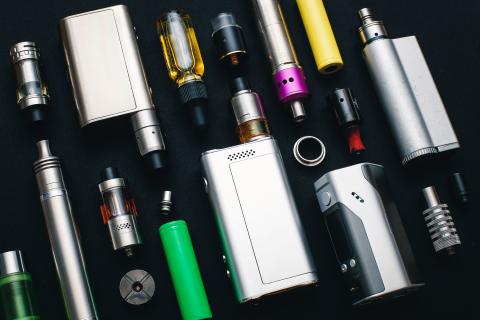
E-cigarettes, vapes, pods, mods... The popularity of these devices continues to grow, especially among young people. According to a Spanish survey, more than half of the adolescents aged 14 to 18 have used them at some point. Vaping control varies from country to country: in Spain, vaping products have been regulated since 2017 and the new anti-smoking plan aims to equate their legislation to that of tobacco, while the United States imposes fewer restrictions. In this brief guide, we explain what is known and not known on controversial issues such as the safety of electronic cigarettes, their risks or whether they are useful to quit tobacco.
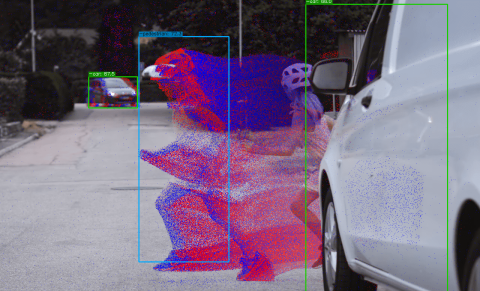
Combining two types of cameras could enable autonomous vehicles to detect objects accurately and efficiently, say researchers in Switzerland in a study published in Nature. Autonomous vehicles need visual systems capable of detecting fast-moving objects without sacrificing image quality. The system described combines a colour camera with a reduced frame rate - to lower the bandwidth needed to process images - and an event camera, which detects fast movements - such as pedestrians or vehicles - and compensates for the higher latency of the colour camera.

Research published in JAMA Network Open indicates that women with premenstrual disorders diagnosed before the age of 25 have a higher risk of all-cause mortality and death by suicide. For death by suicide, the risk increased regardless of age at diagnosis. However, in general, women with premenstrual disorders do not have an increased risk of premature death from natural and unnatural causes. The study compares over several years a group of more than 67,000 women in Sweden with a diagnosed disorder with a group of more than 338,000 women without such a diagnosis.

A study in England has found a link between increased exposure to air pollution during early life and the risk of developing psychotic disorders and depression during youth. In addition, greater exposure to noise during childhood and adolescence was associated with an increased risk of anxiety. The results of the study, which collected data from more than 9,000 people, are published in the journal JAMA Network Open.
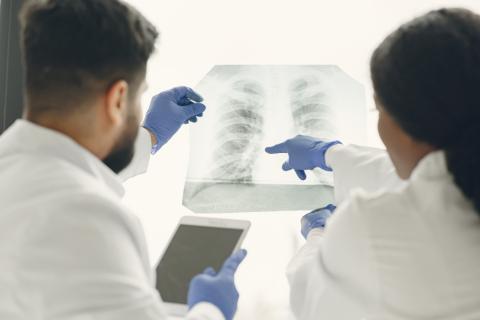
Chinese researchers have designed an asthma treatment based on CAR-T cells. A single injection of these cells, modified to attack the eosinophils themselves - a type of white blood cell that is activated by certain infections and allergies - achieved remission of the signs and symptoms of the disease for at least a year in mice. According to the authors, the technique will need to be tested in human clinical trials, but could be useful for treating both asthma and other types of allergies. The results are published in the journal Nature Immunology.

A South Korean research team has designed an artificial olfactory system capable of distinguishing short-chain fatty acids with 90 % reliability. These molecules serve as diagnostic biomarkers for diseases such as stomach cancer and halitosis, according to the authors, whose research is published in Science Advances. The system - consisting of human olfactory receptors, artificial synapses and an artificial neural network - is able to distinguish combinations of molecules, compared to current techniques that detect single molecules and single compounds.

The PsychENCODE consortium, established in 2015 and dedicated to illuminating the molecular mechanisms underlying schizophrenia, bipolar disorder, and autism spectrum disorder, presents findings based on the examination of human brains at the cellular level. The studies are published today in the journals Science, Science Translational Medicine and Science Advances.