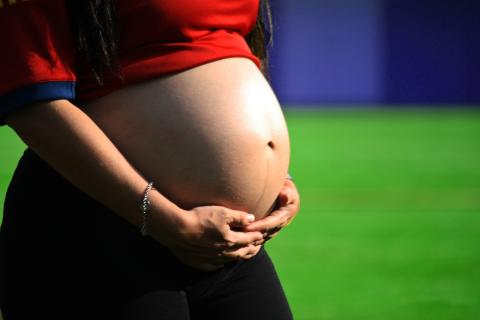
A study conducted in Spain and five other European countries shows that exposure to mixtures of endocrine disruptors during pregnancy is associated with metabolic health problems in children. The research, published in JAMA Network Open, followed more than 1,100 mother-child pairs between 2003 and 2016 and found a correlation between measures of metabolic dysfunction in children aged 6-11 years, and their prenatal exposure to chemicals such as metals or organochlorine pesticides, among others. According to the authors, these results could be related to the current increase in metabolic syndrome across the lifespan, which results in an increased risk of cardiovascular disease and type 2 diabetes.

A Finnish study involving more than 700,000 adolescents has found some risk of transmission of some mental disorders among classmates. The results are published in the journal JAMA Psychiatry.

Research led by ISGlobal has analysed more than 11 million hospital admissions in 48 Spanish provinces during the months of June to September between 2006 and 2019. The results, published in the journal Environmental Health Perspectives, show that high temperatures increase admissions for obesity-related issues and renal and urinary insufficiency, among other causes.
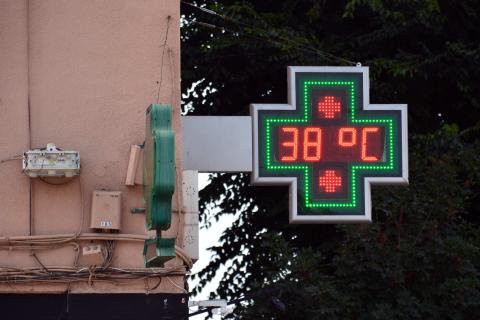
A study published in the journal Environmental Health Perspectives has analysed hospital admissions in 48 Spanish provinces during the months of June to September between 2006 and 2019. Its results, discussed at a briefing organised by Science Media Centre Spain, show that high temperatures increase admissions for issues related to obesity and renal and urinary insufficiency, among other causes.
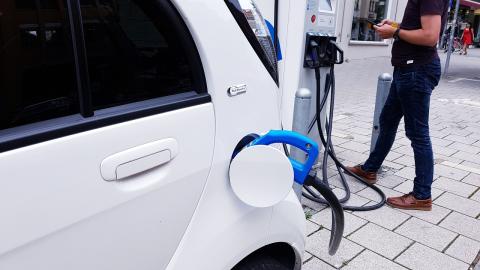
According to a study on the number of pedestrian accidents in Great Britain between 2013 and 2017, published in the Journal of Epidemiology & Community Health, the risk of pedestrian crashes was twice as high for electric and hybrid vehicles as for petrol and diesel vehicles.

An increased frequency of nightmares and hallucinations may precede the onset of certain autoimmune diseases such as lupus, says a study published in the journal eClinicalMedicine. The team surveyed 676 people with lupus and 400 physicians, as well as in-depth interviews with a smaller group. Of the patients who experienced hallucinations, 61% of those with lupus and 34% of those with other rheumatic autoimmune diseases reported having more disturbing nightmares before the hallucinations. Paying more attention to these neuropsychiatric symptoms could provide an ‘early warning system’ for earlier clinical intervention, say the authors.

A clinical trial involving 60 people with upper and lower body paralysis showed that a non-invasive electrical spinal cord stimulation device - called ARCEX - helps improve hand and arm function in quadriplegic patients. The study, the results of which are published in Nature Medicine, showed that 43 of the people with paralysis experienced improved arm and hand strength and function after receiving electrical stimulation along with rehabilitation exercises.

The Science group is simultaneously publishing four papers (two in the journal Science, one in Science Immunology and one in Science Translational Medicine) that include advances in a sequential vaccination strategy for an effective HIV vaccine. The methods employed aim to obtain broad-spectrum neutralising antibodies and one of the proposals is already in clinical trials.
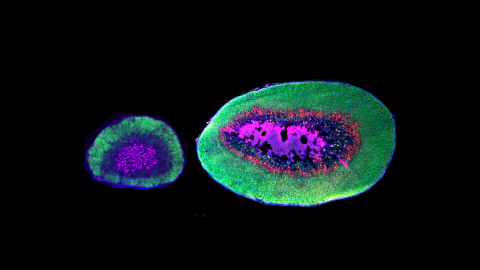
A research team has discovered a type of cell that appears to be linked to parental care in Oldfield mice, a monogamous species. These cells are not present in Deer mice, other rodents of the same genus that engage in promiscuous behaviour. The results "provide an example by which the recent evolution of a new cell type in a gland outside the brain contributes to the evolution of social behaviour," the authors conclude in their paper, published in Nature.

A team of physicists led by Harvard University (USA) has succeeded in linking two quantum memory nodes 35 kilometres apart using existing fibre optics in the Boston area (USA). This is the longest distance achieved to date. According to the authors, who publish their results in the journal Nature, ‘demonstrating that quantum network nodes can intertwine in the real-world environment of a busy urban area is an important step towards practical networking between quantum computers’.