
Un estudio analizó la edad biológica de más de 1.700 participantes utilizando seis relojes epigenéticos diferentes. Los resultados mostraban que cada embarazo individual reportado por una mujer se correlacionaba con un envejecimiento biológico adicional de dos a tres meses. Estos efectos persistían incluso cuando se tenían en cuenta el estatus socioeconómico, el tabaquismo, la variación genética y la urbanidad del entorno de los participantes. El estudio se publica en PNAS.

A "large fraction" of groundwater samples are contaminated by perfluoroalkyl and polyfluoroalkyl substances (PFASs) and would be considered unacceptable for drinking water, a study claims. The analysis, published by Nature Geoscience, brings together data from 273 studies of surface and groundwater samples from around the world since 2004. The exact proportion of samples exceeding the thresholds varies according to the standards considered. For example, 69% of groundwater samples with no known source of contamination exceed the Canadian threshold, but the figure is only 6% if the EU criterion for the sum of all PFASs is considered.

This Friday, the Interterritorial Council of the National Health System approved the Comprehensive Plan for the Prevention and Control of Smoking (PIT). The document, which incorporates 147 proposals from the autonomous communities, has not achieved consensus among all of them.

An international team of researchers, with Spanish participation, has proposed in the journal Science a new mechanism to explain asthma attacks more fully. According to their hypothesis, the mechanical forces that occur during these episodes cause cells to accumulate in excess, leading to a process of elimination called "cell extrusion". As a result, the tissue is damaged, loses its barrier function and increases the risk of successive attacks. Inhibitors of this mechanism improved damage and inflammation in laboratory mice.

In 2021, covid-19 replaced stroke as the second leading age-standardised cause of death, with 94 deaths per 100,000 people, says a study published in The Lancet. The pandemic changed the ranking of the five leading causes of death that had remained stable since 1990, according to the study, which is based on data from the Global Burden of Diseases, Injuries, and Risk Factors Study. The study found that life expectancy since 1990 increased by 6.2 years, an increase that slowed during the pandemic.

A phase 2 clinical trial in France has examined whether taking an oral anti-diabetic drug called lixisenatide - a GLP1 receptor analogue, similar to those also used for weight loss - also has an effect on the progression of Parkinson's disease. The results indicate that there is a modest but significant decrease in the progression of motor symptoms of the disease, although side effects were also observed. The results are published in the journal NEJM.
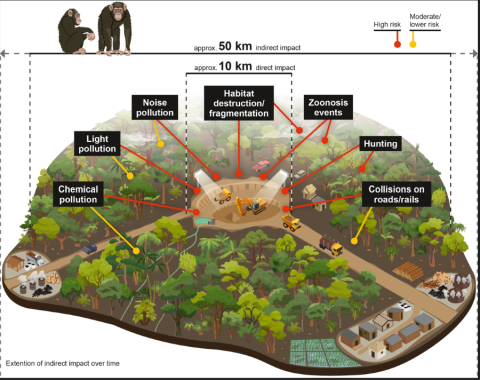
A study published in Science Advances analyses population data for great ape species in mining areas in 17 African countries and shows that their habitats overlap, endangering the apes' survival. The study also reveals a considerable information gap: 97% of the mining areas contain no population data for these animals.

10 % of people are left-handed, which occurs when the right cerebral hemisphere is more dominant for the control of that hand - whereas it is the left hemisphere in the case of right-handed people. To investigate the genetic basis of this laterality, scientists in the Netherlands have analysed genome data from 350,000 people in the UK biobank for rare genetic variants associated with this phenomenon. The heritability of left-handedness due to rare coding variants was low, at less than 1%. The research, published in Nature Communications, suggests that one gene - TUBB4B - is 2.7 times more likely to contain rare coding variants in left-handed people.
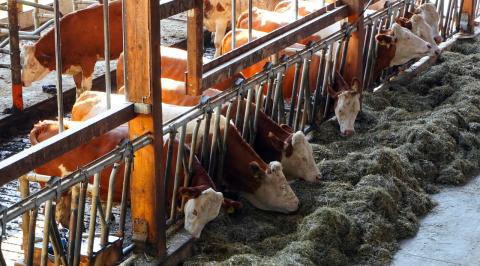
Eighty-two percent of EU farm subsidies articulated through the Common Agricultural Policy (CAP) financed high-emission livestock production in 2013, according to a study published in Nature Food. The analysis, which is based on data from 1986 to 2013 - the latest year for which records are available - highlights that 82% went to animal products in the following proportions: 38% directly and 44% for feed production. The authors note that food of animal origin is associated with 84 % of the greenhouse gases emitted by EU food production.

A study has analysed data on heat waves from 1979 to 2020 and concludes that their propagation speed has decreased over the last 40 years due to anthropogenic causes. In addition, their frequency, intensity and travel distance have increased. According to the authors, "longer-lasting and slower-moving heat waves will cause more devastating effects on natural and social systems in the future if [greenhouse gases] continue to increase and effective mitigation measures are not taken". The findings are published in the journal Science Advances.