
The journal Science publishes an article in which international experts demand mandatory standards to monitor three parameters within public buildings: carbon dioxide (CO2), carbon monoxide (CO), and PM2.5 (fine particles that can enter the lungs and bloodstream), as well as to ensure proper ventilation.

A French study involving more than 100,000 women has found a link between long-term use of some progesterone hormone analogues - used for contraception or hormone replacement therapy - and an increased risk of developing meningioma, a generally benign type of brain tumour. The results are published in The BMJ.

An antibody therapy is able to restore the immune system of elderly mice to a more youthful state. The method, published in the journal Nature, rebalances blood cell production and reduces age-related immune decline. Preclinical and clinical studies are needed to determine whether this approach could be feasible in humans.

Some 90 % of coastal and lowland wine-growing regions in Spain, Italy, Greece and southern California are at risk from extreme events, such as excessive droughts and heat waves, according to a review published in Nature Reviews Earth & Environment. The article summarises the expected changes and the adaptations that wine producers will need to make.
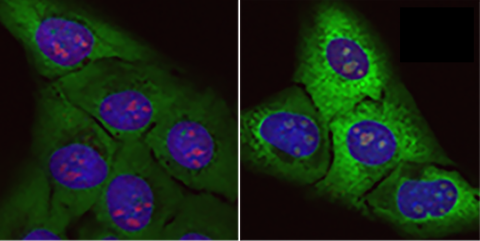
In a paper published in Molecular Cell, a team of researchers led by the Spanish National Cancer Research Centre (CNIO) provides the first evidence that a possible cause of the hereditary type of ALS - familial ALS - is the accumulation in motor neurons of 'junk proteins', proteins with no function that accumulate unduly and prevent the cell from functioning properly. In addition, the research describes a new causal factor in the ageing process: nucleolar stress, which encompasses alterations in organelles called nucleoli.

Work by the Institute for Health Metrics and Evaluation (IHME) estimates that by 2050, more than three quarters (155 out of 204) of countries will not have fertility rates high enough to maintain their population size. The percentage will rise to 97% by the year 2100. The authors warn that national governments must plan for the threats these changes will pose to the economy, food security, health, the environment and geopolitical security. The findings are published in the journal The Lancet.

In 2022, 62 million tonnes of e-waste were generated worldwide, a figure 82% higher than the 34 million tonnes recorded in 2010, according to a United Nations report. The 2022 figure represents an average of 7.8 kilograms per capita per year worldwide, compared to 19.6 kg in Spain. Only 22.3% of this amount of global e-waste was documented as properly collected and recycled, says the Global E-waste Monitor 2024.

An international team of researchers has examined the epigenetic effects of tobacco and e-cigarettes over time in more than 3,500 samples. Their results indicate that e-cigarettes can also cause changes associated with an increased risk of cancer even shortly after starting to use them. They publish the study in the journal Cancer Research.

According to an unpublished study presented at a conference of the American Heart Association and not peer-reviewed, an analysis of over 20,000 American adults found that individuals who restricted their food intake to less than 8 hours a day, following a time-restricted eating plan, were more likely to die from cardiovascular diseases compared to those who ate during 12-16 hours a day.

Two investigations published in the journal JAMA conclude that there is no evidence of brain injury detectable by magnetic resonance imaging or biological abnormalities in people suffering from the so-called Havana syndrome. This syndrome has been described in overseas civil servants and their family members, who suffer from symptoms including noise, pressure and pain in the head, and cognitive dysfunction, called abnormal health incidents. Studies did find differences in symptoms of imbalance, fatigue, post-traumatic stress disorder and depression.