
Between 1990 and 2023 in Spain, cases of infertility among women aged between 35 and 49 rose from around 975 cases per 100,000 women in this age group to 2,226 cases per 100,000, figures that are below the European average. Overall, this age-adjusted prevalence rose in all regions of the world during the same period. The study has been published in The Lancet Obstetrics, Gynecology, & Women’s Health.

According to the findings of two clinical trials published in Annals of Internal Medicine, adults at high cardiometabolic risk who slept almost 80 minutes less per night for six weeks gained nearly half a kilogram on average and experienced an increase in waist circumference. The studies included a total of 95 participants, all of whom had a habitual sleep duration of at least seven hours per night. Sleep restriction was also associated with increased leptin levels, a hormone involved in regulating energy balance, and with greater sedentary time.

According to an observational study, from which no causal relationship can be inferred, each additional hour per day of sedentary behaviour is associated with a 10% increase in the risk of death from cancer. The association depends not only on total sedentary time, but also on how it is accumulated: if that hour of inactivity is interrupted, the risk is reduced by 19%. In addition, replacing one hour of sedentary behaviour with light physical activity reduces the risk by 12%. The study, published in PLOS Medicine, included nearly 91,300 participants from the UK Biobank who were monitored for seven days using an accelerometer and followed for a median of 12.38 years.
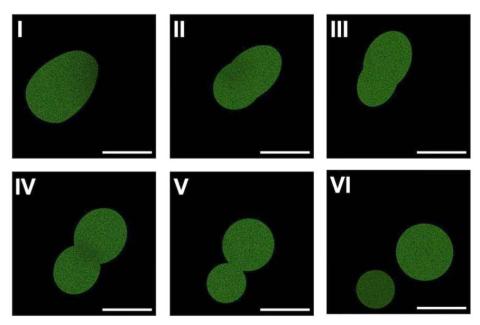
The team led by scientist Kate Adamala of the University of Minnesota has released the news—under an embargo—to several media outlets regarding the creation of a synthetic cell capable of feeding, growing, and replicating, which they have named Spudcell. Their work, which, according to Science News, was rejected by the journal Cell, is published on the team’s website, pending peer review.

An international team has analyzed data collected between 1990 and 2024 from nearly one million people in seven countries regarding their body mass index, cholesterol levels, and blood pressure. The results indicate that, in adults over 40, these levels have been converging, becoming quite similar overall in obese and non-obese individuals, possibly due to the widespread use of treatments. Despite these findings, the authors note that there are other risks associated with obesity not included in the study, such as diabetes, kidney disease, and cancer, among others. The work is published in The Lancet.

An essay published today in the journal PLOS Climate examines the need for “immediate and sustained” investment to safeguard urban forests. The article reviews the necessary policies, ranging from maintenance and management to legal protections. The authors call on policymakers to “prioritize” these spaces in their strategies to combat climate change, given their positive role in climate resilience, biodiversity, and public health.
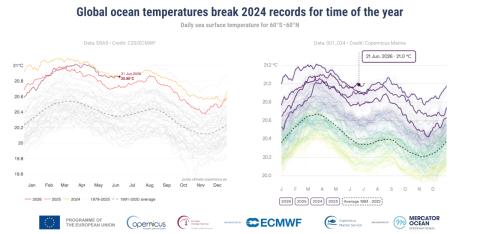
Two Copernicus services have independently confirmed that global sea surface temperatures have broken records for this time of year. Daily data from the Copernicus Climate Change Service exceeded the 2024 levels on 21 June, reaching 20.86 °C, higher than the 20.83 °C recorded in 2023 and 2024. Data from the Copernicus Marine Watch Service show temperatures of 21.0 °C on 21 June, beating the 2023 and 2024 records by 0.1 °C. This unprecedented warming is linked to the onset of El Niño (announced by the WMO and declared by NOAA on 11 June) and to record-breaking sea surface temperatures in the North Pacific; consequences are anticipated for weather patterns, the global climate and marine ecosystems.

A team of researchers analyzed data on mental health consultations among people aged 10 to 46 in Norway’s primary care system from 2010 to 2024. They observed significant increases in consultations for symptoms of anxiety and depression, particularly among young people and especially among women. However, the proportion of consultations coded as disorders increased only slightly or remained stable. The authors suggest that this discrepancy may be due to changes in help-seeking behavior when experiencing psychological distress and in diagnostic practices, rather than an increase in mental health problems. Furthermore, they note that the growing volume of consultations for symptoms poses a challenge for primary care physicians, one that could be addressed through psychoeducation or digital interventions. The article is published in the Journal of Epidemiology & Community Health, part of the BMJ Group.
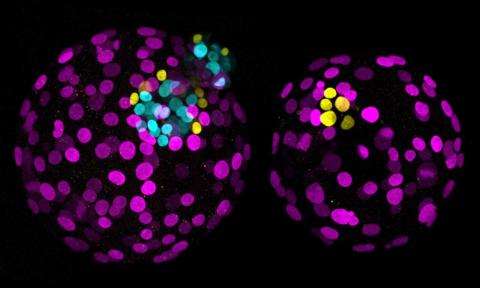
An article published in Nature describes how the first use of precision editing has shed light on a gene essential for embryonic development. The authors caution that the clinical application of genome editing in human embryos requires rigorous ethical analysis and oversight, as well as broad public debate and support.

Venezuela has been hit by a pair of earthquakes measuring 7.2 and 7.5 on the Richter scale, according to the U.S. Geological Survey (USGS). The quakes struck less than a minute apart and have severely affected the city of Caracas and surrounding areas. Interim President Delcy Rodríguez reported that the death toll has risen from 32 to 164 and the number of injured from 700 to 971. She also declared the state of La Guaira, north of Caracas, a “disaster area” and announced the mobilization of the country’s entire public and private healthcare network.