In December 2025, the European Commission proposed new rules for the placing on the market of genetically modified microorganisms (GMMs). Tomorrow, European Union health ministers will vote to adopt the position of the Council of the European Union (EU) on this proposal. The Commission, the Council, and the European Parliament must agree on the final version of the legislative text.
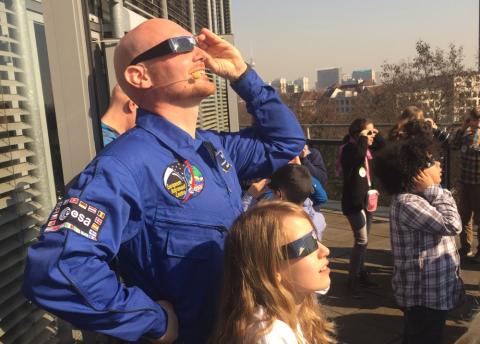
To fully experience the astronomical phenomenon of a total eclipse, you need to prepare in advance. The main concern is eye safety, but there are other health risks that can easily be avoided. We explain the main personal precautions to bear in mind.
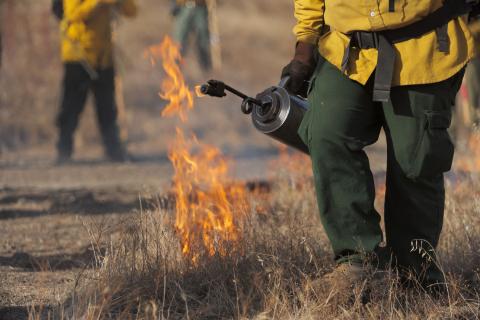
Controlled burning of coniferous forests helps prevent larger wildfires and thus reduces emissions of polluting smoke, according to a study published in Science. The study uses satellite data to estimate the severity of wildfires in California between 2000 and 2021, combined with estimates of fine particulate matter emitted by the fires. By simulating the prescribed burning of more than 2,000 km² of forest per year, the authors estimate a 10% reduction in the cumulative emission of harmful particles in California up to a decade later.

Air conditioning in buildings is necessary to combat the high temperatures of summers, which are becoming increasingly long and hot; however, it is not without controversy due to its energy consumption and environmental impact. Today, the WHO is presenting its new guidance on health and heat action plans, in which it acknowledges that air conditioning is problematic, while also emphasizing the need for vulnerable populations to have access to these systems. In a recent briefing organized by SMC Spain, we analyzed its role in the fight against global warming.
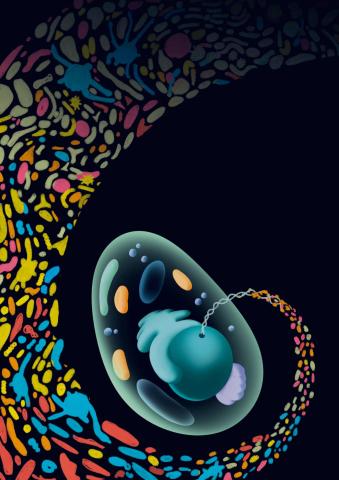
The origin and the process by which eukaryotic cells—the cells that make up animals, plants and fungi—first emerged remains one of the great unanswered questions in biology. The prevailing explanation, put forward by biologist Lynn Margulis, identified the union between an archaeon and a bacterium as the turning point. Now, a study carried out by IRB Barcelona and the Barcelona Supercomputing Center re-examines and expands on the current theory. The findings, published in the journal *Nature*, suggest that the process was longer and more complex than previously thought. At least two other different bacteria contributed to the development of eukaryotic cells, and giant viruses appear to have acted as vehicles for gene transfer. To explain the study, the Science Media Centre Spain organised a briefing with Toni Gabaldón, the lead researcher on the paper.

Six state-of-the-art large language models (LLMs) based on artificial intelligence (AI) can simulate human emotions such as fear, sadness, and anxiety, according to a study published in the journal The Lancet Digital Health. The authors clarify that these are metaphorical reactions on the part of the algorithms, but suggest that this could open new avenues for developing and testing conversational therapy techniques aimed at treating mental health disorders.
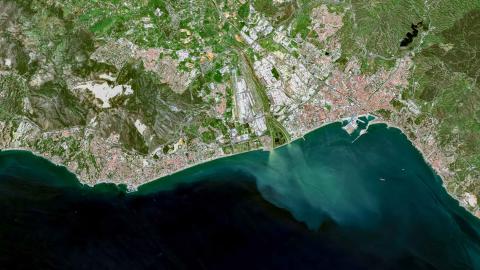
Rising sea levels have quadrupled the frequency of extreme events related to this phenomenon along coastlines since 1900. This is one of the conclusions of a study, which included Spanish participation, suggesting that climate change has already altered the risk of coastal flooding and highlighting the need to integrate these changes into adaptation and risk management strategies. More than 680 million people worldwide live in low-lying coastal regions, where small changes in sea level can significantly affect flood risk. The study is published in Nature Climate Change and aligns with another paper, published the same day in Science Advances, which states that since the 1970s, the number of days on which sea levels have exceeded annual averages has tripled.
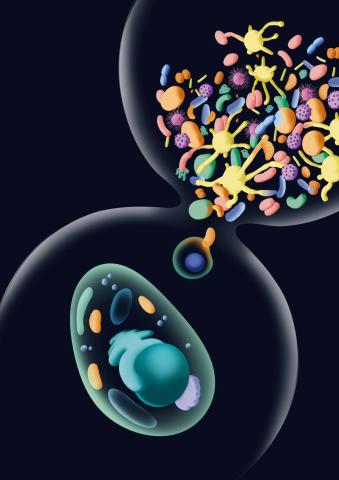
The origin and the process by which eukaryotic cells arose remains one of the great unanswered questions in biology, with Lynn Margulis’s theories regarding the incorporation of a bacterium that would later become the mitochondrion marking a major turning point. Now, Spanish research carried out by IRB Barcelona and the Barcelona Supercomputing Center challenges this view. Without denying the role of mitochondria, it suggests that the process was longer and more complex than previously thought, stretching over hundreds of thousands of years. At least two other different bacteria contributed to the development of eukaryotic cells, and giant viruses appear to have acted as vehicles for genetic transfer. The findings, published in Nature, suggest a much more protracted and gradual process of exchange between microorganisms.
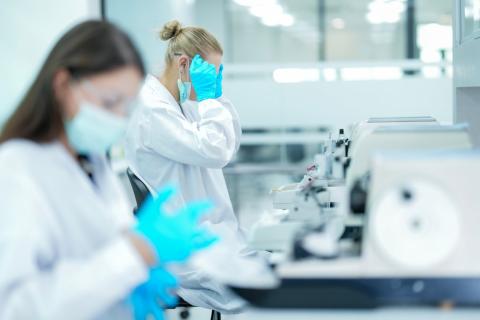
Formaldehyde is a preservative used on human tissue; inhaling it has harmful health effects and it is considered a human carcinogen. A study published in Occupational & Environmental Medicine shows that airborne concentrations of this compound in most pathological anatomy departments of the UK’s National Health Service (NHS) are rarely monitored and regularly exceed the occupational exposure limits set by the European Union (EU): seven out of 10 departments exceeded the eight-hour maximum exposure limit set by the EU.
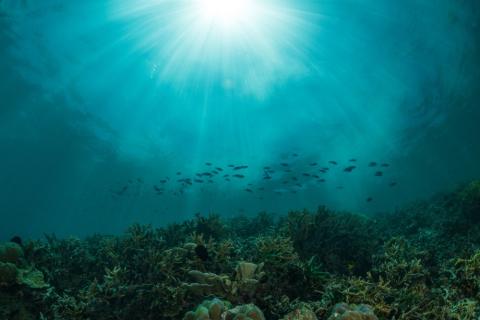
As discussions around a possible “Blue COP31” gain momentum, a recent analysis published in Nature Portfolio warns that record ocean heat, intensifying marine heatwaves and accelerating sea-level rise are beginning to challenge international systems designed for a far more stable climate reality. The analysis proposes several priority actions to integrate the ocean more directly into international climate governance.