
A team has analysed estimated data on exposure to pollution during and after pregnancy and its possible link to a diagnosis of autism in more than two million births in Canada between 2002 and 2022. Their findings are that greater exposure to small PM2.5 particles containing sulphate or ammonium is associated with a higher likelihood of receiving a diagnosis of autism in the first five years of life. A slightly increased proportion was also observed with greater exposure to ozone during certain weeks of pregnancy and in the first year of life. The results are published in the journal JAMA Network Open.

Periodontal disease—chronic inflammation of the gums—is correlated with minor brain damage in older people, according to a study published in Neurology Open Access. The study compared magnetic resonance images of the brains of 800 adults with periodontal disease with those of 343 people without the condition.
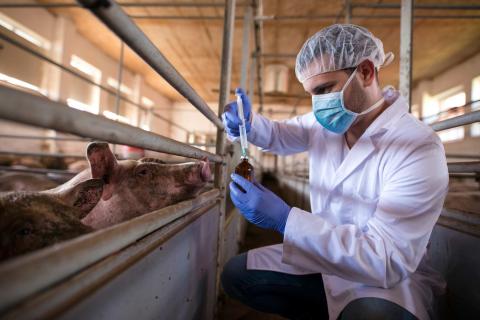
An international team has used the CRISPR gene-editing tool to modify a key gene for the replication of the classical swine fever virus in pigs. The experiment, conducted on four animals, showed complete protection against the disease. According to the researchers, this breakthrough could serve as an additional method for controlling this type of virus, which entails significant economic and animal welfare costs. The results are published in the journal Trends in Biotechnology.

Different antidepressant drugs cause different side effects in the body, in parameters such as heart rate, blood pressure or body weight, according to a meta-analysis published by The Lancet. For example, agomelatine administration is associated with weight loss, while other molecules such as maprotiline are associated with weight gain. The research brings together 151 studies and 17 reports from the US Food and Drug Administration (FDA), including more than 58,000 people and comparing 30 antidepressant drugs with a placebo.
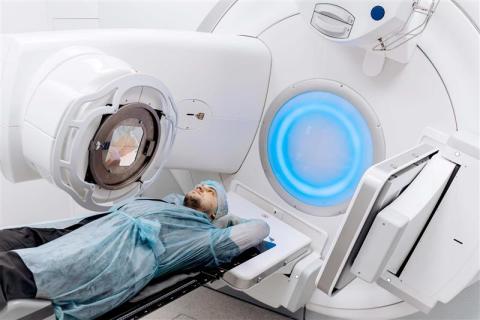
Between 2003 and 2017, the incidence of six types of cancer—thyroid, breast, colorectal, kidney, endometrial, and leukaemia—increased in young adults in three-quarters of 42 countries included in a study published in Annals of Internal Medicine. For all of these types of cancer, except colorectal, diagnoses also increased in adults over the age of 50. The study analyses data on 13 types of cancer and notes that those with increasing incidence include some of the most obesity-related cancers, such as endometrial and kidney cancer.

Age-related macular degeneration (AMD) is the leading cause of irreversible blindness and there is no treatment that can restore vision. Now, an international team has tested a device that combines a small wireless chip implanted in the back of the eye with high-tech glasses. The scientists have managed to partially restore vision in people with an advanced form of the disease. Specifically, 26 of the 32 people who completed the trial had clinically significant improvement and were able to read. The results are published in the journal NEJM.

A research group at Stanford University (United States) has organised the first academic conference in which artificial intelligence (AI) tools serve as both authors and reviewers of scientific articles. Called Agents4Science 2025, the conference will take place on 22 October.

Some ecosystems are able to adapt to moderate droughts, even if they last for several years. However, in scrublands and grasslands, when the phenomenon is extreme and prolonged, their capacity to store carbon plummets. This is the main conclusion of an international study that has assessed the effects of the duration and severity of droughts on the productivity of 74 grassland and pasture ecosystems on six continents. According to the authors, the most vulnerable areas are arid and semi-arid regions, such as those in the Mediterranean region and the southwestern United States. The study, published in Science, involves CREAF, CSIC and IICG-URJC, among other centres.

Although most cancer cases are considered sporadic, some are defined as hereditary, as certain individuals carry variants in their DNA that increase their risk. A team in the United States has analysed the genetic information of more than 400,000 people and concluded that the proportion of those with known risk variants is slightly higher than 5%. This figure is higher than expected: nearly double for variants of the BRCA1 or BRCA2 genes and between 10 and 20 times higher for variants related to thyroid cancer. The results are published in the journal JAMA in research letter format.

Severe combined immunodeficiency due to ADA enzyme deficiency is a rare disease that, without treatment, usually causes death within the first two years of life. These "bubble children" are currently treated with a bone marrow transplant or with injections that aim to restore, to the extent possible, the function of this enzyme. Now, an international team presents the results of a gene therapy administered to 62 children with the disease between 2012 and 2019. The therapy was effective in 95% of cases and did not cause serious complications, according to the authors, whose work is published in the journal NEJM.