
Taking melatonin supplements to treat insomnia for more than a year is associated with an increased risk of heart failure—including an increase in hospitalisations and mortality—within five years of use, according to a study presented at a conference of the American Heart Association. The study compared a group of 65,000 adults diagnosed with insomnia who had a prescription for melatonin with another group who did not have a prescription for this supplement.
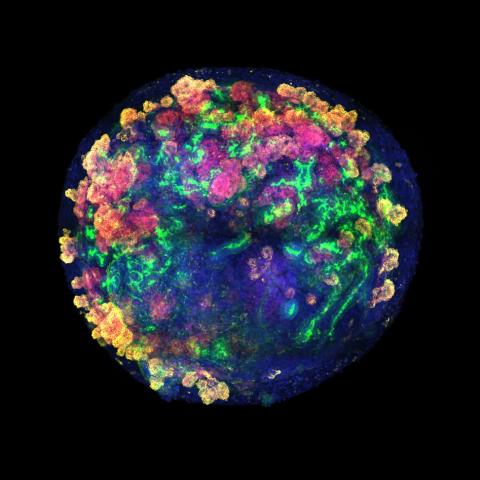
An international team, including several Spanish groups and coordinated by the Institute for Bioengineering of Catalonia (IBEC), has developed a pioneering technology that allows for the creation of multiple human kidney organoids, their combination with pig kidneys outside the body, and their successful transplantation back into the same animal. The method could contribute to improving future research and, according to the authors, allows us to envision a future clinical scenario in which organs destined for transplantation can be treated and conditioned before implantation. The work is published in Nature Biomedical Engineering.

While preparing a systematic review of animal studies on subarachnoid hemorrhage —a particular type of stroke— a Dutch team detected suspicious images and redirected their research: they analyzed 608 publications considered relevant, looking for potential problems with their results. Their findings indicate that 243 (40%) contained duplicate or potentially manipulated images, raising doubts about their reliability. The vast majority (87%) originated in China, and only 22% had been corrected. According to the researchers, these findings “could explain why, despite hundreds of animal studies published in this field, we still lack effective treatments for early brain injury in patients with hemorrhagic stroke”. The results are published in Plos Biology.

The use of hormonal contraceptives is associated with a small increase in the risk of breast cancer—one additional case of cancer for every 7,752 women who use these drugs—according to a Swedish study. The risk varies depending on the type of hormones administered, and is slightly higher with the use of contraceptives containing desogestrel. The study, published in JAMA Oncology, analyses data from a national registry between 2006 and 2019, with more than two million women aged between 13 and 49.
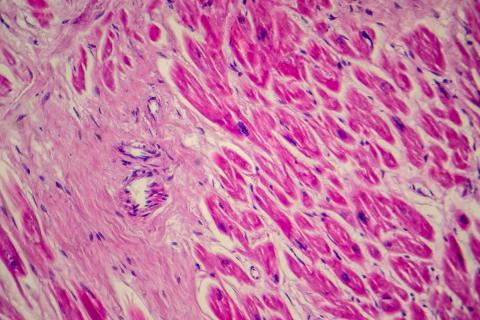
[The BMJ has retracted this article on 31 March, after having published an "expression of concern" on November 12] A phase 3 clinical trial has analyzed the effectiveness of administering stem cells to prevent heart failure in people who have suffered a major heart attack. The trial included 396 patients, 136 of whom received a stem cell infusion. According to the results, published in The BMJ, the treatment significantly reduced the rates of heart failure, although it did not affect mortality.

Around 5,800 deaths per year in Spain between 2012 and 2021 can be attributed to heat—twice as many as during the 1990s—according to a report published in The Lancet. In addition, of the deaths that occurred during 2022, around 22,000 can be attributed to air pollution, the publication adds. The Countdown report describes the impact of climate change on global health with more than 50 indicators reviewed by scientists. In the period 2020-2024, 61% of Spanish territory experienced at least one month of extreme drought per year; this figure is six times higher than the average for the period 1951-1960.

Even if they have not been diagnosed with coeliac disease or wheat allergy, one in 10 people say they experience symptoms – gastrointestinal, fatigue or headache – after eating wheat or other foods containing gluten, according to a meta-analysis published in the journal Gut. This sensitivity is strongly associated with being female, psychological distress and irritable bowel syndrome, according to the study.

COP30 will kick off on 10 November in Belém, a Brazilian city and gateway to the Amazon. Expectations are high because it coincides with the tenth anniversary of the Paris Agreement, whose goal of limiting the temperature increase to 1.5 °C was shattered in 2024. In addition, this year countries must present a new version of their measures to combat climate change in a turbulent geopolitical context, marked by the Trump administration's abandonment of the climate agenda.

An Italian team has studied the factors that are increasing the frequency of massive floods in the Mediterranean region. According to their analysis, and in a context of climate change, a “dead end” effect is occurring in which mountains close to the sea block moisture and “trap” rain over the region. The article focuses on the floods suffered by the Emilia-Romagna region (Italy), but according to the authors, other Mediterranean areas with a similar geography, including Valencia and Catalonia, “could face the same risks and these events could become more frequent as the climate continues to change.” The results are published in Scientific Reports.
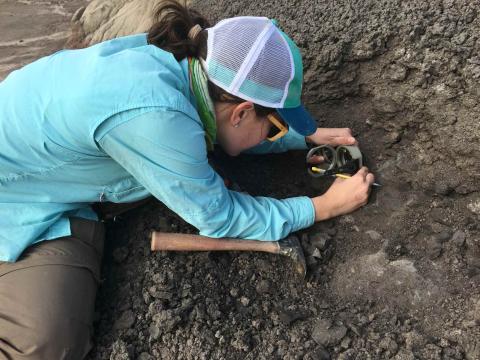
Although it is accepted that the impact of a large meteorite was what caused the extinction of the non-avian dinosaurs at the end of the Cretaceous, there are various theories as to whether their disappearance was sudden or if their population was already in gradual decline. An international team with Spanish participation has analyzed new fossil data from northern New Mexico (USA) and concluded that they were not in decline, but were abruptly exterminated by the impact that occurred some 66 million years ago. The results are published in the journal Science.