
Gilberto and Tomás are two macaques trained to synchronise their movements with the rhythm of a metronome, who were also able to tap to a musical beat, according to a study published in Science. This result contradicts the vocal learning hypothesis, according to which only species capable of complex vocalisations can perceive and follow a musical rhythm.

Viruses that cause avian influenza are capable of replicating at temperatures higher than a typical fever, according to a study in in vitro models and mice. ‘Fever-resistant replication could help explain why avian viruses and pandemic influenza viruses with avian PB1 cause more severe disease in humans,’ the authors write in the journal Science.

A study published in Scientific Reports concludes that adults who use Instagram very frequently overestimate their ‘addictive’ use, which complicates self-control and increases feelings of guilt. According to the research, excessive use, in most cases, is not an addiction but a habit. The study was conducted on more than 1,000 Americans and suggests that the fact that many think they have an ‘addiction’ may be related to the media's frequent use of this term when talking about social media.
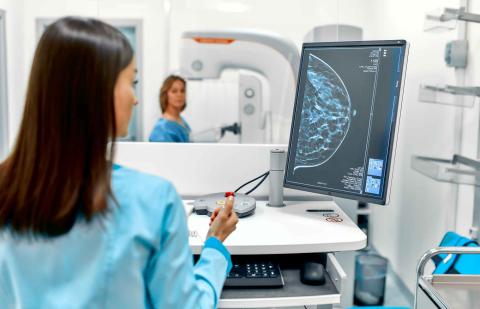
An artificial intelligence (AI) model trained on over 400,000 mammograms and analyzed in a separate sample of over 240,000 improved cancer risk prediction in cases of dense breasts, which are more common in young women or those with a low body mass index. This is an important factor in screening, especially because it can hinder tumor detection. The results are presented as an abstract, not yet peer-reviewed, at the annual meeting of the Radiological Society of North America.

Consuming up to four cups of coffee a day is associated with an increase in telomere length in people with severe mental disorders, such as schizophrenia or bipolar disorder. Telomere length is an indicator of cellular ageing and is shorter in people with these disorders, although the causes are not clearly understood. According to the study, published in BMJ Mental Health, the effect shown is comparable to ‘a biological age five years younger’ in coffee drinkers.
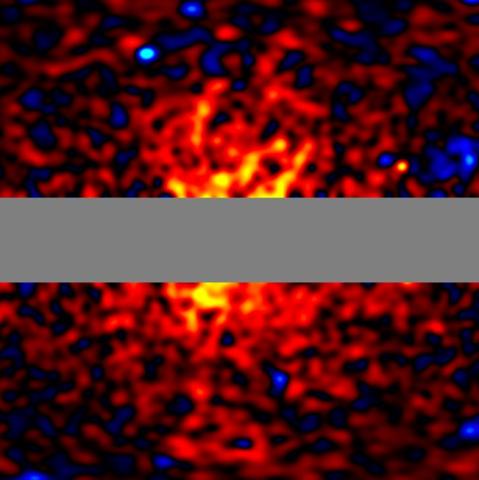
A century ago, astronomer Fritz Zwicky observed that galaxies were moving faster than their mass should allow, leading him to infer the presence of an invisible structure, dark matter. Since the particles that make up dark matter do not interact with electromagnetic force, they cannot be observed directly, as they do not absorb, reflect, or emit light. Now, NASA's Fermi space telescope has found specific gamma rays in the center of the Milky Way that are consistent with the decay of theoretical dark matter particles, although they could also come from other sources. “If this is correct, to my knowledge, it would be the first time that humanity has ‘seen’ dark matter,” said study author Tomonori Totani in a press release. The article is published in the Journal of Cosmology and Astroparticle Physics.

A research team identified five major phases of brain topology throughout human life—changes in the structure of neural connections—as detailed in an article published in Nature Communications. Using brain images from 3,802 people between the ages of 0 and 90, it defines four turning points around the ages of 9, 32, 66, and 83.

The power of communication to represent violence against women has been on the table for scientific and social debate for more than two decades. However, after 25 years of manuals on how to address gender-based violence in journalism, inadequate coverage persists, still romanticising it or simplifying its approach as emotional violence.

A new article published in eClinicalMedicine measures mental health problems in the Gaza Strip among the population over 40 years of age before and after the genocide committed by Israel. The study indicates that the proportion of these adults experiencing high levels of distress has tripled in the last five years, with a peak following the escalation of the massacre since October 2023. It was already known that chronic stress factors affecting victims pose a serious threat to mental health, but no longitudinal study had yet been conducted comparing distress in the same individuals before and after the genocide.
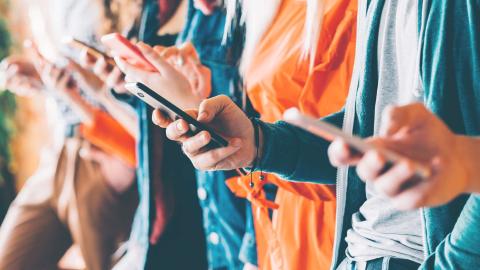
Avoiding social media for a week can reduce symptoms of anxiety, depression, and insomnia, according to a study published in JAMA Network Open. The study measured the mental health of a group of 373 people aged 18 to 24 in the US before and after a week without using Facebook, Instagram, Snapchat, TikTok, or X. The authors caution that the durability of these results and their associations with behaviour require further research.