
An international team has used a type of artificial intelligence (AI) to identify the most important factors influencing cancer survival in almost every country in the world. The study provides information on policy improvements or changes that could be implemented in each nation to have the greatest impact. In general, access to radiotherapy, universal health coverage, and economic strength emerged as common and important factors. Furthermore, information for each country, including Spain, can be accessed through an online tool. The results are published in Annals of Oncology.

Moderate-intensity physical activity, such as walking at an average speed of 5 km/h for an additional five minutes per day, is associated with a 10% reduction in all-cause mortality among most adults, according to a study published in The Lancet. The research also found that reducing sedentary time by 30 minutes per day was associated with an estimated 7% reduction in all-cause mortality if adopted by most adults. The study analyzed data from more than 135,000 adults from Norway, Sweden, the United States, and the United Kingdom, with an average follow-up of eight years.

Although extensive livestock farming has increased in some regions, it has also decreased in 42% of pastures dedicated to this purpose, according to a study published in the journal PNAS that analyses data from 1999 to 2023. The decline has occurred in wealthy areas of the world, such as Europe, North America and Australia, where consumption trends have shifted towards animals such as pigs and chickens. The increase was seen in poorer areas, specifically in Africa, Asia, South America and Central America. The authors of the study, one of whom is Spanish, state that ‘reductions in livestock stocking rates can have significant ecological consequences at regional and global scales,’ affecting biodiversity and fire regimes.

A few days ago, research published in JAMA Network Open showed that, although the use of melatonin in children is growing, its effectiveness and long-term effects are unknown. It is important to note that there are several types of melatonin, with or without a prescription, and their effects also differ in children and adults.

Physical exercise of any kind shows similar benefits to psychological therapy for the treatment of depression in adults. This is one of the conclusions of a new systematic review by the Cochrane Collaboration based on data from almost 5,000 people, which is the latest update of a review first published in 2008. With regard to antidepressants, the research shows a similar effect, but the evidence is somewhat more limited. The authors point to the lack of robustness in terms of long-term treatment with physical exercise.
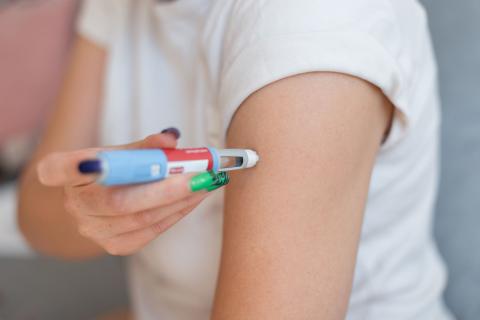
Stopping weight loss drugs is followed by weight regain and reversal of beneficial effects on markers of cardiovascular and metabolic health, such as high cholesterol and high blood pressure, according to a meta-analysis published by The BMJ. The research includes 37 studies published up to February 2025 involving more than 9,300 people.

An international team with Spanish participation has analysed hominid remains discovered in Casablanca (Morocco) and concluded that they could be very close ancestors of early modern humans. The fossils date from around the same period as the Homo antecessor found in Atapuerca—some 773,000 years ago—but are morphologically different. According to the authors, who published their findings in Nature, the fossils offer clues about the last common ancestor shared with Neanderthals and Denisovans, and support an African, rather than Eurasian, origin for H. sapiens.
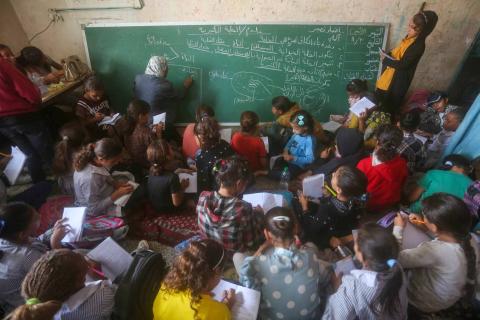
An international report led by the University of Cambridge (United Kingdom) warns that there is a serious risk of a ‘lost’ generation emerging in Gaza, due to the combination of educational, physical and psychological impacts after more than two years of the Israeli invasion. As of 1 October 2025, the UN Office for the Coordination of Humanitarian Affairs (OCHA) reported the deaths of 18,069 students and 780 education personnel in Gaza, with 26,391 students and 3,211 teachers injured. The study estimates that children in Gaza will have lost the equivalent of five years of education due to repeated school closures since 2020, first due to COVID-19 and then due to the Israeli invasion.
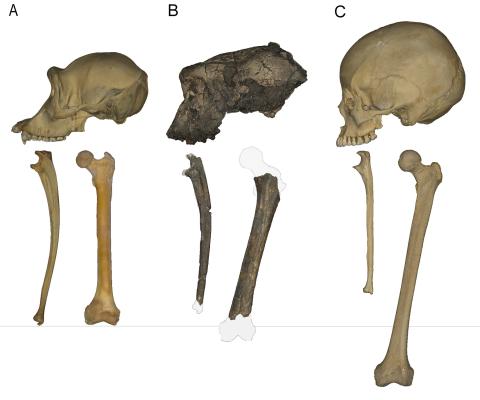
A US research team presents new evidence in Science Advances that Sahelanthropus tchadensis was a biped that evolved from an ape ancestor. Based on the study of two partial ulnas and a femur, they conclude that S. tchadensis—the oldest known hominid, which lived around 7 million years ago—had bones similar in size and shape to those of chimpanzees, but with a relative proportion more similar to that of hominids.
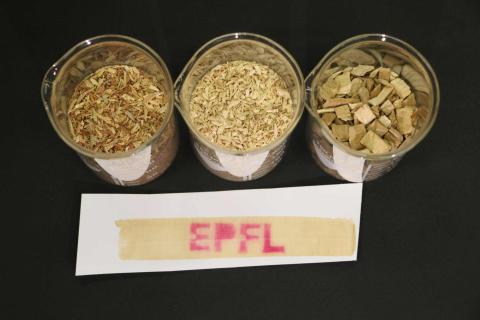
Thermal paper, designed for use with heat-sensitive inks and widely used for printing receipts, contains potentially toxic substances such as bisphenol A and S. Both are considered endocrine disruptors, as they have the ability to interfere with hormones. A new study published in Science Advances reveals a more sustainable and less toxic alternative based on wood derivatives. Specifically, they have surpassed bisphenol thermal coatings thanks to the plant derivatives lignin and D-xylose sugar derived from xylan (DFX).