
A team in China has studied the ability of a test to detect the human papillomavirus (HPV)—responsible for the vast majority of cervical cancers—in menstrual blood from more than 3,000 women. The results indicate that the test is comparable to current screening performed in medical offices. According to the researchers, “Using menstrual blood for HPV testing is practical and non-invasive, allowing women to collect samples at home and thus potentially offering a practical way to expand access to screening.” The study is published in The BMJ.

A study published in Nature suggests that a brain network that controls the execution of actions (SCAN), which was described in 2023, plays an important role in Parkinson's disease. Focusing treatments—such as transcranial stimulation—on the SCAN rather than other brain regions associated with movement could improve their effectiveness, according to the research.

The inclusion of transgender women in women's sports categories is a controversial decision. To compare body composition and physical fitness between transgender and cisgender women, a team from Brazil has conducted a meta-analysis encompassing 52 studies and 6,485 individuals, analysing these values before and after gender-affirming hormone therapy. Although trans women showed greater lean mass—an indicator of muscle mass—there were no significant differences in upper or lower body strength, nor in maximum oxygen consumption, compared to cis women one to three years after hormone therapy. ‘The current evidence is, for the most part, of low certainty and heterogeneous quality, but it does not support theories about the inherent athletic advantages of trans women over cis women,’ say the authors of the study, published in the British Journal of Sports Medicine.

In 2022, approximately four out of every 10 new cancer cases worldwide were due to modifiable risk factors, primarily tobacco or alcohol consumption and infections, including those caused by the human papillomavirus or H. pylori bacteria. These are some of the conclusions of a global study led by the World Health Organisation (WHO) and its International Agency for Research on Cancer (IARC), published in Nature Medicine. In Spain, 41.8% of cancer cases in men are attributed to modifiable external factors, compared to 26.1% in women, with smoking remaining the main factor (28.5% and 9.9%, respectively). The analysis is based on data from 185 countries.

The Prime Minister, Pedro Sánchez, announced on Tuesday from Dubai that Spain will ban children under the age of 16 from accessing social media and will adopt other measures to increase control over digital platforms and ensure that their executives are held accountable for violations. Sánchez made this announcement in his speech to the plenary session of the World Government Summit and announced that next week the government will approve a series of measures, including this ban.
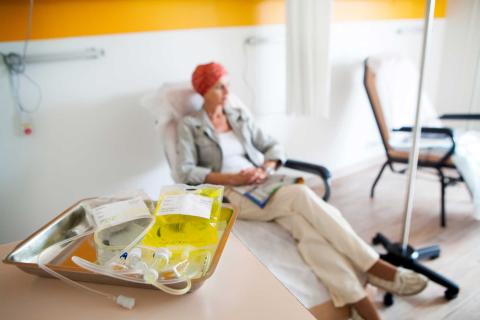
[Nature Medicine has retracted this article on 24 June 2026]
A phase 3 clinical trial conducted in China tested 210 patients with advanced non-small cell lung cancer—the most common type—to see whether the time of day when immunotherapy and chemotherapy were administered influenced their effectiveness. The data indicate that, on average, those who received therapy after 3 p.m. did not see their cancer worsen for 5.4 months. In contrast, those who received it before that time did not see their cancer worsen for an average of 11.7 months, almost twice as long. Overall, response rates were 56.2% and 69.5%, respectively. The results, published in Nature Medicine, suggest that scheduling therapy early in the day may offer a simple and cost-free way to improve treatment efficacy.
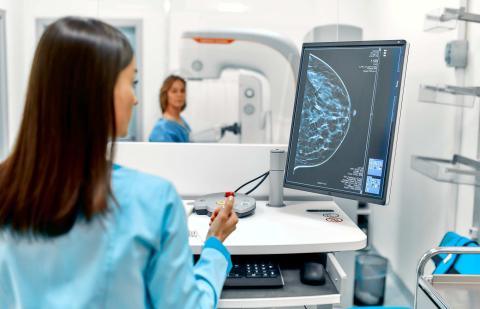
Between April 2021 and December 2022, more than 100,000 women in Sweden were randomly assigned to either AI-assisted mammography screening or double reading, where two radiologists review each mammogram without the aid of AI. AI-assisted screening identified more women with significant cancers without a higher rate of false positives and also achieved a 12% reduction in the rate of interval cancers—those that appear between mammograms because they went unnoticed or are newly developed and more aggressive—compared to the double reading procedure. This is the first clinical trial of its kind, and its results are published in The Lancet.

Genetics accounts for approximately 55% of the variability of human lifespan, which is more than double previous estimates, according to research published in the journal Science. The analysis is based on mathematical models and data from twin registries in Denmark, Sweden, and the United States. According to the authors, this high heritability is similar to that of most other complex human traits and to the influence of genetics on the life expectancy of other species.

The body composition index – used to estimate body fat reserves – of polar bears in Svalbard declined between 1995 and 2000, but then increased until 2019, despite the fact that the number of ice-free days in this Norwegian Arctic archipelago increased by about four days per year during that period. "Increases in some prey species, including harbour seals, reindeer, and walrus, may partly offset reduced access to seals," the authors write in Scientific Reports.
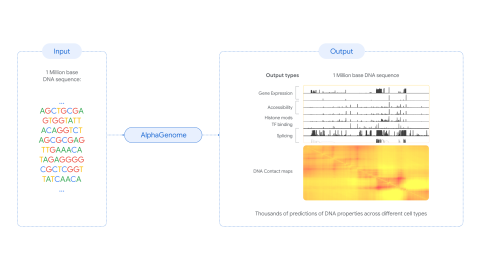
AlphaGenome is a deep learning model developed by Google DeepMind capable of predicting the function of DNA sequences up to one million base pairs long. An evaluation of the tool shows that it matches or improves upon the predictive ability of existing models in 25 of the 26 tests performed. According to the authors, who are part of Google DeepMind itself, AlphaGenome can help scientists "better understand genome function, the biology of diseases, and ultimately drive new biological discoveries and the development of new treatments." The results are published in Nature.