
A study published in The Lancet Oncology shows that age-adjusted breast cancer mortality has declined from 1990 to 2023, even though the number of cases has increased. In Spain, the mortality rate for this disease fell by almost 42% during this period, reflecting the success of screening, diagnosis and treatment in high-income countries, according to the article's data. Although incidence and mortality rates will remain stable, the authors predict that population growth and ageing will increase the number of breast cancer cases and deaths between now and 2050.

Cancer patients receiving a type of immunotherapy known as Immune Checkpoint Inhibitor (ICI) have a higher risk of serious adverse events, such as aortic aneurysm rupture, interstitial lung disease, myositis and liver failure, according to a study published in PNAS. "Establishing formal contraindications for ICI users seems warranted," concludes the analysis, based on more than 290,000 cases from pharmacovigilance databases of the US Food and Drug Administration and the World Health Organisation.

The transition zone between land and sea in glaciers is an indicator of their stability. An analysis of satellite measurements from 1992 to 2025 has shown that 77% of Antarctica’s coastline has experienced no change. The 23% that did see a reduction in area was concentrated in regions where deep troughs allow access to warmer waters and where the bed slopes inland. These include the Antarctic Peninsula, Wilkes and George V Lands, and West Antarctica, where retreat of this transition line ranged between 10 and 40 km. A total of 12,800 km² of ice has been lost —an area roughly equivalent to almost half the size of Galicia— most of it in West Antarctica. The results are published in the journal PNAS.

According to the newspaper El País, the Catalan Regional Government has reported a case of swine flu —not swine fever, which is caused by another virus and does not affect humans— in an 83-year-old person in the province of Lleida. The newspaper points out that, as the patient had no contact with pigs that could transmit the virus, they may have been infected by another person.

Spina bifida is a congenital malformation in which the spinal column does not close completely. A team in California (USA) has completed a phase 1 clinical trial testing, for the first time, a stem cell treatment combined with standard foetal surgery. The trial was conducted on six pregnant women with foetuses diagnosed with myelomeningocele, the most severe form of spina bifida. The six babies, born between 2021 and 2022, maintained the repair intact and had no serious adverse effects. The team will follow up carefully to ensure that the treatment remains safe and improves the children's quality of life. The results are published in The Lancet.
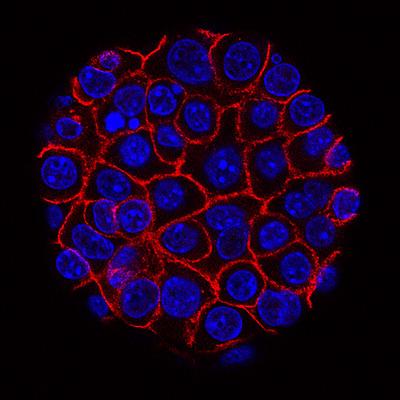
Although CAR-T cells have been effective against certain blood cancers, they have not worked well in solid tumors due to the lack of a common target on the surface of the cells. A study published today in the journal Science has developed ultra-sensitive CAR-T cells capable of detecting even very low levels of the CD70 protein, a promising target. The researchers succeeded in eradicating kidney, ovarian, and pancreatic tumors in preclinical models.

When Neanderthals and modern humans had offspring together, little Neanderthal DNA from the X chromosome entered the human gene pool. A study published in the journal Science traced ancient gene flow and found a relative excess of 62% modern human ancestry on Neanderthal X chromosomes. This suggests that the couples who had children were mostly Neanderthal men and modern human women, although the authors cannot rule out the possibility that demographic processes played a significant role.

The use of the drug orforglipron reduces blood sugar levels and body weight more than semaglutide, the other available oral GLP-1 receptor agonist treatment, according to a phase III clinical trial. The trial, funded by Eli Lilly, involved 1,500 people with type 2 diabetes who took the drug for one year in five countries, and the results are published in The Lancet.
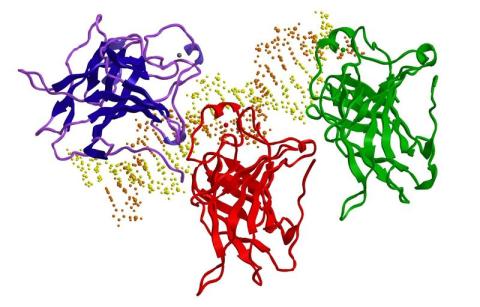
The p53 gene, known as the ‘guardian of the genome’, is a tumor suppressor gene that is mutated in more than half of all solid tumors in humans, affecting the function of the protein it encodes. However, there are no approved treatments capable of reactivating its function. A US team has tested a new drug in a phase 1 clinical trial that is capable of performing this function against a specific mutation, present in approximately 1% of solid tumors. After being administered to 77 people with different types of advanced or metastatic tumors, 20% showed a full or partial response, and the most common adverse effects were nausea or vomiting, according to a report published in NEJM.

A study conducted in South Korea collected data from more than 410,000 smokers over an average of nine years. The analyses indicate that the risk of developing Parkinson's disease in those who quit smoking during that period was about 60% higher than in those who continued to smoke; however, their risk of death was lower. According to the researchers, who emphasise that the study does not prove that smoking prevents Parkinson's disease, smoking ‘remains one of the leading causes of preventable death and contributes to the development of heart disease, cancer and chronic lung disease. The health benefits of quitting smoking remain substantial and clear.’ The results are published in Neurology.