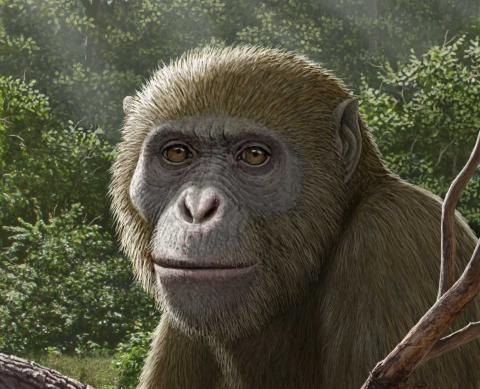
A newly discovered ape fossil in northern Egypt suggests that the closest ancestors of modern apes may have originated in North Africa, outside the East African regions that have traditionally been studied. Dating back between 17 and 18 million years, the new species —Masripithecus moghraensis — represents the closest known hominid relative to the lineage that ultimately gave rise to all living apes, including humans. The study is published today in the journal Science.

The economic costs of CO₂ emissions can be calculated in three ways: through the historical damages resulting from past emissions; through the expected future damages caused by those past emissions; and through the expected future damages from current or future emissions. A study published in Nature concludes that the future economic costs associated with past emissions could be at least ten times higher than the costs already incurred from those same emissions. The authors estimate that one tonne of CO₂ emitted in 1990 caused $180 (around €155) in global damages up to 2020, but will generate an additional $1,840 (nearly €1,590) by 2100. The analysis covers countries, high-net-worth individuals and major companies, as well as behavioural patterns, including taking an additional long-haul flight each year or choosing a non-vegetarian diet.

Individualised dosing of a synthetic inhalable formulation of mebufotenine, a psychedelic substance, led to improvements in depressive symptoms compared with placebo and was well tolerated. These are the results of a phase 2 clinical trial published in the journal JAMA Psychiatry, which includes Spanish participation. According to the authors, this supports its potential as a novel, fast-acting treatment for treatment-resistant depression.
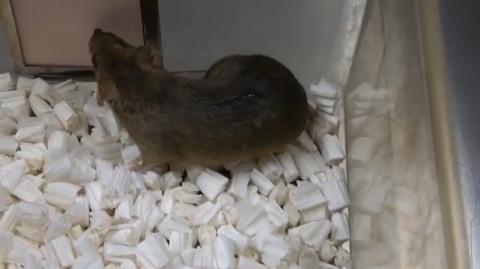
Repeated cloning cannot be sustained indefinitely in mammals, according to the findings of a twenty-year study on mice conducted in Japan. Serial cloning of mice led to an accumulation of lethal DNA mutations that affected birth rates from the 27th generation onwards, with the 58th generation being the last, according to the article published in Nature Communications, showing that sexual reproduction is necessary to prevent large-scale genetic mutations.
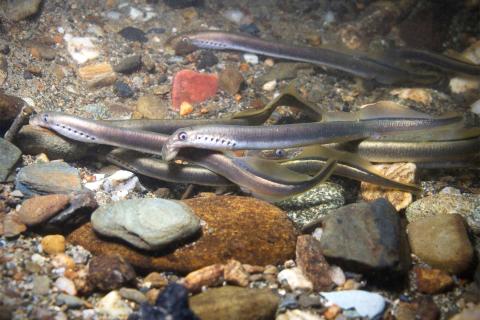
Worldwide, 349 species of migratory freshwater fish are at risk and meet the criteria for inclusion in the Appendices of the United Nations Convention on the Conservation of Migratory Species of Wild Animals (CMS), a global treaty designed to protect migratory animals. These fish are among the vertebrates most threatened by factors such as changes in river flow, habitat degradation, exploitation and pollution, the report warns. Among the priority species are 50 species from Europe, including the following freshwater fish from Spain: Alosa alosa (shad), Lampetra planeri (brook lamprey) and Salmo salar (Atlantic salmon).

Drought is linked to the growth of antibiotic-resistant bacteria in the soil, according to a study published in Nature Microbiology. Using data from hospitals in 116 countries, the study observes a link between local aridity and the prevalence of antibiotic-resistant bacteria, although the research does not prove a causal relationship between the two phenomena.

A team in the UK has developed the first laboratory-grown oesophagus in pigs that has been shown to safely replace an entire section of the organ and restore normal function, including swallowing, in a growing animal without the need for immunosuppression. The procedure, successfully carried out on eight pigs, involves removing cells from a donor organ, repopulating it with the recipient’s own cells and then implanting it. If this technology is adapted for use in humans, it could help in the treatment of newborns or children born with oesophageal atresia, a serious congenital malformation in which the oesophagus does not develop properly. The results are published in Nature Biotechnology.

The European Network of Transmission System Operators for Electricity (ENTSO-E) has published its final report on the blackout of 28 April 2025 that left mainland Spain and Portugal without power. The document, drawn up by a panel of 49 members, concludes that the blackout was caused by a combination of many interacting factors, including oscillations, deficiencies in voltage control, rapid power reductions and generator disconnections in Spain. These factors caused rapid voltage rises and cascading generation disconnections, leading to the blackout. At a press briefing, Damián Cortinas, Chair of the ENTSO-E Board of Directors, clarified: “The problem is not renewable energy, but voltage control, regardless of the type of generation”. He added: “This isn’t about high technology; it’s something we’ve been able to do for decades.” Experts have made recommendations to prevent similar situations in Europe, such as strengthening operational practices, improving monitoring of system behaviour, closer coordination and data sharing among electricity system operators. Furthermore, they have highlighted the need to adapt regulatory frameworks to implement these recommendations in line with the changing nature of the electricity system.

The German mathematician Gerd Faltings has won the Abel Prize, awarded by the Norwegian Academy of Science and Letters. Faltings, director emeritus of the Max Planck Institute for Mathematics, became a celebrity at the age of 29 for proving a conjecture that earned him the Fields Medal in 1986. His contributions have revolutionised arithmetic geometry, a branch of mathematics at the intersection of the two oldest: number theory and geometry.

Oral semaglutide is not effective in slowing the progression of the disease in patients with mild Alzheimer’s disease, according to the findings of the first large-scale, randomised phase 3 clinical trials published in The Lancet. In these trials, around 3,800 patients aged between 55 and 85 with a confirmed diagnosis and mild symptoms received up to 14 mg daily of oral semaglutide or a placebo. After two years, no significant difference in disease progression was observed.