
The accelerated extraction of critical minerals such as lithium and cobalt is causing water insecurity and health risks, according to a report by the United Nations University Institute for Water, Environment and Health (UNU-INWEH), which refers to them as the “oil of the 21st century.” The high water consumption of mining operations limits access to water for other purposes such as agriculture, fishing, and human consumption. Furthermore, data from various regions in South Africa, Bolivia, and the Democratic Republic of the Congo reveal “widespread heavy metal contamination and exposure to toxic waste,” the report states. This leads to health problems including fetal malformations and chronic diseases, which disproportionately affect women and children.
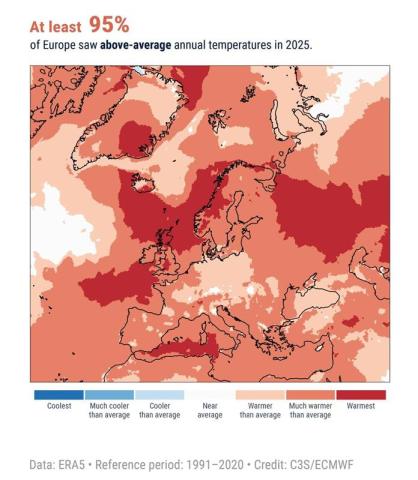
Rapid warming in Europe is reducing snow and ice cover, while very high air temperatures, drought, heatwaves, and record ocean temperatures are affecting regions from the Arctic to the Mediterranean. These are the main findings of the State of the Climate in Europe (ESOTC) 2025 report, prepared by the European Centre for Medium-Range Weather Forecasts (ECMWF), which operates the Copernicus Climate Change Service, and by the World Meteorological Organization (WMO). The data show that 95% of the continent recorded above-average annual temperatures last year, and river flows were below average for 11 months.
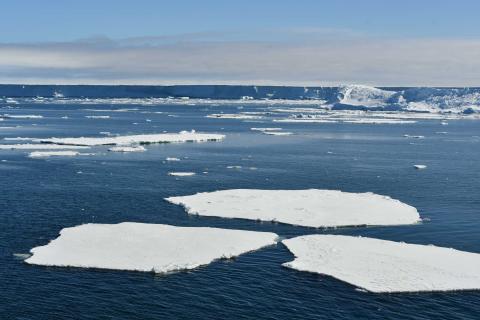
A new study, based on oceanographic data collected by ships and robotic floating buoys over several decades, provides the first evidence that a warm mass of deep circumpolar water is approaching Antarctica, threatening the fragile ice shelves that border it from below. This warming in the Southern Ocean has implications not only for Antarctic ice melt and sea-level rise, but also for global heat regulation, carbon storage and the global climate system. The study is published in Communications Earth & Environment.

Using Ireland as a case study, a new article published in the *Journal of Behavioral Addictions* has analyzed gambling advertisements, taking into account segmentation by gender and age group, as well as the actual reach of the ads. The team included 411 ads from 88 operators that ran between January and February 2025. The data was extracted from the Meta Ad Library, a database of advertising on Meta-owned platforms such as Facebook, Instagram, and Messenger. The total number of ads reached 2.3 times more men than women, and the most exposed age group was 25 to 34 years old. Twenty-two percent of the ads targeted men exclusively; none were aimed solely at women.
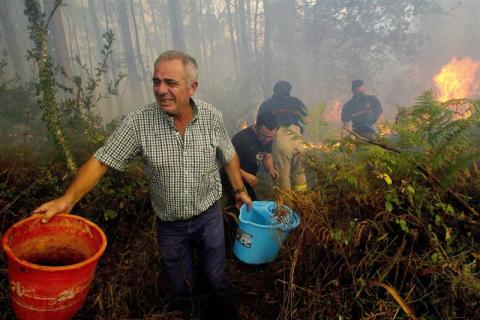
The way people respond to wildfire smoke varies depending on their level of education and only occurs once the smoke begins to pose a health risk. These are the main findings of a study based on geolocation data from 163,000 cell phones belonging to people exposed to air pollution during the 2018 wildfire season in California (United States). According to the authors, whose study is published in the journal PNAS, these gaps in awareness could pose an obstacle to interventions aimed at changing people’s behaviors.

Exposure to neurotoxic metals poses the greatest risk to children’s brain development between the ages of six and nine months, according to an analysis of baby teeth from 489 children in Mexico. The study, published in Science Advances, identifies this window as a critical developmental stage during which exposure to these metals is linked to increased behavioural problems in childhood and smaller brain volume. The study includes boys and girls aged between 8 and 14 years old and uses their milk teeth as biomarkers to reconstruct concentrations of lead, zinc, copper, manganese, magnesium, lithium, strontium, barium and tin, from 20 weeks before birth to 40 weeks after.

Between 2010 and 2020, nearly 2.6 million sudden deaths were recorded in Europe. This finding shows an upward trend in sudden death–attributable mortality of 2.9 % per year, with a significantly greater increase in women—although the majority of sudden deaths occurred in men—and clear geographic differences, with higher increases observed in Eastern and Southern Europe. Spain showed the greatest increase among the countries analysed, with an average annual rise of 3.3 %. The results were based on mortality data from the World Health Organization (WHO), covering 26 European countries and more than 53 million deaths. The study, published in The Lancet Regional Health, did not investigate the underlying causes, but the authors hypothesise that differences in cardiovascular risk profiles, access to healthcare, and emergency response systems may contribute to the observed trends.

A study published in Science analyzed more than 100,000 human neocortical cells from weeks 13 to 23 of gestation, when cortical neurons are generated. The samples came from 26 donors, some with and others without Down syndrome. Using single-cell genomics, they observed how trisomy 21 disrupts the developmental sequence of various types of neurons, which could explain subsequent differences in cognition. A second study in the same journal, which examines the postnatal brains of children with Down syndrome, finds that many of these changes persist into childhood. The authors note that their study will not have short-term clinical applications, but they hope it can be used to develop specific drugs or create gene therapies.

A study claims that 98% of the environmental claims made by meat and dairy companies constitute greenwashing—statements and promises of environmental action that are not backed by scientific evidence. The analysis is based on 1,233 claims published between 2021 and 2024 in sustainability reports and on websites (for example, “producing carbon-neutral dairy products by 2050 at the latest”) by 33 major companies, including Danone and Nestlé. “The meat and dairy industry may be misleading consumers and investors about whether and to what extent they are addressing environmental impacts, including climate change,” the authors write, whose study is published in PLoS Climate..
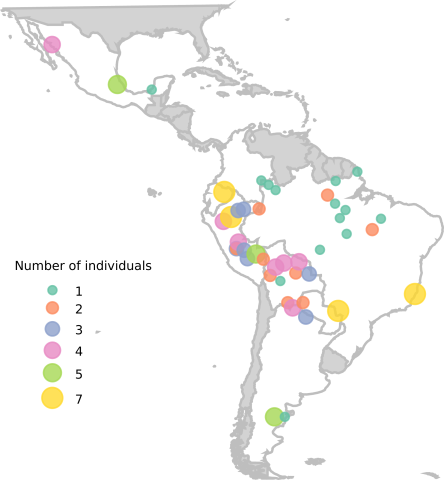
An international team led by the Institute of Evolutionary Biology (IBE), a joint center of the Spanish National Research Council (CSIC) and Pompeu Fabra University (UPF), has compiled the largest genetic database of Native American populations to date, including 128 new complete genomes. The research identified more than one million genetic variants not previously observed in other populations, revealing a unique genetic diversity. According to the authors, who published their work in Nature, “these results demonstrate the need to better represent these populations in genomics.”