
A team from the United States has analysed the performance of 21 large artificial intelligence (AI)-based language models—including ChatGPT, Gemini and Grok—for clinical diagnosis. Their conclusions are that, despite advances in these models, their reasoning capabilities remain limited for initial diagnosis and that they should not be relied upon without the supervision of a medical professional. According to the authors, who published their findings in JAMA Network Open and aimed to “help distinguish reality from hype in the use of these tools”, the results “reinforce the idea that language models in healthcare still require human intervention and very rigorous supervision”.

Premature births, babies born with birth defects, bad luck, satellite and telecommunications failures… Eclipses are attributed with a wide variety of consequences that have no scientific basis and are largely rooted in cultural traditions and deep-seated misconceptions. With the help of expert sources, in this article we explain why some people believe in them, what the main risks are and how to counter them.

Permanent splits in chimpanzee groups are extremely rare—an event that occurs once every 500 years, according to genetic evidence. The journal Science reports on the split of the largest known group of wild chimpanzees following 30 years of observations. This involves the Ngogo chimpanzees in Kibale National Park (Uganda). The group shifted from cohesion to polarization in 2015 and eventually split into two distinct groups in 2018. From that point on, violence escalated, and members of one group killed at least seven males and 17 infants from the other. In the 1970s in Gombe (Tanzania), another case of this type was documented, but the chimpanzees had been fed by humans-
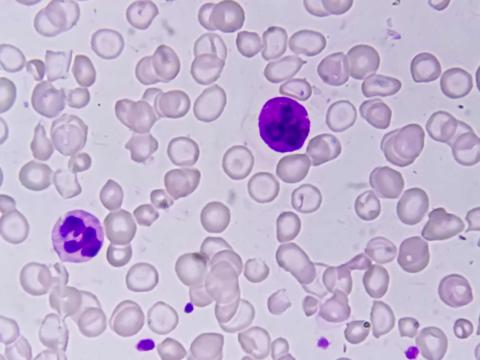
For the first time, CAR-T cell therapy has been used to treat a patient with three different autoimmune diseases – autoimmune haemolytic anaemia, immune thrombocytopenia and antiphospholipid syndrome – which were life-threatening and had resisted years of treatment. The patient, who previously required daily blood transfusions, has been in remission for a year without the need for further treatment since then. The case report, published in the journal Med, suggests that these therapies may help treat complex and severe autoimmune diseases.

GLP-1 medicines for the treatment of obesity show considerable variability between individuals. Using data from 23andMe, scientists at this genetic testing company conducted genome-wide association studies in nearly 28,000 people treated with these drugs, analysing self-reported weight loss and adverse effects. Their findings, published in Nature, identified variations in two genes involved in gut hormone pathways that regulate appetite and digestion, although the authors caution that the effects of genetics appear to be modest.

The exaggeration of actual or potential successes is a risk in science communication, which is subject to highly competitive funding and publication dynamics. As a result, there are fields of research that appear revolutionary but fade away after years of promise, although more often than not they do lead to modest advances in the long term. Spotting the hype and reporting on it rigorously is one of the challenges science journalists face every day. Here are our tips.

Neuromuscular taping, or Kinesio taping, is widely used to relieve joint and muscle pain and improve range of motion. However, a meta-analysis published in the journal BMJ Evidence-Based Medicine concludes that it may not be as effective as previously thought. This adhesive tape may provide immediate or short-term benefits, but the current evidence is “highly uncertain”. The authors conclude that the lack of robust evidence, coupled with the potential for associated skin irritation, could limit its use in clinical practice.
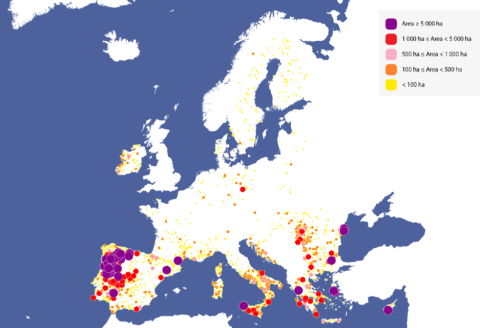
The 2025 wildfire season was the worst the European Union has seen in the last century. According to a report by the European Forest Fire Information System (EFFIS), managed by the European Commission’s Joint Research Centre (JRC), more than one million hectares were burned last year. Some 43% of that figure was burned in the major fires that occurred in Spain and Portugal during the summer. The report also covers the rest of the European continent, the Middle East, and North Africa, resulting in a total of more than two million hectares of burned area.

A team from Australia has conducted a review of various types of studies on e-cigarettes from 2017 to 2025. Their conclusion is that e-cigarettes containing nicotine are likely carcinogenic to humans and will cause an as-yet-undetermined number of cases of mouth and lung cancer. In a press release, the authors, who published their findings in the journal Carcinogenesis, state that “the conclusion is unequivocal, although it will take decades for human studies estimating the risk to accumulate.”

Artificial intelligence (AI) chatbots that offer advice and guidance on everyday matters may be reinforcing harmful beliefs in their users through flattering responses. This is one of the conclusions of a study published in the journal Science, which analysed 11 large AI-based language models from companies such as OpenAI, Google and Anthropic. The research shows that this flattery is both frequent and harmful: it can undermine users’ ability to be self-critical and influence responsible decision-making.