
For months, Spain has been preparing to host an astronomical milestone: a trio of solar eclipses that will be visible mainly from the peninsula, Ceuta, and Melilla. In addition to explaining what they are and why they are important, this article will tell you where to find expert sources to answer your questions about this fascinating phenomenon.

In certain hospital interventions that replace medical doctors with nurses, there is little or no difference in patient mortality and quality of life, according to research that brings together the results of 82 previous studies, and includes data from healthcare personnel from different specialities. "While our findings suggest there is merit in pursuing [nurse-physician substitution] as a solution to shortages and maldistribution of doctors, it is also important to consider the implications of [nurse-physician substitution] on the availability of nurses and future developments in the scope of nursing practice," the authors write in the study, published in the Cochrane Database of Systematic Reviews.
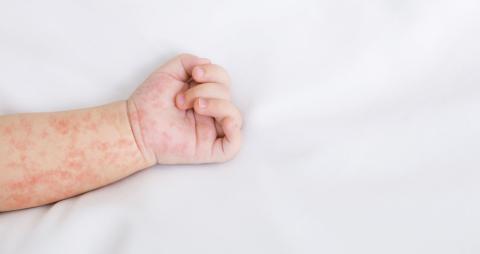
Measles cases in Europe and Central Asia fell in 2025 compared with 2024, according to preliminary data reported by 53 countries in the World Health Organization (WHO) European Region. This decline aligns with the preliminary figures published this week by the European Centre for Disease Prevention and Control (ECDC). According to the WHO, countries in Europe and Central Asia reported 33,998 measles cases in 2025, representing a decrease of nearly 75 % compared with the 127,412 cases recorded in 2024. In Spain, however, the number of cases has increased, as shown by data from the Carlos III Health Institute. A few weeks ago, the WHO announced that Spain had lost its measles-free status.
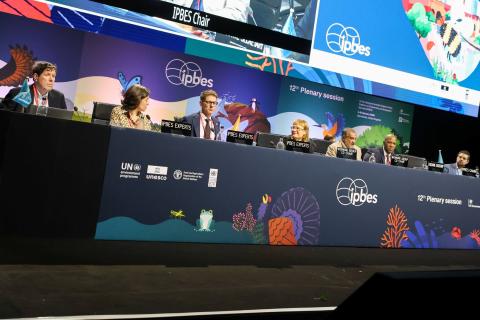
Meeting in Manchester (United Kingdom), the plenary session of IPBES (Intergovernmental Science-Policy Platform on Biodiversity and Ecosystem Services) ratified its Assessment on Business and Biodiversity, which presents data to understand the dependence and impact of businesses on nature and proposes more than 100 measures to improve the global situation. Three of its representatives explained the main results and proposals at a briefing organized by SMC Spain.

The claim that one type of tree—Picea abies—can anticipate a solar eclipse through electrical signals is based ‘on speculative interpretations and unsupported evolutionary assumptions,’ according to an opinion piece published in the journal Trends in Plant Science. The paper refutes another from 2025 that claimed these trees synchronised their bioelectrical behaviour hours before a solar eclipse in Italy's Dolomite region. According to the authors of the new article, this electrical activity can be explained by temperature changes and atmospheric electrical discharges.
Statins are a group of drugs widely used to lower cholesterol levels and reduce cardiovascular risk. Although they have been associated with various adverse effects, a meta-analysis of 19 clinical trials with more than 120,000 participants in total concludes that only four of the 66 side effects listed in the package inserts are caused by statins themselves and the risks are very low. The authors, who published their findings in The Lancet, recommend revising the current list of side effects on statin labels to better reflect the evidence so that patients and doctors can make clearer and more informed decisions about treatment.
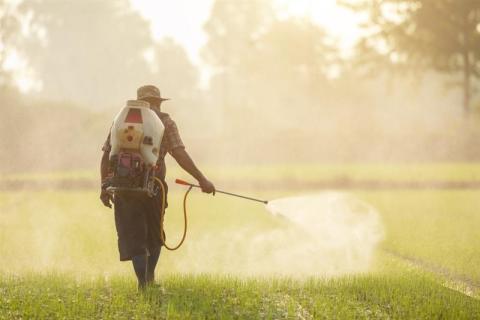
A study published in Science shows a global increase in the toxicity and ecological harm caused by pesticides, contrary to the United Nations’ goal of halving pesticide-related risks by 2030. The authors analysed Total Applied Toxicity (TAT), which accounts for both pesticide use and toxicity, at a global scale between 2013 and 2019. The data covered the risks of 625 pesticides across eight species groups and 65 countries, representing 79.4% of global cropland. TAT increased in six of the eight species groups, including all invertebrate groups and terrestrial plants, and only Chile would meet the target of reducing pesticide risk by 50% by 2030.

Device-independent quantum key distribution (DI-QKD) is a key step toward the quantum internet, as it provides the highest level of cryptographic security allowed by quantum mechanics. For it to have practical applications in a communication network, it must be achieved between nodes that are sufficiently far apart. An article published in Science demonstrates DI-QKD for the first time between two single-atom nodes connected by 100-kilometer-long fibers. This distance would be sufficient to achieve cryptographic security at a metropolitan scale.
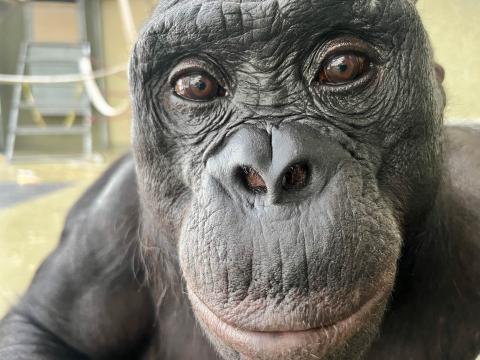
Two researchers from Johns Hopkins University (United States) have shown for the first time, through three experiments, that apes can use their imagination and play pretend, a skill previously thought to be unique to humans. During the study, Kanzi, a 43-year-old bonobo, tasted imaginary glasses of juice and bowls of imaginary grapes. According to the researchers, ‘imagination has long been considered a crucial element of the human condition, but the idea that it is not unique to our species is truly transformative.’ The results are published in Science.

A study published in The BMJ suggests that the incidence of autism spectrum disorder (ASD) is comparable between boys and girls. The study included a sample of more than 2.7 million people born in Sweden between 1985 and 2020 who were followed from birth to a maximum age of 37. More than 78,000 were diagnosed with ASD. It was observed that boys are usually diagnosed between the ages of 10 and 14, five years earlier than girls. By the age of 20, the proportion of diagnoses is almost equal between the sexes. Before the age of 10, the ratio is 3:1 in favour of boys.