
An international team, including Spanish researchers, has analyzed data from more than 86,000 people aged 51 to 90 from 27 European countries and concluded that multilingualism—the habit of speaking more than one language—is associated with a reduced risk of accelerated aging. According to the authors, who published their findings in the journal Nature Aging, “these findings could inform educational and public health policies aimed at promoting cognitive resilience and functional capacity in older populations.”

A meta-analysis concludes that the use of beta-blockers is not necessary in patients who have suffered a heart attack but have normal cardiac function. The research, coordinated in Spain by the CNIC, brings together data from five clinical trials and 17,801 patients. One of these trials, REBOOT, already showed that patients who did not have reduced cardiac function after a heart attack did not benefit from treatment with beta blockers. According to this recent meta-analysis, published in the New England Journal of Medicine and presented at the American Heart Association Congress in New Orleans (USA), the use of these drugs does not reduce mortality, reinfarction or heart failure in this group of patients.
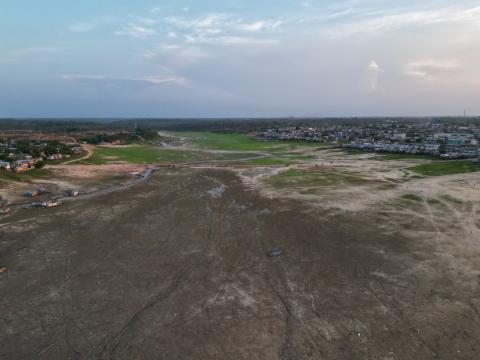
Lakes are considered sentinels of climate change, although most research has focused on temperate regions. An international team analysed 10 tropical lakes in the central Amazon during the 2023 drought, which caused high mortality among fish and river dolphins. Using satellite data and hydrodynamic models, the authors show how intense drought and a heatwave combined to raise water temperatures: five of the 10 lakes experienced very high daytime temperatures, exceeding 37°C. Specifically, temperatures in the shallow waters of Lake Tefé soared to 41°C—hotter than a thermal bath. The study is published in Science.

Since 2013, undeclared and uncertified exports of fins from five overexploited shark species have been illegal. Now, an international team has determined that illegal fins from four of those species remained prevalent in the market between 2015 and 2021. Among the countries cited as potential violators are Spain, China, and Taiwan. The study is published in the journal Science Advances.

A team from the Miguel Hernández University of Elche and the Alicante Hospital has implanted a microelectrode array in the brains of two blind people. This array is capable of sending electrical stimuli that evoke visual perceptions, something that has been done before, and also of "reading" neuronal responses and adapting to them in real time. The system has allowed them to recognize various complex patterns, movements, shapes, and even some letters. According to the researchers, this new technology "can help make the difference between perceiving a flash and seeing the world." The results are published in the journal Science Advances.
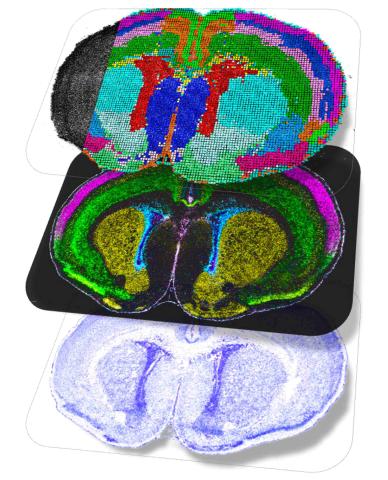
An international consortium has published the most detailed maps to date of brain development in mammals, including mice and humans. According to the researchers, this work provides a detailed outline of how different types of brain cells arise and mature over time, which “will allow us to begin discovering how alterations in this process can lead to disorders such as autism or schizophrenia.” The results are published simultaneously in a set of 12 articles in the journal Nature.
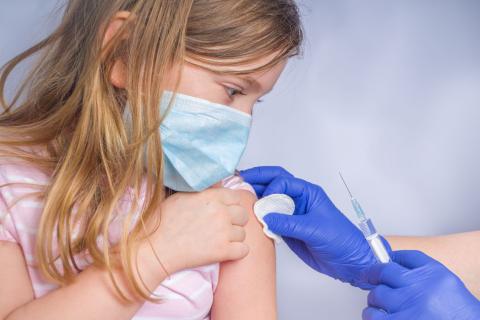
The Pfizer-BioNTech COVID-19 vaccine has been linked to rare cases of heart inflammation in children and young people. The largest study of these risks in children, published in The Lancet Child & Adolescent Health, concluded that receiving the vaccine is associated with a risk of developing myocarditis or pericarditis within six months of 0.85 additional cases per 100,000 vaccinated children; while after COVID-19 infection, the risk is 2.24 additional cases per 100,000. The study used data from 98% of the British population under the age of 18 (almost 14 million) between January 2020 and December 2022.

The adoption of plant-based diets could reshape agricultural employment worldwide. This is the main conclusion of an international study that estimates that by 2030, between 5% and 28% less agricultural labour would be needed, i.e. between 18 and 106 million fewer full-time jobs. The countries most affected would be those with agriculture based largely on livestock farming, while others, especially low-income countries, could need between 18 and 56 million more workers to grow fruit, vegetables, legumes and nuts. The study is published in The Lancet Planetary Health.

Large language models (LLMs) do not reliably identify people's false beliefs, according to research published in Nature Machine Intelligence. The study asked 24 such models – including DeepSeek and GPT-4o, which uses ChatGPT – to respond to a series of facts and personal beliefs through 13,000 questions. The most recent LLMs were more than 90% reliable when comparing whether data was true or false, but they found it difficult to distinguish between true and false beliefs when responding to a sentence beginning with ‘I believe that’.

Physical inactivity is a risk factor for the onset of Alzheimer's disease. An international team has studied nearly 300 people with preclinical Alzheimer's—without symptoms but with an accumulation of tau and beta-amyloid proteins in the brain—for 14 years to find out whether physical exercise can also influence its progression. The results indicate that even very moderate activity—walking between 3,000 and 5,000 steps per day—was associated with slower deterioration, while the benefits—which appear to be related to lower tau protein deposits—were greater and tended to stabilise with activity involving between 5,000 and 7,500 steps. The results are published in the journal Nature Medicine.