BC3 Basque Centre for Climate Change
If you are the contact person for this centre and you wish to make any changes, please contact us.
Research proffesor at Ikerbasque, the Basque Centre for Climate Change (BC3)
Head of International Relations at the Spanish Society of Public Health and Healthcare Administration (SESPAS), organiser of the 2026 European Public Health Conference (EUPHA), Ikerbasque Research Professor at the Basque Centre for Climate Change (BC3) and professor and researcher at the universities of Alcalá and Johns Hopkins
Scientific Director of the BC3 Basque Centre for Climate Change
Head of the Climate Change Adaptation Research Group at the Basque Centre for Climate Change (BC3) and expert in urban climate governance
Researcher at BC3 (Basque Center for Climate Change).
Ikerbasque Research Fellow at the Basque Centre for Climate Change
Ikerbasque research professor at the Department of Plant Biology and Ecology of the University of the Basque Country (UPV/EHU), Leioa, Spain and research associate at BC3. His research interests include ecology, evolution, conservation biology and biogeography. He is currently leading a research group in molecular ecology

A study published in Geophysical Research Letters shows that greenhouse gas emissions since the 2015 Paris Agreement are linked to the intensity of the heatwaves recorded in Europe since 2021. For the analysis, the team trained a generative artificial intelligence model and utilised climate models and meteorological observations. “We have found strong evidence that, had the heatwave that struck Europe in the summer of 2025 occurred without the emissions recorded since 2015, it would very likely have been cooler,” the authors state in a press release.
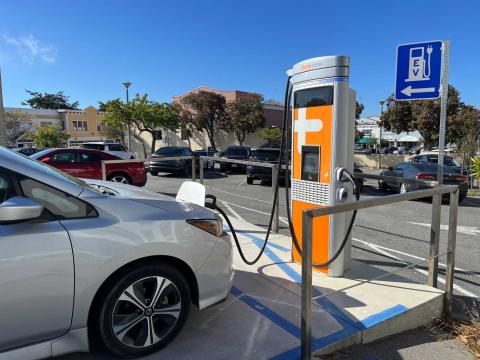
One of the main strategies for mitigating CO₂ emissions is the electrification of vehicles. Although taking vehicles that are still in good condition off the road has an environmental impact, a study published in the journal Science has shown that replacing them with battery electric vehicles brings long-term benefits, even when taking into account the emissions resulting from their manufacture. To address this issue, the authors estimated the life-cycle CO₂ emissions associated with keeping a combustion-engine vehicle in use, compared with scrapping it early and replacing it with an electric vehicle. The results show that the carbon footprint of manufacturing the new vehicle is reduced, as electric cars emit only a third of the greenhouse gases produced by combustion-engine vehicles.
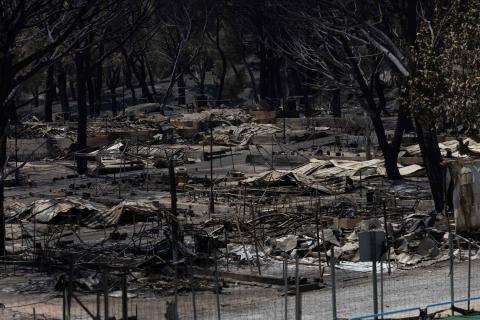
Human-induced climate change has made the ‘extreme’ weather conditions that fuelled the recent wildfires at least twice as likely in France and 20 times as likely in Spain, according to a new analysis by World Weather Attribution (WWA). The team analysed historical weather observations and used the Daily Severity Index (DSR), which incorporates heat, drought and wind conditions and reflects the difficulty of extinguishing a fire. The researchers examined the seven-day period with the highest DSR in south-western France and central Spain, where the fires occurred, and compared it with simulations of a pre-industrial climate. According to the study, under current climate conditions, events of this intensity are projected to occur once every 20 years in south-western France and once every six years in central Spain.
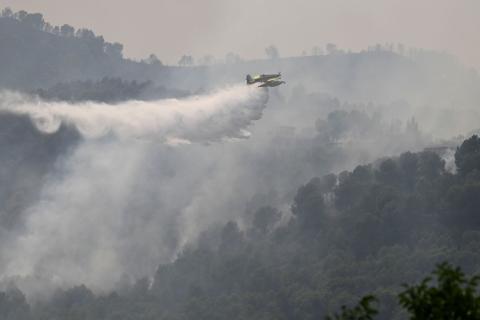
In some areas of Spain and France, the intensity of weather conditions that favour wildfires — heat, drought and wind — increased by up to 50 per cent between 2016 and 2025, compared with the period between 1981 and 2010. This is one of the conclusions of a study carried out by a team including Spanish researchers, which analysed national records of forest fires in southern Europe – Spain, Portugal, France, Italy and Greece – alongside meteorological and climatic data from 1981 to 2025. The data, published in Scientific Reports, show that the number of days with conditions conducive to fires also increased in some areas of these countries. However, the annual number of fires over the last decade was 40 per cent lower than in the 1981–2010 period in all countries – a decline which, according to the authors, is consistent with a reduction in fires caused by humans, driven by stricter regulations.

International entertainment events have a very high carbon footprint. The majority of this stems from emissions caused by spectators’ travel, which account for 82 per cent of the emissions from the 2026 FIFA World Cup and 97 per cent of those from Coldplay’s 2024 European tour, according to a study published in Communications Sustainability which analyses the environmental impact of both mega-events. The researchers propose that organisers should bear part of the carbon costs by rewarding fans with discounts for choosing more environmentally friendly modes of transport to attend the events.

A team from the UK and the Netherlands has estimated the environmental cost attributed to the actions of the top 10% of spenders—generally the wealthiest—both globally and in the richest country on each continent. Globally, they are responsible for damages worth between US$1.7 trillion and US$5.7 trillion. These figures exceed the funding needed to meet the 2035 climate finance target agreed upon at COP30—US$993 billion—and to cover the funding needed to halt biodiversity loss by 2030—US$657 billion. The study is published in Communications Sustainability, a journal of the Nature group.

Air conditioning in buildings is necessary to combat the high temperatures of summers, which are becoming increasingly long and hot; however, it is not without controversy due to its energy consumption and environmental impact. Today, the WHO is presenting its new guidance on health and heat action plans, in which it acknowledges that air conditioning is problematic, while also emphasizing the need for vulnerable populations to have access to these systems. In a recent briefing organized by SMC Spain, we analyzed its role in the fight against global warming.
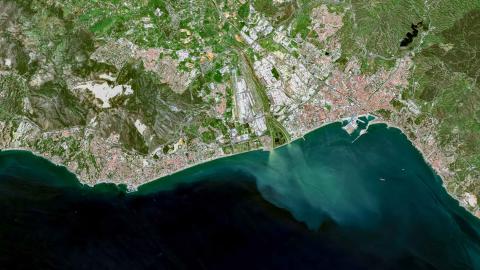
Rising sea levels have quadrupled the frequency of extreme events related to this phenomenon along coastlines since 1900. This is one of the conclusions of a study, which included Spanish participation, suggesting that climate change has already altered the risk of coastal flooding and highlighting the need to integrate these changes into adaptation and risk management strategies. More than 680 million people worldwide live in low-lying coastal regions, where small changes in sea level can significantly affect flood risk. The study is published in Nature Climate Change and aligns with another paper, published the same day in Science Advances, which states that since the 1970s, the number of days on which sea levels have exceeded annual averages has tripled.
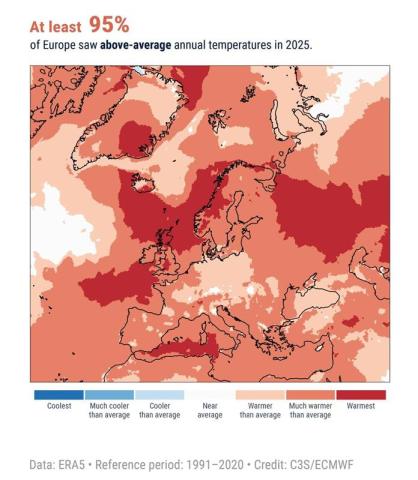
Rapid warming in Europe is reducing snow and ice cover, while very high air temperatures, drought, heatwaves, and record ocean temperatures are affecting regions from the Arctic to the Mediterranean. These are the main findings of the State of the Climate in Europe (ESOTC) 2025 report, prepared by the European Centre for Medium-Range Weather Forecasts (ECMWF), which operates the Copernicus Climate Change Service, and by the World Meteorological Organization (WMO). The data show that 95% of the continent recorded above-average annual temperatures last year, and river flows were below average for 11 months.
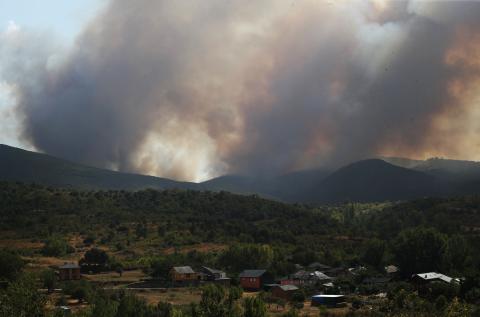
Forest disturbances in Europe—including fires, insect pest outbreaks, and windstorms—could double by the end of the 21st century compared with the 2001–2020 period if emissions are not reduced. In the case of wildfires, the annual area burned could nearly triple. The Mediterranean region ranks among the most vulnerable, and almost 90% of Mediterranean forests could be affected by increased fires and pest outbreaks under higher warming scenarios. The findings are published in a study in the journal Science involving Spanish research centers such as CREAF, the CTFC and the University of Girona.