
National Biotechnology Centre (CNB-CSIC)
If you are the contact person for this centre and you wish to make any changes, please contact us.
Co-director of the Microbiome Analysis Laboratory and Research Professor
Co-director of the coronavirus group at the National Biotechnology Centre (CNB-CSIC)
Research professor at the National Biotechnology Centre (CNB-CSIC) and at the CIBERER-ISCIII
CNB-CSIC Scientific Researcher at the CiMUS of the University of Santiago de Compostela, IDIS. Laboratory of Cell Senescence, Cancer and Aging
Virologist at the National Center for Biotechnology (CNB-CSIC)
Head of the Cerebral Cortex Development research group at the National Center for Biotechnology (CNB-CSIC)
Researcher at the National Biotechnology Centre (CNB-CSIC)
Researcher specialized in ecology and evolution of antibiotic resistance.
Virologist at the National Biotechnology Centre (CNB-CSIC)
CSIC Research Professor at the National Center of Biotechnology
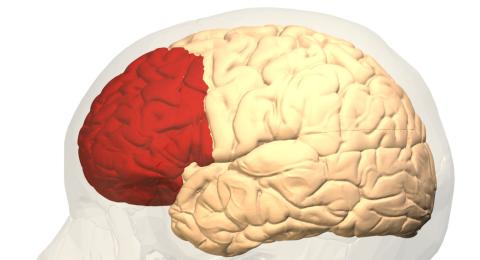
The prefrontal cortex is a brain region involved in some of the defining characteristics of human beings, such as planning, complex problem-solving, and impulse regulation. Researchers from the PsychAD consortium have created the most comprehensive map to date of gene expression in this region across the lifespan. According to the authors, the maturation process is complete by approximately age 24. The study—which will facilitate research into aspects of aging and cognitive decline—is published in Nature alongside seven other papers describing disease-related alterations and new genetic risk factors.

Over the last four years, we have seen that artificial intelligence (AI) is capable of playing a role in every stage of the scientific process. However, this carries risks: today, more than half of the peer reviews of papers are not carried out by researchers, but by AI systems, which are excellent at analysing proposals similar to others, but tend to reject innovative ideas. We are facing a revolution that is forcing us to redefine how we do science. Whether AI becomes a trick for misleading or a treat for the advance of knowledge will depend on us.
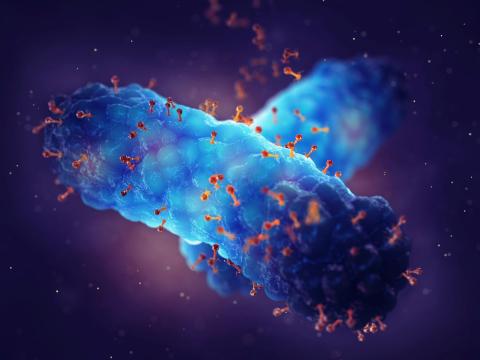
A team of researchers has designed complete and functional genomes for bacteriophages — viruses that feed on bacteria — from scratch using generative artificial intelligence (AI), and has tested them against bacteria that had developed resistance to this type of virus. The study, published in the journal Science, represents a step forward towards generative systems capable of designing complete biological systems. The authors also state that it raises important questions regarding biosafety and biosecurity.

In 2025, a six-year-old Chinese girl named Mei (not her real name) became the first person in the world to undergo gene-editing therapy targeting the brain. She had a developmental delay associated with a rare genetic syndrome, Snijders-Blok-Campeau syndrome. According to Science, her parents had raised $860,000 to partially fund the treatment at Xinhua Hospital in Shanghai (China), led by Zilong Qiu, one of the neuroscientists competing to apply base editors — a version of CRISPR — in children with rare diseases. Now, Science and Retraction Watch have exclusively revealed that Mei died from a severe immune reaction seven days after receiving the treatment, a story that had been kept hidden. The entry on clinicaltrials.gov has not been updated since 2025; and when Qiu and his team published animal studies related to the trial in the journal Nature in early 2026, according to the journalistic investigation, they omitted any reference to Mei and her family.
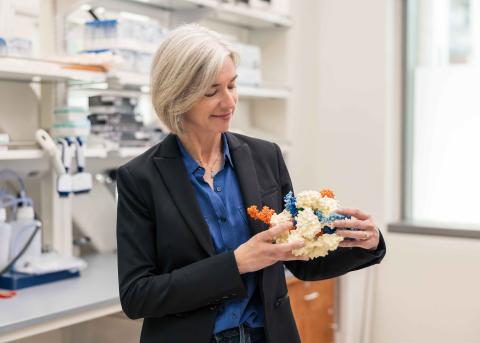
The range of CRISPR tools for genome editing can extend beyond nature-inspired designs thanks to proteins designed using artificial intelligence. A new study by Nobel laureate Jennifer Doudna’s team, published in Science, describes the design of synthetic RNA-guided nucleases, with sequences substantially different from those found in nature, which match or exceed the activity of their natural counterparts whilst offering novel properties.
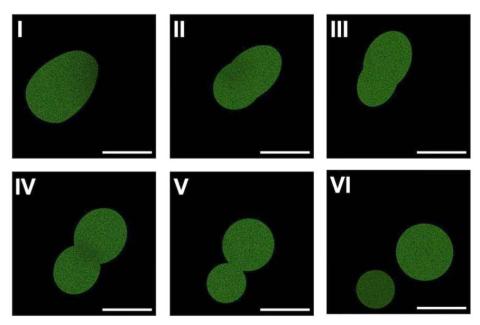
The team led by scientist Kate Adamala of the University of Minnesota has released the news—under an embargo—to several media outlets regarding the creation of a synthetic cell capable of feeding, growing, and replicating, which they have named Spudcell. Their work, which, according to Science News, was rejected by the journal Cell, is published on the team’s website, pending peer review.
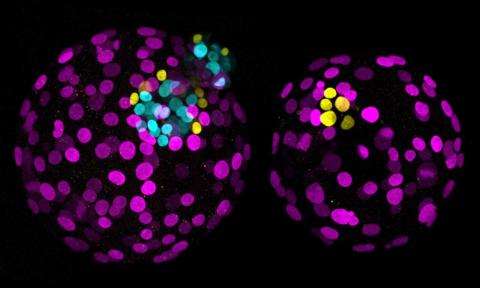
An article published in Nature describes how the first use of precision editing has shed light on a gene essential for embryonic development. The authors caution that the clinical application of genome editing in human embryos requires rigorous ethical analysis and oversight, as well as broad public debate and support.

In December 2025, the European Commission proposed new rules for the placing on the market of genetically modified microorganisms (GMMs). Tomorrow, European Union health ministers will vote to adopt the position of the Council of the European Union (EU) on this proposal. The Commission, the Council, and the European Parliament must agree on the final version of the legislative text.
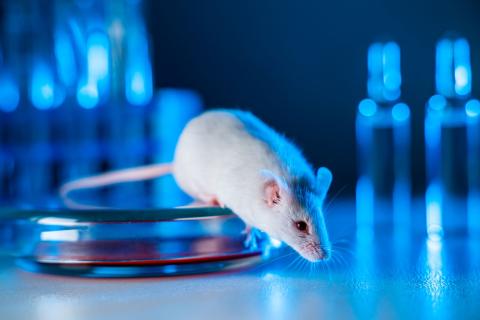
We often see headlines claiming that new research has found a ‘cure’ for diseases. However, what are the real chances of this being true? How does the current stage of the research affect its ultimate outcome? Has it already been tested on humans, or only on laboratory animals? In this article, we explain why animals are used in biomedicine, the reasons why mice are the most commonly used, the steps and timeframes involved from when a treatment appears effective until it can be determined whether it works in people, the characteristics and limitations of various disease models, and how results should be communicated to inform the public without raising false hopes.
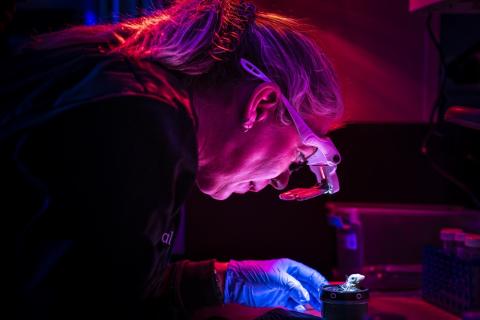
The US company Colossal Biosciences claims to have successfully incubated a bird in an artificial egg system until it hatched. In a press release, the company states that this technology allows a bird embryo to develop fully outside the shell of a biological egg, and could be used to bring back extinct bird species such as the giant moa from New Zealand’s South Island.