University of the Basque Country (UPV-EHU)
If you are the contact person for this centre and you wish to make any changes, please contact us.
Researcher at the Department of Sociology and Social Work of the University of the Basque Country (UPV/EHU)
Professor of the Department of Journalism at the University of the Basque Country (UPV/EHU) and principal researcher of the Gureiker group
Paleontologist at the University of the Basque Country UPV/EHU, director of the geology department and member of the former Anthropocene Working Group
Professor of Sociology and principal investigator of the Research Group on Social Determinants of Health and Demographic Change-OPIK at the University of the Basque Country (UPV/EHU)
Researcher in the geology department
Professor of Anatomy and Embryology at the University of the Basque Country, founding scientific director of the Achúcarro Neuroscience Centre in Bilbao and president of the Spanish Society of Neuroscience (SENC)
Researcher in the Department of Social Psychology and lecturer in Criminal Psychology at the University of the Basque Country (UPV/EHU)
Assistant Professor (PhD) in the Department of Didactics and School Organization at the Faculty of Education and Sport of the University of the Basque Country (UPV/EHU)
Geneticist and Ikerbasque and Ramón y Cajal researcher at the University of the Basque Country (UPV/EHU)
Professor of Organic Chemistry at the University of the Basque Country (UPV/EHU)
Professor of Fundamentals of Economic Analysis, Faculty of Economics
Researcher at the University of the Basque Country / Euskal Herriko Unibertsitatea
Professor of Medical Microbiology and researcher at the Faculty of Medicine and Nursing of the University of the Basque Country UPV/EHU
Specialist in Digestive System at Donostia University Hospital, coordinator of the Liver and Gastrointestinal Diseases Area at the Biogipuzkoa Institute and professor of Medicine at the University of the Basque Country (UPV/EHU)
Assistant professor of Journalism, researcher of the Gureiker group at the University of the Basque Country (UPV/EHU).
Doctor of Psychology, specialist in Clinical Psychology, Professor of Psychological Assessment and Diagnosis at the University of the Basque Country (UPV/EHU) and full member of the Spanish Academy of Psychology
Researcher and Lecturer in the Department of Analytical Chemistry at the University of the Basque Country (UPV/EHU)
Full Professor of the Department of Mathematics at the University of the Basque Country (UPV/EHU)
Postdoctoral researcher at the University of the Basque Country (UPV/EHU)
President of the Donostia International Physics Center (DIPC) Foundation and Professor of Condensed Matter Physics at the University of the Basque Country (UPV - EHU).
Ikerbasque research professor at the Department of Plant Biology and Ecology of the University of the Basque Country (UPV/EHU), Leioa, Spain and research associate at BC3. His research interests include ecology, evolution, conservation biology and biogeography. He is currently leading a research group in molecular ecology
Researcher at the Department of Applied Physics I and the Planetary Sciences Group of the Bilbao School of Engineering of the University of the Basque Country UPV/EHU
Researcher at the Department of Applied Physics and the Planetary Sciences Group of the Bilbao School of Engineering of the University of the Basque Country UPV/EHU
Permanent Senior Researcher, acreditated as Research Professor, in the Department of Genetics, Physical Anthropology and Animal Physiology at the University of the Basque Country (UPV/EHU).
Full professor of Journalism, researcher of the Gureiker group at the University of the Basque Country (UPV/EHU).
Demographer and Ikerbasque researcher, member of the Research Group in Social Determinants of Health and Demographic Change
Professor of Systems Engineering and Automatics at the University of the Basque Country (UPV/EHU)
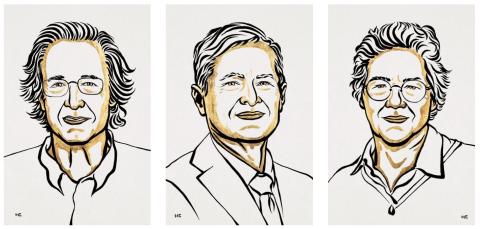
The Royal Swedish Academy of Sciences has awarded the 2023 Nobel Prize in Physics to Pierre Agostini, Ferenc Krausz and Anne L'Huillier for developing "experimental methods generating attosecond light pulses". These advances made it possible to observe the motion of particles in atoms on the shortest time scale captured by humans. An attosecond is a unit of time equivalent to one trillionth of a second, roughly the time it takes light to travel the diameter of an atom.
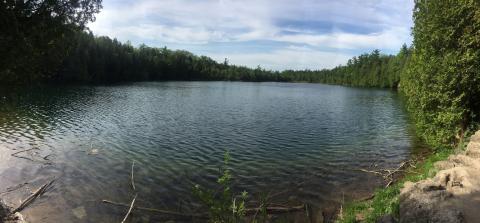
The Anthropocene Working Group of the International Commission on Stratigraphy has proposed Crawford Lake in Canada as a reference site for studying the Anthropocene as a possible geological epoch. This proposal for a Global boundary and Stratotype Section and Point (GSSP) was presented today at the International Congress of Stratigraphy in Lille, France. It is a necessary, but not sufficient step for the Anthropocene to enter the International Chronostratigraphic Table, the worldwide reference for geological units. Once approved by the AWG, this proposal has to go through three more votes in international geological bodies.
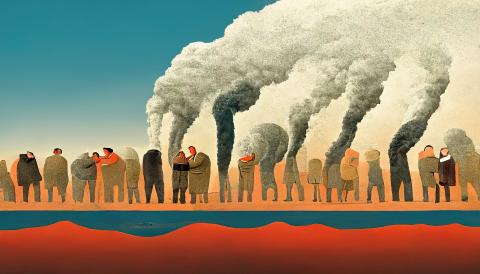
The term Anthropocene describes the profound changes on Earth due to human activities in the past decades. The concept comes from geology but has spread to other areas and has sparked controversy within science. In this article, we provide some keys to understand what the Anthropocene is, and why there has been debate in recent days surrounding its possible declaration.

A commentary published in the journal Nature Human Behaviour discusses the scientific evidence for why rape victims are often involuntarily paralysed, unable to defend themselves or express themselves without consent, and the implications this has for the world's legal systems.

A research team including scientists from the University of Santiago de Compostela and the Centro Tecnológico Agroalimentario de Lugo has analysed the presence of potentially pathogenic bacteria in 100 meat samples bought in supermarkets in Oviedo, Spain in 2020. The researchers found E. coli bacteria which produce enzymes that make the bacteria resistant to various types of antibiotics in more than half of the turkey (68 %) and chicken (56 %) samples, and less frequently in beef (16 %) and pork (12 %) samples. They also found E. coli bacteria that can cause urinary tract infections. The team presented these results at the European Congress of Clinical Microbiology and Infectious Diseases (ECCMID), which is being held in Copenhagen, Denmark, until 18 April.

This year's theme for 8M is "For an inclusive digital world: innovation and technology for gender equality". If we want to innovate for everyone, there must be women doing research in mathematics, an essential discipline in the fields of technology, finance and health. However, the future of mathematical research in Spain has a male profile and this is worrying: advances and major decisions will be made excluding half of the population.
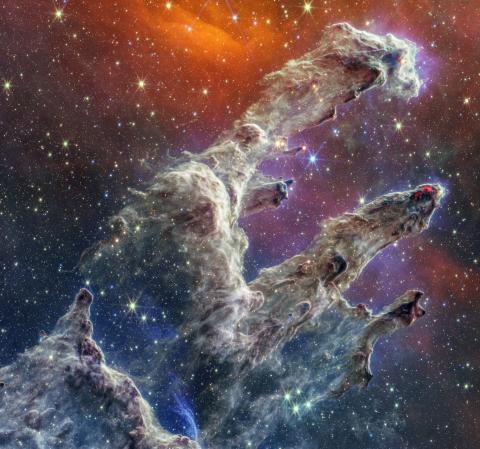
Two decades of work with numerous setbacks, a budget of more than 10 billion dollars and a journey of 1.5 million kilometres to provide us with images of the universe in unprecedented detail have led Science magazine to choose the James Webb Space Telescope (JWST) as the science breakthrough of 2022.
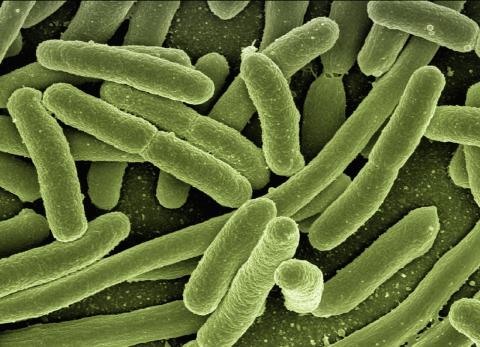
Bacterial infections were the second leading cause of death in 2019. This is according to research published in The Lancet, which estimates that one in eight deaths that year was associated with bacterial pathogens. Five of these - S. aureus, E. coli, S. pneumoniae, K. pneumoniae and P. aeruginosa - accounted for more than half of all bacteria-related deaths.

Early this morning, the Spanish air navigation manager restricted a strip of airspace due to the possible passage of the Chinese space object CZ-5B, which had detached from the Long-March 5B rocket. The fragment finally fell over the Pacific Ocean and Spanish airspace is no longer restricted.
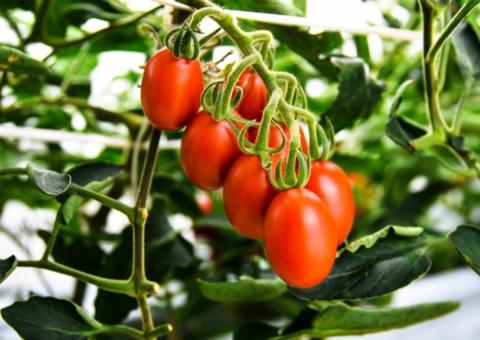
The Spanish Confederation of Scientific Societies (COSCE) has just published a report, submitted to the EU, which proposes and compares different possibilities for reform of the regulatory framework for genome editing techniques.