University of Valencia
If you are the contact person for this centre and you wish to make any changes, please contact us.
Chief of the Oncology Department at the University General Hospital of Valencia
President of the Spanish Multidisciplinary Melanoma Group
Professor of the Department of Statistics and Operations Research at the University of Valencia
Professor of Genetics at the University of Valencia and researcher of the Genomics and Health Area at the Foundation for the Promotion of Health and Biomedical Research of the Valencian Community (Fisabio)
Professor of Obstetrics and Gynaecology in the Department of Paediatrics, Obstetrics and Gynaecology
Professor of Theoretical Physics at the Institute of Corpuscular Physics (IFIC), University of Valencia - CSIC
Group Leader of the Functional Inorganic Materials Team (FuniMAT) at the Institute of Molecular Science (ICMol) and senior lecturer in the Department of Inorganic Chemistry at the University of Valencia.
Professor of Journalism and POLIBIENESTAR researcher at the University of Valencia
Researcher at the Climate, Atmosphere and Oceans Laboratory (Climatoc-Lab) at the Desertification Research Centre (CIDE, CSIC-UV-GVA)
Educational sociologist and lecturer in Sociology of Education at the University of Valencia
CIBEROBN researcher and professor of preventive medicine at the University of Valencia
CIDEGENT Distinguished Researcher
Professor Emeritus of Pediatrics at the University of Valencia
Researcher Emeritus at the Research Foundation of the Valencia University General Hospital Consortium
Research group head at CIBERobn
Professor of Genetics at the University of Valencia and researcher at the mixed unit Infection and Public Health FISABIO/Universitat de Valencia
Researcher, Instituto de Física Corpuscular
Professor of the Department of Theoretical Physics & IFIC of the University of Valencia - CSIC
Ramón y Cajal researcher, leader of the DREAM research group on Defect Engineering in Advanced Responsive Materials, Institute of Molecular Science (ICMol), University of Valencia
Professor of Astronomy and Astrophysics at the Universitat de València in the Department of Astronomy and Astrophysics and at the Astronomical Observatory, and coordinator of the activities of the Virgo Group of the Universitat de València for the detection and analysis of gravitational waves (LIGO-Virgo-KAGRA collaboration)
Coordinator of the Motor Neuron Diseases Unit at the Neuromuscular Diseases and Ataxias Unit of La Fe Hospital, contracted Juan Rodés, member of CIBERER and associate lecturer at the University of Valencia
Research professor at the Spanish National Research Council (CSIC) at the Institute of Corpuscular Physics (IFIC) in Valencia (University of Valencia-CSIC), co-principal investigator of the KM3NeT research team at IFIC and co-leader of the VEGA Group at IFIC
CSIC lecturer at CIDE (Centre for Research on Desertification), Valencia
Professor of Biochemistry and Molecular Biology at the University of Valencia
Member of the Food Security and Environment Research Group of the Desertification Research Centre (Valencia)
Researcher and lecturer at the faculty of Pharmacy
Head of the Biotechnology and Synthetic Biology Group at the University of Valencia (I2SysBio) and founder of the company DARWIN
Professor in the Department of Physiology at the University of Valencia
Professor of Preventive Medicine and Public Health at the University of Valencia.
Senior Lecturer in the Department of Theoretical Physics at the University of Valencia and at the Institute of Corpuscular Physics (IFIC)
Professor at the University of Valencia, former director of the Institute of Corpuscular Physics (IFIC), University of Valencia - CSIC
Professor of Preventive Medicine and Public Health at the University of Valencia and outgoing president of the Spanish Society of Epidemiology (SEE).
Professor of Theoretical Physics at the University of Valencia
Researcher in the Department of Preventive Medicine and Public Health at the University of Valencia and member of CIBEROBN (CIBER of Physiopathology of Obesity and Nutrition)
Assistant Professor in the Department of Preventive Medicine and Public Health at the University of Valencia, and researcher at the CIBER Centre for the Physiopathology of Obesity and Nutrition (CIBEROBN) at the Carlos III Institute
Researcher CIDEGENT
GenT Researcher of the Functional Inorganic Materials Team (FuniMAT) at the Institute of Molecular Science (ICMol), University of Valencia
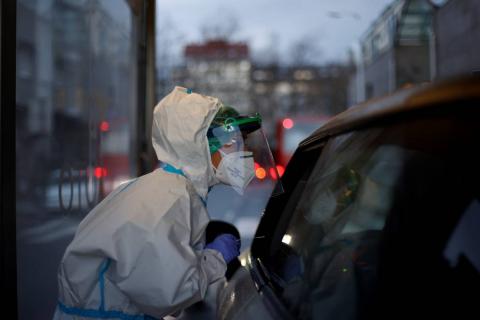
In recent days, several countries have modified the quarantine times for close contacts and the isolation of infected people, while others are already considering it. Spain has announced that it will reduce these periods to 7 days, both for people who have tested positive in a test and for close contacts who require quarantine (in the case of our country, unvaccinated people).
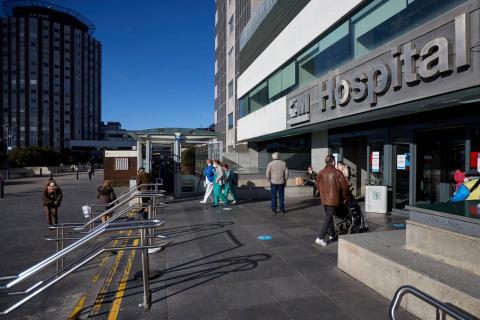
The discovery of the Omicron variant has led to the cancellation of flights to several African countries, while many countries are beginning to detect cases among travellers from countries such as South Africa, but also Nigeria and Egypt. Spain has just announced the first detected case of Omicron, which corresponds to a traveller who had visited South Africa. What measures should be taken to stop the spread of this variant? Is it even possible?

An analysis of 602 community contacts of 471 covid-19 index cases indicates that the secondary attack rate (SAR) for household contacts exposed to the delta variant is 25% in fully vaccinated individuals, compared to 38% in unvaccinated individuals.