An attribution study links climate change to the intensity of extreme fires in Spain and Portugal in August 2025
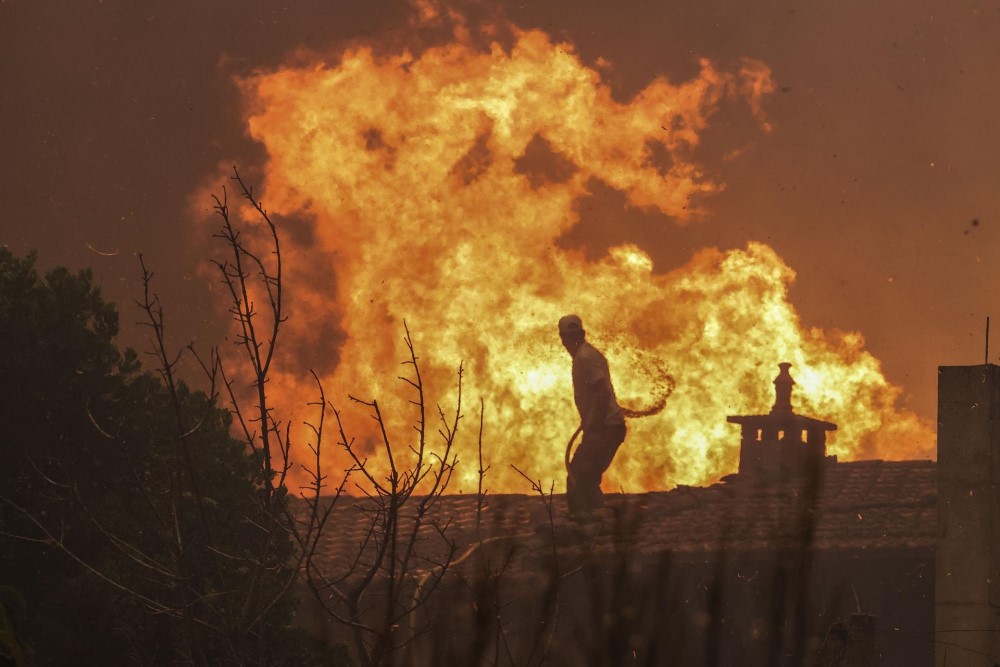
Climate change has made the hot, dry and windy weather conditions that spread fires across the Iberian Peninsula 40 times more frequent and 30% more intense than in the pre-industrial climate, according to a rapid study by World Weather Attribution. The ten-day heatwave was also 200 times more likely and 3°C hotter due to climate change. The study, which analysed weather observations rather than climate models, warns that fires in Europe are overwhelming firefighting resources and highlights the importance of controlling vegetation in affected areas.
Ernesto - atribución incendios 2025
Ernesto Rodríguez Camino
Senior State Meteorologist and president of Spanish Meteorological Association
The fires that ravaged mainly the north-west of the Iberian Peninsula last August were exceptional, as indicated by the authors of the World Weather Attribution initiative, which conducts studies in near real time to determine the extent to which current anthropogenic climate change is responsible for the increase in their frequency and intensity. Although the study was based exclusively on observational data and did not use climate models, we can say that its conclusions are in line with similar studies in the Mediterranean basin. Compared to the pre-industrial climate and according to the authors, the current climate—with global warming of 1.3 °C—makes the weather conditions for the development of these fires in the north-west of the Iberian Peninsula about 40 times more frequent and 30% more intense.
The study determines the undoubted role of climate change in the development of these fires, as well as other extreme weather and climate phenomena such as heavy rainfall, droughts and heat waves, without forgetting the relevant role of other factors related to land use, depopulation, the availability of resources for prevention and extinction, etc. The ultimate cause of the increased frequency and intensity of this type of fire must therefore be attributed to rising greenhouse gas emissions caused mainly by the widespread use of fossil fuels, which are the main cause of current climate change. However, in addition to contributing to reducing emissions, societies must reduce their vulnerability by preparing to face this type of event, which will become increasingly frequent and intense. Both these fires and any extreme weather or climate event can become either an event with manageable consequences or a human disaster, depending on prevention, preparation and, ultimately, the reduction of the structural vulnerability of societies.
Gustavo - WWA incendios 2025
Gustavo Saiz
Forestry engineer and senior scientist at the National Institute for Agricultural and Food Research and Technology (INIA-CSIC)
This publication effectively highlights and summarises the connection between the new climatic and environmental realities generated by humans. In this case, it links the extreme weather conditions in the north-west of the Iberian Peninsula with the mega-fires that occurred in the same region during August 2025. The data analysis is clear and consistent with the best scientific evidence: we have changed the climate, which, combined with the accumulation of plant fuel in our forests (as a result of rural abandonment), means that increasingly devastating fires are now a reality.
This report shows that the authorities urgently need to invest significantly in prevention and adaptation policies in order to at least minimise the effects of the major fires that are to come due to the climatic and environmental conditions that we have all created.
Finally, I would simply like to mention that there is a statement in the report that I believe to be erroneous. On page 2 of the WWA scientific report, it states: ‘In the last two decades, 2006-2024, the annual average fell to around 80,000 ha (EFFIS data), mainly thanks to improved prevention measures and harsher sentences for those responsible for starting fires’.
I disagree with this statement, as it emphasises prevention and coercive measures, when in reality most fires caused by humans in Spain (and Portugal) are due to negligence (see paragraph below), and it is firefighting operations that are seeing an increase in funding, while forest fire prevention measures have remained unchanged for years in the case of Spain. Portugal has significantly increased its resources for prevention in recent years in the wake of the 2017 fires.
In fact, in the report itself (on the page before the last one), the authors mention: "The causes of wildfires are often unknown, but of the identified cases, human ignition accounts for around 90% of fires (Liz-Lopez et al., 2024). On average, between 2019 and 2023, 68% were accidental fires (e.g. certain agricultural activities, discarded cigarettes, barbecues or broken glass) and 24% were arson (e.g. deliberate fires) (2024 report of the Attorney General's Office). In Portugal, wildfire causes were mostly associated with social factors and a lack of knowledge and awareness of the risks involved in the use of fire. A review of fires in 2023 by public authorities in Portugal found that 62.1% were due to accident or negligence, while less than 2% of forest fires with known causes were due to natural causes (Ferreira et al, 2024).
Vanesa - WWA incendios 2025
Vanesa Castán Broto
Professor of Urban Climate Change at the University of Sheffield
This report adds to the evidence that climate change has increased the likelihood of fires in the Iberian Peninsula. However, increased risk depends not only on the likelihood of the hazard and exposure to heatwaves and drought conditions but also on the vulnerability of ecosystems and human populations.
A thorough assessment of such vulnerabilities requires deep engagement with the socio-ecological histories of the affected areas —something beyond the scope of this report but necessary for future management efforts. Place-based, collaborative initiatives are needed to prevent the recurrence of this catastrophe. Scholars of climate change governance emphasise the importance of fostering adaptive capacity among communities—that is, enhancing their ability to adjust to the increasing risk of fire under climate change. A promising strategy, already taking shape in many locations across the Peninsula, is incorporating local knowledge alongside expert assessments to deliver collaborative and place-based land management efforts.
Forest engineers and other rural development professionals play a crucial role in shifting the generalised perception of ‘institutional abandonment’ in rural communities by helping co-create diverse livelihood opportunities and improved conditions for rural living.
Eduardo Rojas - WWA incendios 2025
Eduardo Rojas Briales
Lecturer at the Polytechnic University of Valencia and former Deputy Director-General of the FAO
The study was carried out in a very short period of time and with limited information and methodologies, as acknowledged in the study itself. For example, if the aim is to compare the effect of fires with other countries, it is necessary to have consolidated information on forest area —in terms of the Spanish Forestry Law, wooded forest area—. For now, the only information available is from satellite images, from which the following must be subtracted:
- areas not actually burned
- non-rural land uses (watercourses, reservoirs, infrastructure, urban, logistics and industrial areas)
- agricultural land and
- deforested forest land.
To put this into context, the following table is attached:
|
Year |
2021 |
2022 |
2023 |
2024 |
2025 (up to 24.8) |
|
Wooded forest area |
18,739 |
106,486 |
41,373 |
10,576 |
21,509 |
|
Other forest areas |
57,628 |
146,766 |
43,969 |
33,344 |
77,860 |
|
Total forest area |
76,367 |
253.252 |
85,342 |
43,920 |
99,369 |
|
% of total forest area covered by trees |
24.5 % |
42.0 % |
48.5 % |
24.1 % |
21.6 % |
In hectares (ha)
It should be noted that in 1970 Spain had 25 million ha of forest land (50%), of which 53% was deforested and 47% (11.8 million ha) was forested (IFN-1). Fifty years later (average field data from 2020), 66% of forest land is wooded (18.4 million ha) and 33% is deforested (IFN-4). When compared with fire figures for the last five years, it can be seen that fires are concentrated in deforested areas, especially in the north-western interior. These areas are also those with a considerably higher number of forest fires in relation to their surface area. According to the latest ten-year report published by MITECO (2006-2015), which divides Spain into four regions for fire purposes (Northwest: Galicia, Basque Country, Cantabria, Asturias, León and Zamora; inland Spain, Mediterranean Spain and the Canary Islands), the northwest, which accounts for only 16.1% of Spain as a whole (excluding the Canary Islands), suffers 9.0 fires per 1,000 km2, while the rest of Spain suffers only 1.4, which is a ratio 6.4 times higher. It should be noted that the Basque Country has low fire rates and in summer, which is the most critical time for fires in Spain as a whole, the Cantabrian coast and northern Galicia have hardly any fires.
This high number also shows a culturally ingrained use of fire compared to the rest of Spain, linked to livestock farming.
With regard to claims that the risk of fires has increased up to 40 times or that such fires only had a return period of 500 years until the onset of climate change, whereas now they are much more frequent, it is advisable to be more cautious as many factors are masked. Obviously, climate change brings about changes that increase the risk of large fires, but we also know of huge fires in the past (the Greeks named the Pyrenees after the fires, pyros).
When talking about winds, it should be borne in mind that a fire of a certain size generates its own wind currents that are different from those around it. Closer to the present day, but with significantly lower concentrations of CO₂ in the atmosphere, we have records of the Ayora fire (Valencia) in 1979, which burned around 30,000 ha, and the two fires in central Catalonia in 1994, which burned more than 40,000 ha at a time when the continuity and biomass load of forests were significantly lower than today.
The fact that Spanish forests have closed rapidly, increasing by 62% in area and 338% in biomass load, means a multiplication of the continuity and load of fuel ready to burn. This is precisely what leads to high-risk fires (6th generation) capable of modifying the atmosphere above them and generating pyrocumulonimbus clouds when they reach that point, meaning that what happens in the surrounding atmosphere is no longer a determining factor. This requires large concentrations of heat from the fire if there is a significant accumulation of fuel ready to burn, determined by fine dead elements characteristic of areas with forests and scrubland, as well as abandoned fields.
Finally, one of the main conclusions of the European research project FIREPARADOX was that, given the exclusively repressive response to fires, focused on extinction, an improvement in the area burned was achieved in the short term, but that, over time, this was diluted as the underlying problem was not addressed: the generalised state of abandonment of the territory in the Mediterranean, the best indicator being the progressive increase in the area burned, increasingly concentrated in large forest fires (GIF: >500 ha).
It includes a passing reference to the floods caused by the DANA on 29 October in Valencia. While it is obvious that climate change increases this risk, there are references to recurrent flooding in the Turia, Júcar and Barranco del Poio basins at intervals of 25-50 years (e.g. Cavanilles). The Sinus ilicitanus reached the gates of Elx in Roman times and has closed within 2,000 years thanks to successive floods in an area with considerably less rainfall than the Gulf of Valencia.
The main messages section indicates that these were the most devastating fires suffered by Spain when, in 1994, 438,000 hectares of forest land and 250,000 hectares of wooded forest land were burned, a figure that, considering the above, is unlikely to be reached, given that autumn is generally a quiet period in this area.
While climate change is undoubtedly a contributing factor to the risk of large fires, focusing solely on a long-term global process that depends on disruptive advances, both in terms of energy generation and its economical and reliable storage, which are unpredictable over time and require complex international consensus, is not responsible for a basic issue of spatial and temporal scale with regard to a specific territory. Even what is identified as a priority, recovering management and adapting territories to make them more resilient, would contribute very positively to the fight against climate change by increasing the supply of extensive livestock products that do not generate greenhouse gas emissions, wood, cork, resin and other key forest products in the substitution of fossil and mineral raw materials with high energy requirements (bioeconomy). Deconcentrating the population of metropolitan areas would not only be advisable for quality of life or culture, but also for the climatic effects it entails.
The trend in public policy has been to favour preventive and resilient approaches over repressive ones, for reasons of efficiency and equity. It is incomprehensible why, when it comes to the rural world, certain actors repeatedly show a clear lack of empathy, which is an important part of the equation and of the principle embodied in the SDGs of leaving no one behind. Faced with a lack of support from society, in a democracy they finally decide to leave and abandon their territory, and one of the consequences of this is large fires.
Large-scale reforestation is also proposed, which is not exactly desirable if discontinuities in vegetation are required so that firefighting teams can act safely and have a real chance of controlling the fire. Furthermore, in most of the wooded areas in both Portugal and north-western Spain, the predominant species were Pinus pinaster, Quercus ilex, Q. pirenaica, Q. robur, Q. petraea and Castanea sativa, characterised by the ability of the former to produce serotine seeds and the latter to regrow.
The main messages make a scientifically refuted reference to the greater propensity of some species to burn compared to others, forgetting that the structure and load of fine dead material is much more decisive in forest fires. The behaviour of fire has nothing to do with the origin of the species, whether introduced or native. They cite Eucalyptus and Acacia, which, although present in the north-west, are not found in the burned area, as it is too continental and cold in winter.
María José Sanz - WWA incendios 2025
María José Sanz
Scientific Director of the BC3 Basque Centre for Climate Change
This is a very quick exercise that aims to illustrate the changes in climatic conditions that favour the occurrence and intensity of fires. These exercises are useful for reinforcing the fact that we are facing a climate emergency and the messages from the recent IPCC assessment with evidence that has already materialised.
It merely links fires to these changes in conditions, but the situation is more complex, because there are other areas with greater changes and anomalies where these fires have not occurred. Its message must therefore be placed in a broader context of what other factors (lack of forest management, better warning and coordination systems, for example) are critical for these disasters to occur, in combination with climatic conditions. Because if all of these are not considered together, a sense of helplessness can be generated that leads to inaction or the design of ineffective preventive measures.
Fernando Valladares - WWA incendios 2025
Fernando Valladares
PhD in Biology, CSIC researcher and associate professor at the Universidad Rey Juan Carlos de Madrid
The World Weather Attribution (WWA) has conducted a brilliant study on the devastating wave of fires associated with an extreme heatwave that took place in the summer of 2025 in Spain and Portugal. The study summarises the impact (almost 400,000 hectares burned, 3% of the country in the case of Portugal, at least 8 deaths), analyses its extreme and anomalous nature (for example, a heatwave of this magnitude would only occur once every 2,500 years in normal situations, and now one is expected to occur every 13 years) and investigates the contribution of climate change to this combination of extreme heat and devastating fires. In fact, this is the main contribution of the study, known as an attribution study: to quantitatively estimate the relationship between climate change, the heatwave and the fires. The results are clear and highly significant: weather conditions conducive to intense fires are now about 40 times more frequent and about 30% more intense compared to the pre-industrial climate, and the ten-day heatwave was 200 times more likely and 3°C hotter due to climate change.
It is very important to understand both the statistical significance of an attribution study (it is not a simple correlation, let alone an informed opinion, but a complex mathematical analysis based on simulations and models that yield probabilities) and the extraordinary contribution of climate change to the extreme and sustained heat in August and to the extensive and intense fires.
The study should prompt equally extraordinary measures by governments, the private sector and citizens to urgently adapt to the new climate and the extraordinary fire risks that are affecting more and more people. And it should lead us to establish agreements between all sectors, political forces and public administrations to jointly and coordinately address these disasters and prevent their frequency from continuing to increase in the future. This has a name and has been proposed by the scientific community for 40 years: climate change mitigation and adaptation. Mitigation involves, first and foremost, reducing greenhouse gas emissions and drastically decreasing the use of fossil fuels.
Víctor Fernández-García - WWA incendios 2025
Víctor Fernández-García
Lecturer in the Department of Engineering and Agricultural Sciences at the University of León
The rapid study provides an overview of the fires that occurred in the northeast of the Iberian Peninsula during the summer of 2025. Specifically, it provides historical data on the area burned, illustrating how this year has been extraordinary, and offers detailed meteorological context.
The strength of the authors' analysis is undoubtedly the climatic aspect. They present robust evidence of how the meteorological risk of fires has increased over recent decades. As they show, this means that the weather conditions we have experienced this summer will become increasingly frequent (approximately once every 15 years) and intense (30% more prone to fires). This is very interesting, as it demonstrates how the conditions experienced would have been highly unlikely before humans began to warm the atmosphere (once every 2,500 years).
Methodologically, the analysis is based on indices and reference data sources, such as the DSM (a derivative of the Fire Weather Index) or ERA5 meteorological data, so the conclusions about the change in fire weather risk over the last few decades can be considered robust.
The main limitations of the study relate to some statements unrelated to meteorology. For example, the authors indicate that this year's fires have been the worst since 1961, which is not supported by their own data on burned area, as it would be the fifth worst year in Spain. They may be the worst fires, but perhaps in other aspects not explored in the article, such as size or intensity. The article also addresses other aspects, such as the vulnerability and exposure of the population to fires, although it does not carry out its own analysis in this regard.
The implications could be significant. For example, the results are fully in line with the main assumption and need raised by the State Pact on Climate Emergency proposed by the government, which argues that some impacts, such as fires, will become increasingly extreme in the context of climate change, and that we must be better prepared to deal with them.
Víctor Riera - WWA incendios 2025
Víctor Riera
Project technician at the Pau Costa Foundation
The article analyzes and highlights a specific episode in August, linking it to the episode of major forest fires in the northwest of the peninsula.
It is true that there are no records of such a large area being burned in such a short time (since 1961 according to the EGIF; I do not know how old the Portuguese record is, but it is not that old). In 2022, there was already talk of an unprecedented summer, but the area burned by it was spread mainly between June and July (this video clearly shows how the Saharan intrusions, purple colors on the map, predisposed the vegetation to large fires in the middle of each month). In addition, the number of fires in 2022 was higher (EFFIS).
On the other hand, it is compared with 2017, as it was particularly virulent in this area. However, the most notable episode of that campaign was the arrival of Ophelia, causing very strong winds and an unprecedented wave of fires, especially on October 15. Therefore, it should be considered an anomaly.
Regarding the episode of high temperatures, AEMet has reiterated throughout the month the unusual nature of the conditions (for example, as referenced in the article). However, it has not yet issued any official report, nor have I seen any analysis of the episode of high temperatures or heat waves, although it is likely to do so later this month (they usually publish an operational report on their official blog, in addition to issuing a monthly climate summary).
The article analyzes the episode using the DSR index, a variation of the Fire Weather Index. I was not familiar with this index, and its references are recent (Calheiros et al., 2020; Silva et al., 2023). As it is based on the FWI, I understand that it also takes into account the accumulated drought, which, in this case, coincides with the accumulation over three months, although the analysis focuses more on abnormal temperature values.
In summary, I find the article very interesting in terms of the statistical analysis of an extreme event such as the one we have experienced, as it conveys a very clear and strong message. Also in the use of the DSR, as it is a variation of the FWI applied to the area in question (the articles are Portuguese and focus on their territory), but it fails to link the fire episode using only this indicator and, above all, by focusing solely on maximum temperatures. I understand that they themselves correct this by adding other reasons:
"Across parts of Portugal and Spain, there has been a trend of rural depopulation (e.g. due to livelihood opportunities in urban areas), combined with an aging population, contributing to plots of unmanaged forest land and dense fuel loads (Canadas and Novais, 2019). This trend has reduced traditional agricultural practices such as extensive livestock grazing that once acted as a mechanism of vegetation clearance to reduce fuel loads."
To give it robustness, and simply looking at fire statistics, the areas that have burned are those that tend to have the highest number of fires every year, and the people who live there coexist with fire (a clear example is Castromil, on the border between Zamora and Ourense). This year, the usual areas have burned, but this time, the fire has not stopped. When we analyze a fire, we need to compare it with other years, see what the fire has done to understand why it has done so. I am convinced of the high availability of fuel and the effect of these heat waves, but to know that this event has been so unusual, we need more comparison than just total hectares.
You could also mention the effect of soil overheating on the vertical profile (formation of thermal lows, causing instability in the local atmosphere and favoring extreme fire behavior). I also do not understand the references to the fire season being extended, although this is mentioned and explained in one of the reference articles.
Finally, implications for public policy. Those we are seeing and have already mentioned: extraordinary mobilization of firefighting resources with a direct increase in costs. In the medium term, the development of common protocols and investment in more infrastructure that has been lacking or has failed during this episode, and in the medium to long term, greater investment in prevention in order to mitigate these extraordinary costs.
In short, and as I mentioned earlier, I believe it conveys a simple and powerful message: this extreme episode of high temperatures has a ‘return period’ shorter than we thought.
The rest is known to us, either by those who experienced it firsthand or by experts who understand the implications of such an extensive heat wave on vegetation.
And finally, a reference to a closely related article.
World Weather Attribution
- Research article
- Observational study