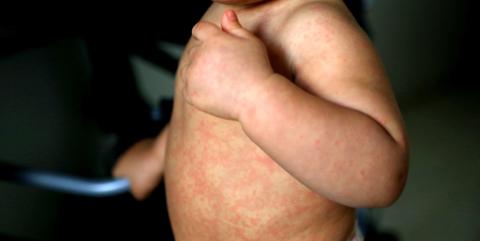
Preliminary data show that measles cases in Europe declined in 2025, although they increased in countries such as Spain
Measles cases in Europe and Central Asia fell in 2025 compared with 2024, according to preliminary data reported by 53 countries in the World Health Organization (WHO) European Region. This decline aligns with the preliminary figures published this week by the European Centre for Disease Prevention and Control (ECDC). According to the WHO, countries in Europe and Central Asia reported 33,998 measles cases in 2025, representing a decrease of nearly 75 % compared with the 127,412 cases recorded in 2024. In Spain, however, the number of cases has increased, as shown by data from the Carlos III Health Institute. A few weeks ago, the WHO announced that Spain had lost its measles-free status.
2026 02 11 Josefa Masa Calles sarampión EN
Josefa Masa Calles
Researcher in Vaccine-Preventable Disease Epidemiology at the National Centre of Epidemiology of the Health Institute Carlos III and member of CIBERESP
In Spain, almost 400 confirmed cases of measles were reported in 2025, a higher figure than in 2024, when 227 cases were notified. The data referred to by the ECDC are preliminary, and we do not yet know whether, once they are confirmed or finalised, the downward trend will actually be maintained. In 2025 we have indeed experienced a higher number of imported cases from areas and countries that were undergoing major measles outbreaks. We have had many imported cases, which is why there were more cases in 2025. The current trend is that the incidence of measles is being maintained; in other words, we are still seeing cases now, at the beginning of 2026. This is to be expected, as measles is a strongly seasonal disease, with more cases mainly in the early spring months and at the end of winter — that is, February, March and April. We are already recording some cases at present, so while we are not saying the trend is increasing, at the moment we cannot say that it is declining either.
2026 02 11 África González Fernández sarampión EN
África González-Fernández
Professor of Immunology at the University of Vigo, researcher at CINBIO, and member of the RAFG
Although the incidence in Europe fell in 2025 compared with 2024, are we still in a fragile situation?
“In overall terms, there were fewer measles cases in Europe in 2025, bearing in mind that there was a sharp increase in cases in 2024. However, levels remain higher than in previous years (2022–2023), and cases are still appearing in 2026, so the possibility of transmission persists.
Another point to note is that this trend is not the same across all countries, as Spain, Austria, the United Kingdom and Armenia have recently lost their measles elimination status. In fact, the number of countries where the virus continues to circulate continuously or where endemic transmission is being re-established has increased from 12 to 19.”
The data became known after the WHO announced that Spain has lost its measles-free status. How do you assess this?
“This shows that we cannot let our guard down. If vaccination coverage does not reach at least 95%, measles re-emerges, as it is an extremely contagious virus. In Spain, coverage for the second dose of the vaccine is below 94%, and this could explain the increase in cases in our country.
We need to carry out campaigns to raise vaccination coverage. We have highly effective vaccines, and measles can be a dangerous disease — it can even be fatal.
The Spanish Society of Immunology has prepared a position statement on the measles situation.”
Is there any major limitation to these data?
“The note itself states that the data obtained from 53 World Health Organization Member States on measles infections could be higher. In fact, in 2024 there was a discrepancy between the information system, which indicated 127,412 cases, and the final figure reported, which was 151,040 cases. This could also happen with the 2025 data, which may currently be underestimated.”
How do these figures fit with the existing evidence?
“The data come from a reliable organisation and are similar to those reported by the European Centre for Disease Prevention and Control.”
2026 02 11 Marcos López Hoyos sarampión EN
Marcos López Hoyos
Scientific Director of the Valdecilla Health Research Institute (IDIVAL), Head of the Immunology Department, and Professor of Immunology at the University of Cantabria-Marqués de Valdecilla University Hospital
Although infection numbers and deaths appear to have fallen in 2025 compared with 2024, they remain very high for a preventable infection when vaccination coverage is adequate, and far from the levels we had at the beginning of this century.
Unfortunately, in some countries the number of cases seems to have increased, and Spain may be one of them, given that the WHO has already announced that measles transmission is endemic. All of this can only be explained by a reduction in vaccination coverage in our population.
2026 02 11 Quique Bassat sarampión EN
Quique Bassat
Director General and ICREA Research Professor at the Barcelona Institute for Global Health (ISGlobal)
The almost 34,000 measles cases provisionally reported in Europe during 2025 represent a very large decrease of nearly 75 % compared with the number of cases in 2024 and, while this is good news, it should still give us cause for concern. The fact that so many cases of a disease that is easily preventable through the use of the excellent vaccines available to us continue to occur simply reflects shortcomings in the system, meaning that across the continent we are still not able to achieve the high vaccination coverage needed to interrupt transmission of this highly contagious and dangerous virus.
We should welcome this reduction in case numbers without complacency, but there is still a great deal of work to be done to recertify every European country as free from transmission of this disease.
2026 02 11 José Gómez Rial sarampión EN
José Gómez Rial
Head of the Immunology Department at the Complejo Hospitalario Universitario de Santiago de Compostela (CHUS), Servicio Gallego de Salud (SERGAS)
The WHO notes that in 2025 measles cases in Europe and Central Asia fell by almost 75 %, from more than 127,000 cases in 2024 to around 34,000, as a result of vaccination campaigns and outbreak control measures, although the risk of resurgence persists as long as 95 % vaccination coverage is not achieved in all communities.
These data show that measles responds immediately when the right action is taken. When vaccination campaigns are strengthened, outbreaks are rapidly identified and control measures are implemented, population protection is restored and virus circulation declines markedly. Such a sharp fall in cases in just one year is not a coincidence, but the direct result of intervention.
At the same time, the figures make it clear that this protection is neither automatic nor permanent: it depends on maintaining high vaccination coverage and active surveillance. When action is taken, the system works; when vigilance slips, the virus returns.
2026 02 11 Ignacio J. Molina sarampión EN
Ignacio J. Molina Pineda
Professor of Immunology and Director of the Department of Biochemistry and Molecular Biology 3 and Immunology at the University of Granada
The WHO report indicating a fall in the number of measles cases in Europe and Asia suggests that this decline is partly due to the fact that a large proportion of the previously unprotected population has already been infected, which also has a negative implication for us. Indeed, Spain and other countries have lost their place on the list of measles-free countries after a long period during which we had been free of the disease.
Measles is one of the most contagious diseases, perhaps surpassed only by COVID-19, and controlling its spread therefore requires an extremely high proportion of the population to be immunised with a vaccine that is very safe and effective. The outbreaks seen in recent years, both in the United States and in Europe, should be linked to the decline in vaccination coverage observed after the COVID-19 pandemic. We were very close to eradicating the disease, and its re-emergence as a result of vaccine refusal represents a major missed opportunity.
Measles can lead to very serious complications, including death, and should not be regarded as a trivial illness. In addition, measles causes the loss of immune memory cells, meaning that we lose previously acquired protection against other diseases and are therefore exposed to them. It is therefore essential to restore vaccination coverage levels that ensure effective control of the disease.
Ángel - Sarampión Europa
Ángel Hernández Merino
Pediatrician and collaborator of the Advisory Committee on Vaccines, the Spanish Association of Pediatrics and the Spanish Association of Primary Care Pediatrics
The reduction in the number of measles cases in the WHO European Region from 127,412 in 2024 to just 33,998 in 2025 (a 73.3% reduction) is a very encouraging figure that can only inspire hope, as it means that, in addition to factors stemming from the biological and epidemiological dynamics of the virus itself, the measures taken after the 2024 data point have contributed substantially to the reduction in cases. It should be noted, however, that the WHO European Region comprises 53 countries with very heterogeneous characteristics across Europe and Central Asia, and that, as the WHO itself states, not all countries have experienced this reduction in cases.
The ECDC, based on data from the EU/EEA region, has also observed an overall reduction in cases from 2024 to 2025 (more than 35,000 cases in 2024 and 7,655 in 2025).
It is striking, however, that this overall trend recorded in the WHO European Region and the EU/EEA region is so different from what has been observed in Spain. In our country, confirmed cases in 2025 have almost doubled those of 2024, rising from 227 in 2024 to 397 in 2025, representing an increase of 74.8%.
The data for the EU/EEA region is probably more relevant than that for the WHO European Region because there is greater uniformity among the countries involved, including Spain.
It is therefore necessary to emphasize that the risk of exposure to the virus remains significant in our society and that a transparent study and debate must be conducted on the conditions that have led to the increase in cases in Spain and the measures that need to be adopted. These include: preventing exposure to the virus for children under one year old, not delaying the first dose after 12 months of age, bringing forward the second dose (as Andalusia has already officially done), actively searching for susceptible individuals among adults born after 1978 and among the immigrant population, with prompt vaccination in necessary cases, strengthening the capacity to detect suspected cases in healthcare services, etc. All of this must be done without delay, involving health authorities, regional health services, the media, and the public.