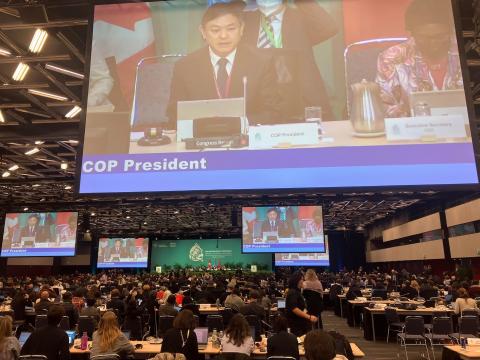
Governments meeting at the COP15 UN Biodiversity Conference in Montreal (Canada) have reached an agreement after two weeks of negotiations. The "Kunming-Montreal Global Biodiversity Framework" aims to protect one third of land and oceans by 2030.

The survey Scientific Disinformation in Spain, carried out by FECYT in the framework of the European project IBERIFIER, shows that most citizens are concerned about the effects of scientific disinformation and that they do not feel very confident when it comes to differentiating between false and true content. The report includes a series of recommendations for dealing with this type of misinformation, which are reproduced below.
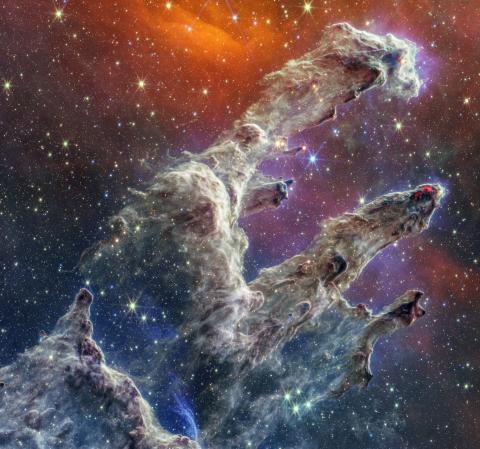
Two decades of work with numerous setbacks, a budget of more than 10 billion dollars and a journey of 1.5 million kilometres to provide us with images of the universe in unprecedented detail have led Science magazine to choose the James Webb Space Telescope (JWST) as the science breakthrough of 2022.
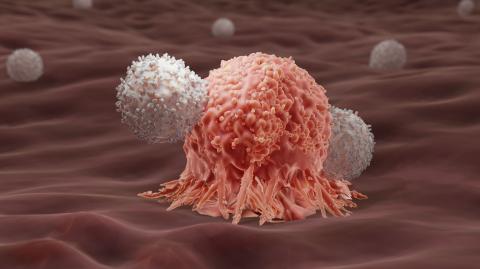
Two preclinical studies published in the journal Science have introduced new bioengineered modifications to CAR-T cells in an attempt to make them more potent and safer in their anti-tumour action. These variations allow their activity to be enhanced only in the vicinity of the tumour or their actions to be regulated on demand.
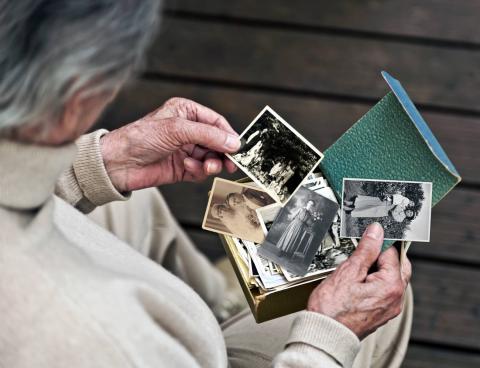
A study published in the journal Neurology claims to have confirmed the usefulness of a biomarker in blood to diagnose Alzheimer's disease without the need for other tests.

Several media outlets are reporting cases of "camel flu" or MERS-CoV at the World Cup in Qatar, including three French national team players. However, no cases have been confirmed and the news reports speak of non-specific symptoms that could be due to any other infectious condition. This coronavirus, discovered in 2012, has a high case fatality rate and before the start of the competition, the WHO had already asked fans travelling to the country to watch out for possible symptoms.
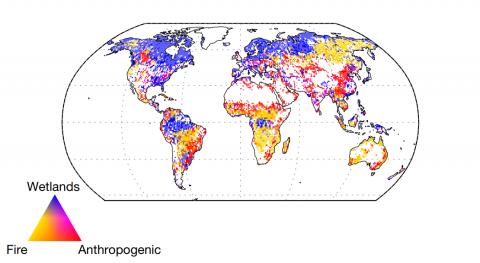
Although in 2020 the covid-19 pandemic caused confinement and economic paralysis in many countries, the rate of methane growth in the atmosphere peaked, reaching the highest level since 1984. Research published in Nature claims that the main source would be the warmer, wetter wetlands of the northern hemisphere.

The US companies Moderna and Merck (MSD outside the US and Canada) have announced this week the results of their phase 2b trials of their skin cancer therapy. The results were shared in a press release stating that the risk of recurrence or death is reduced by 44%.
A team of researchers from the Health Institute Carlos III has published an article quantifying the diagnostic delay of rare diseases in Spain with data from the period 1960-2021. The study reveals that more than half of the patients experienced a delay in diagnosis, that the average delay exceeds six years, and that both the percentage of those affected by the delay and the average time have decreased over the years.
Scientists at Lawrence Livermore National Laboratory in California have announced the success of an experiment at their National Ignition Facility. With analysis of the results still underway, it would be the first net energy gain from a nuclear fusion. The news was revealed on Sunday by the Financial Times newspaper with information provided by sources with knowledge of the experiment.